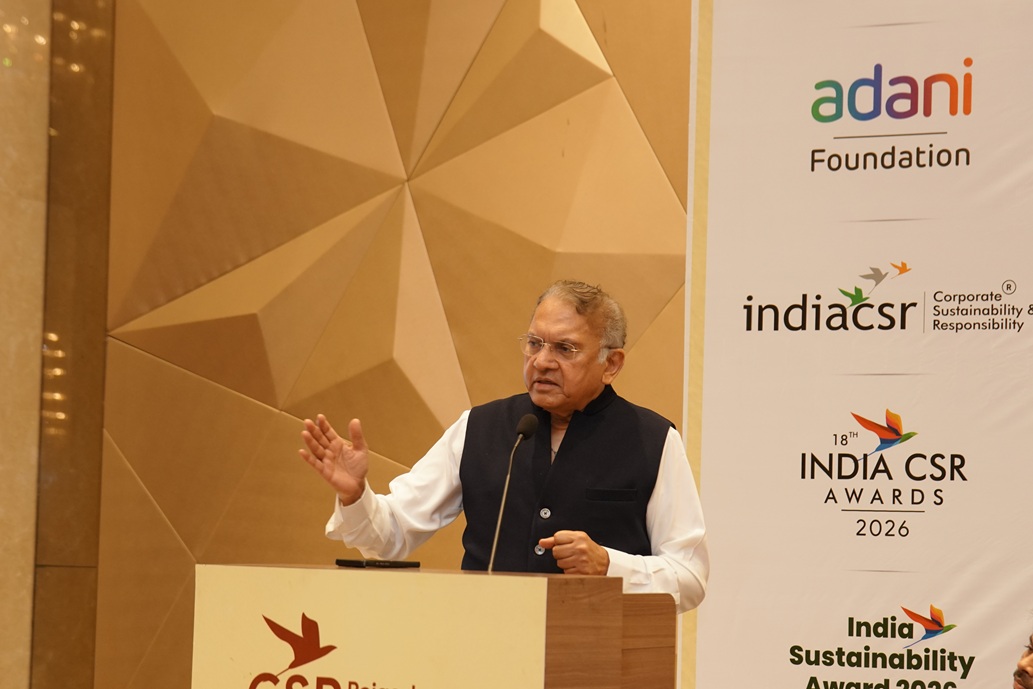



Entrepreneur and philanthropist reflects on the period before formal CSR, corporate longevity and India’s path to prosperity at Raigarh CSR Summit
RAIGARH (Chhattisgarh) (India CSR®) — Satish Jha, founder and chairman of the Ashraya Foundation, did not come to the Raigarh CSR Summit to celebrate progress; instead, he opened with a troubling diagnosis: India treats corporate social responsibility as a discrete policy arena when it should be understood as one thread in a far longer history of economic development. “CSR and regional development must be studied together,” he told participants. “They are part of the same development journey.”
The distinction mattered. Satish Jha, an entrepreneur, philanthropist, author and former journalist who shaped Jansatta at its founding and later edited Dinamaan, began his address by acknowledging his own decades of work predating what the world now calls CSR. His engagement with development economics and regional problems began “before CSR” became a recognized term—a framing that situated contemporary corporate responsibility within institutional and economic structures that had been evolving since long before compliance frameworks.

That history, he suggested, had been largely forgotten. The present CSR discourse, he argued, had emerged from “a much longer journey involving economics, businesses, markets and regional development,” yet companies and policymakers largely treated it as something new.
The Arithmetic of Concentration
From there, he pressed the audience on a narrower, sharper question: How many companies operate in India, and what fraction of market value do they represent?
His interrogation was methodical. He asked participants to examine corporate landscapes not by industry or sector, but by sheer demographic scale. Most companies, he implied, remained marginal. A small cohort captured vast wealth. That asymmetry, he suggested, revealed something essential about how corporate value is created and where it concentrates. The issue was not whether companies were large or small, but rather: Which ones endure?
This led to his core question, one that reframed the entire conversation: How old are India’s leading companies?
He cited a benchmark: fifty years. A half-century, he suggested, was a meaningful threshold for institutional health. Companies that survive and remain influential for that duration possess something fragile and rare. More troublingly for India, the majority of firms occupying prominent positions in today’s market were far younger than that. How many could claim fifty years of continuous operation and relevance? The answer was sobering.
The Question of Environment
From that diagnosis emerged his central thesis. Companies and institutions cannot be created in isolation. They require what he called an environment—a mahaul—that actively supports their development and longevity. This observation carried policy weight. The question was not whether India could produce companies, but whether it could create the conditions necessary to sustain them across generations. What cultural, legal, educational and infrastructural circumstances allow an enterprise to remain relevant for fifty years? What gets lost or gained in that span?
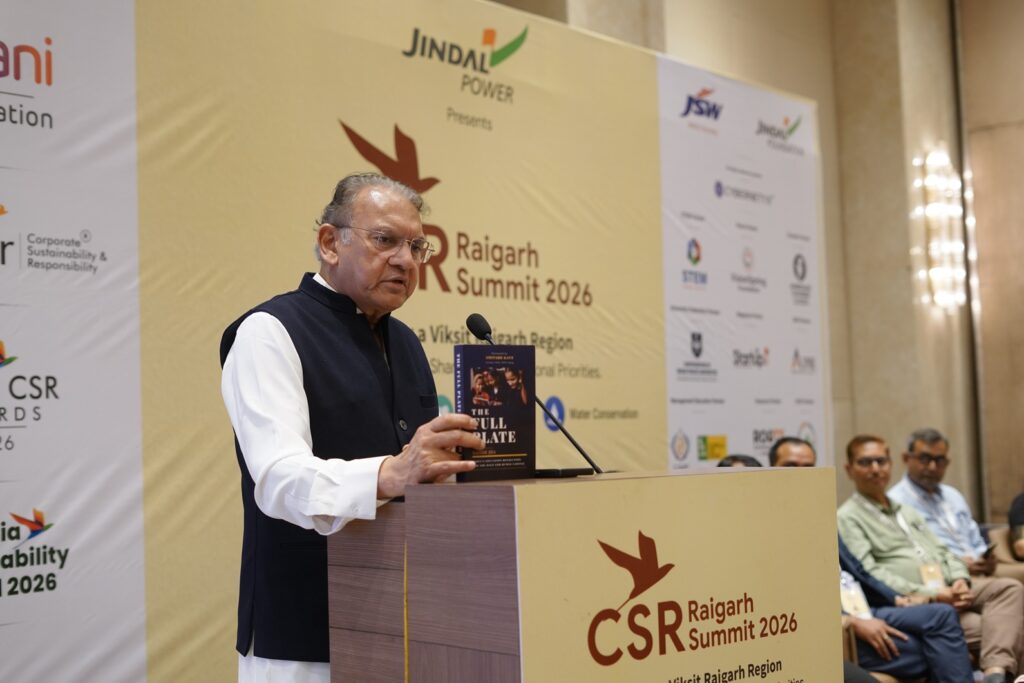
These were not rhetorical flourishes. Jha’s concern aligned directly with his published work. His books The Full Plate: India’s Education Revolution and the Race for Human Capital and The Learning State (2026) had examined precisely these questions—how educational systems, institutional capacity and human capital development shape a nation’s economic trajectory. Both books, he noted, explored how development institutions and companies are created, how they function over time, and what environments support them.
Drawing from Global Experience
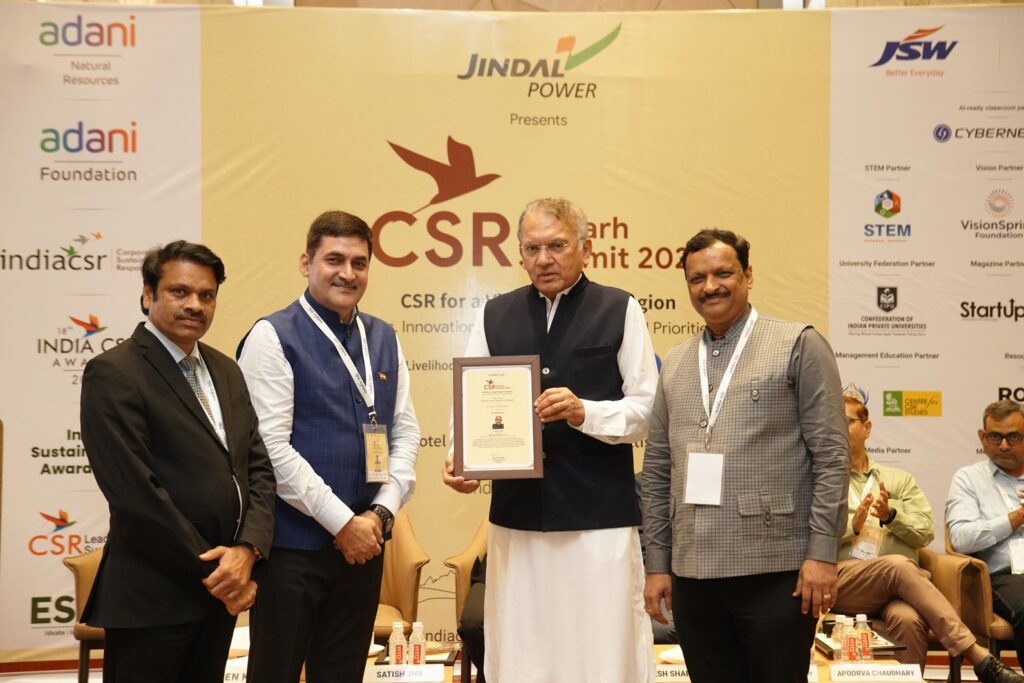
To illustrate the stakes, he drew on his international experience and study of American institutions and academic life. What conditions had allowed certain American organizations to thrive across centuries? What did Harvard’s longevity teach us? He referenced his own time in the United States and his exposure to institutional continuity as a counterpoint to India’s younger corporate landscape.
The comparison was not triumphalist. Rather, it was diagnostic. India faced a specific structural challenge: it lacked depth in institutional longevity. That deficit could not be solved through compliance or good intentions alone.
Geography and People as Constraints
Toward the close of his address, Jha shifted toward the actual conditions on the ground. He emphasized that India’s people and geography belonged to the country and must remain central to any serious discussion of development. These were not abstract variables. They were concrete realities that any lasting institution or company would have to navigate and work within.
This insistence on material reality pushed back against what he saw as false abstractions. Development could not be planned in boardrooms or policy think tanks divorced from the lived experience of Indians in specific regions—like Raigarh itself, a coal-belt district navigating resource extraction, environmental stress, and regional poverty.
National Prosperity as the Encompassing Frame
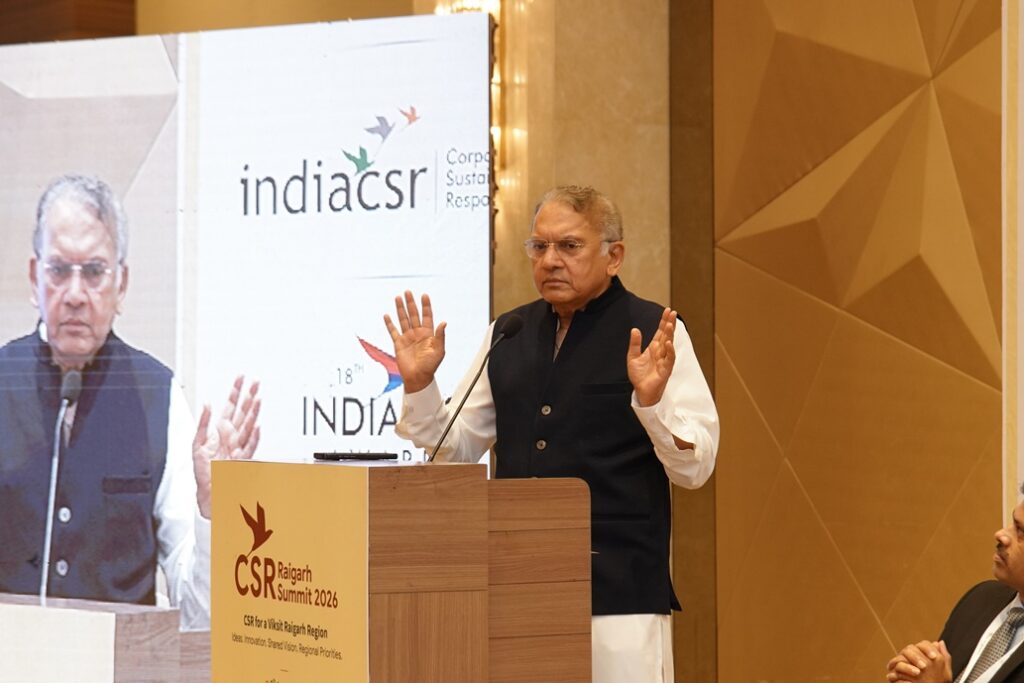
His final movement united all these threads. CSR was not an end in itself. Neither were individual companies or isolated regional development projects. The encompassing question, he argued, was how India could build companies and institutions that remain strong, contribute meaningfully to broader prosperity, and continue serving society over decades.
This reframing was deliberate and consequential. It displaced CSR from the corporate governance agenda to the national economic strategy agenda. It made institutional longevity a measure of national health. And it tied both to the actual geography, population, and historical conditions India possessed—not the idealized versions policymakers sometimes invoked.
The challenge, as Jha framed it, was not whether Indian corporations should pursue social good. The challenge was whether India could deliberately construct the political, educational, and economic environment that allows enterprises to survive and mature across generations, ultimately generating the conditions for genuine, sustained national prosperity.
© Copyright Disclaimer: All rights reserved. No part of this report may be reproduced, republished, distributed or transmitted in any form without prior written permission from India CSR®.