

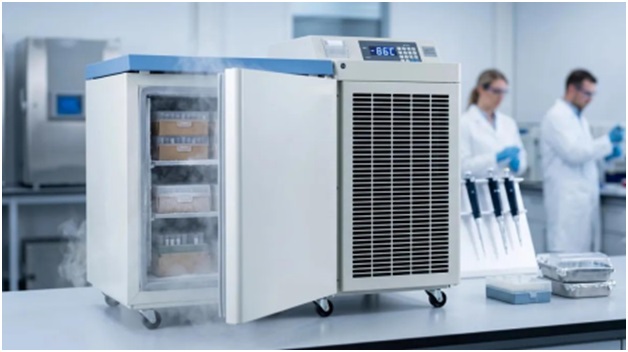


Most people only think about cold storage after something goes wrong. A tripped breaker, a failed compressor, or a door left ajar can undo weeks of careful work. Choosing a deep freezer wisely is less about brand names and more about matching the machine to what you store, where you store it, and how often you open it.
Start With the Deep Freezer Temperature Range
Everything begins with the temperature your product actually needs. Standard units hold roughly -20°C to -40°C, which works for reagents, plasma, frozen ingredients, and many pharmaceutical items. When you need long-term preservation of cell lines, enzymes, or genetic material, an ultra low temperature freezer reaching -80°C or below becomes the sensible choice. Many buyers overspend on colder machines than necessary, so confirm the storage requirement from your protocol or product label first.
Which Type Fits Your Work?
A laboratory deep freezer has stable, documented cooling, often with alarms, data ports and tight temperature uniformity. A biomedical freezer takes it up a notch. Hospitals and blood banks need dependable monitoring of vaccines and clinical samples. But for a commercial deep freezer, where you’re storing bulk food or catering, capacity and durability are more important than audit trails. Mixing these roles is a common mistake. Using a food-grade unit for sensitive samples can create risk that no price saving justifies.
Planning Around Deep Freezer Sizes
Deep freezer sizes range from small undercounter units around 100 litres to tall upright models above 700 litres. Think about growth before you buy. If your sample count doubles in two years, a slightly larger cabinet now is cheaper than a second machine later. Also consider access habits. Chest freezers keep cold air in when opened, while uprights offer drawers and racks for faster retrieval. Measure doorways and lift access as well, because delivery day surprises are costly.
How to Read Deep Freezer Specs Like a Pro
Specifications can look like a wall of numbers, so focus on the ones that impact reliability. Check compressor design, refrigerant type, insulation quality, and controller accuracy. Look for audible alarms, remote alert contacts, lockable doors, and a power-failure warning. Energy consumption
deserves attention too, since a freezer runs around the clock and electricity becomes a large part of ownership cost over the years.
Real-World Deep Freezer Applications
Deep freezer applications stretch across many industries. Diagnostic labs store reagents and patient samples, research centres hold tissue and DNA, and pharmaceutical teams run long stability studies. Food processors, dairies, and ice cream makers depend on steady bulk freezing. Veterinary clinics and blood banks round out the list. Each field has its own rules, so check your local regulatory expectations before you finalise a model.
Habits That Extend Freezer Life
Good placement helps more than most people expect. Keep the unit away from heat sources, leave clearance for airflow, and clean the condenser filter regularly. Do not pack shelves so tightly that air cannot move. Record temperature readings daily, since gradual drift is often the earliest hint of trouble. A simple logbook can save an entire inventory.
Short Answers Buyers Look For
Is a more expensive freezer always better?
Not necessarily. The better choice is the one that meets your temperature, capacity, and monitoring needs with dependable service behind it.
What should I ask a supplier before buying?
Warranty period, service response time, spare parts availability, installation support.”Sometimes a small difference in price is not so important as the after sales care.
Wrapping Up
A thoughtful purchase starts with your real storage needs and ends with a supplier you can call when something breaks. Get those two things right, and your freezer becomes a quiet, dependable part of daily work.