
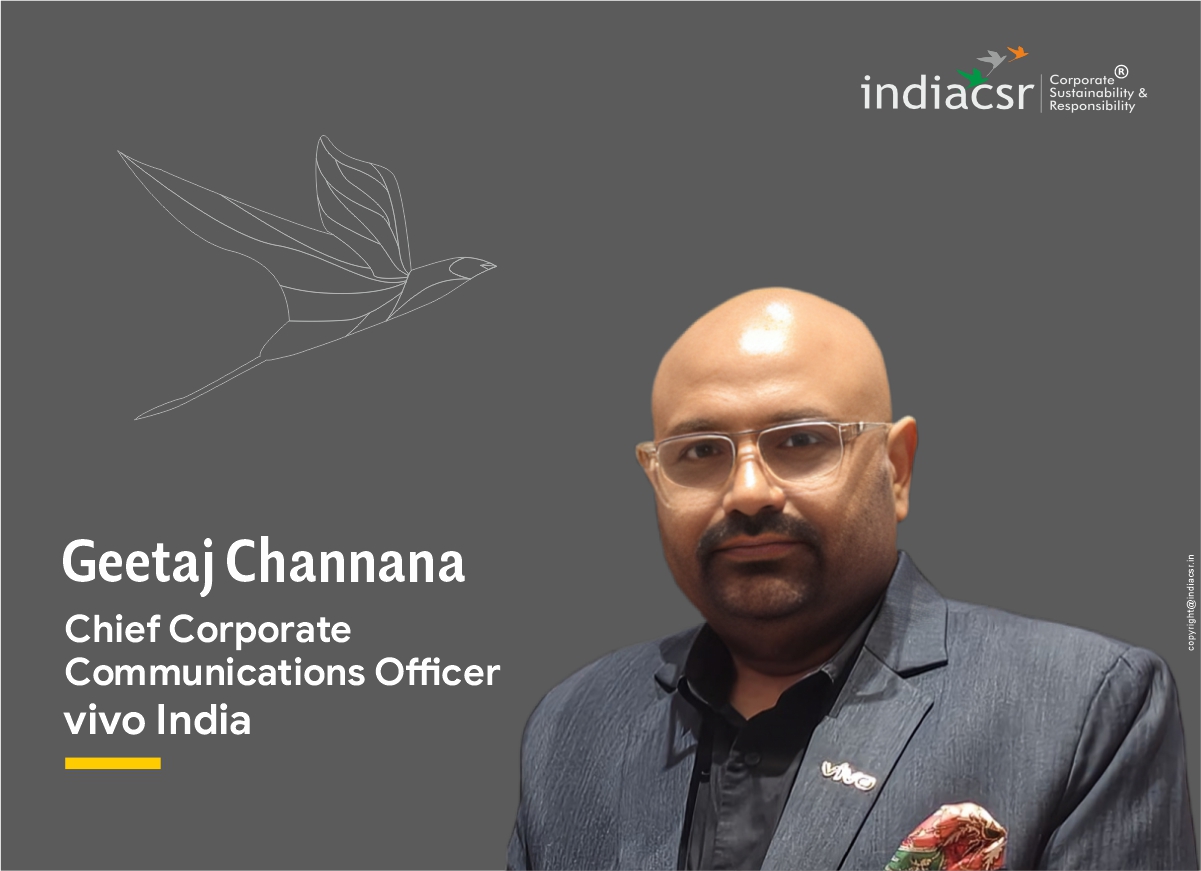


Geetaj Channana, Chief Corporate Communications Officer, vivo India, in conversation with Rusen Kumar, Editor, India CSR

NEW DELHI (India CSR): As India builds a stronger innovation ecosystem, young students need more than a stage to present ideas—they need credible opportunities, mentorship and fair recognition. vivo Ignite, vivo India’s education-focused initiative, seeks to create that pathway for students in Classes 8 to 12. In this conversation with Rusen Kumar, Geetaj Channana, Chief Corporate Communications Officer, vivo India, discusses the thinking behind vivo Ignite, its voluntary origins, its expanding reach across India, and its focus on transparent evaluation. She explains why the initiative values credibility, quality and meaningful mentorship over simply increasing participation numbers.
This interview has been edited for clarity and length.
Q. When did the idea of vivo Ignite first emerge?
Geetaj Channana: The idea began nearly five years ago. Around 2019–20, vivo India was a young and growing company. We started thinking about how we could contribute to society in a meaningful way and create an initiative that connected with our identity as a technology company.
Q. Was this initiative driven by a CSR compliance requirement?
Geetaj Channana: No. At that time, there was no CSR compliance requirement applicable to us. We felt that if we were growing as a business in India, we also had a responsibility to give back to society in a meaningful way.
Q. A company can support many causes. Why did vivo decide to focus on children and innovation?
Geetaj Channana: We asked ourselves what would be meaningful for a technology company. We wanted to take technology and innovative thinking to children. The intention was to create a spark in young minds—something that could become significant for India over time.
Q: What does vivo Ignite ultimately seek to achieve?
Geetaj Channana: Our focus is to build a credible platform that benefits children. If a student says they have participated in vivo Ignite, that experience should have value. We want students to feel encouraged to think, create, solve problems and take their ideas forward.
Q. Why do you call vivo Ignite an initiative rather than a competition?
Geetaj Channana: A competition can end with an announcement of winners. For us, the learning journey is equally important. Students should learn not only what they are creating, but also how to explain, present and develop their ideas.
If a child has built something useful, they should also understand how to present it to a mentor, institution, investor or community.
Q. What role do knowledge partners play in this journey?
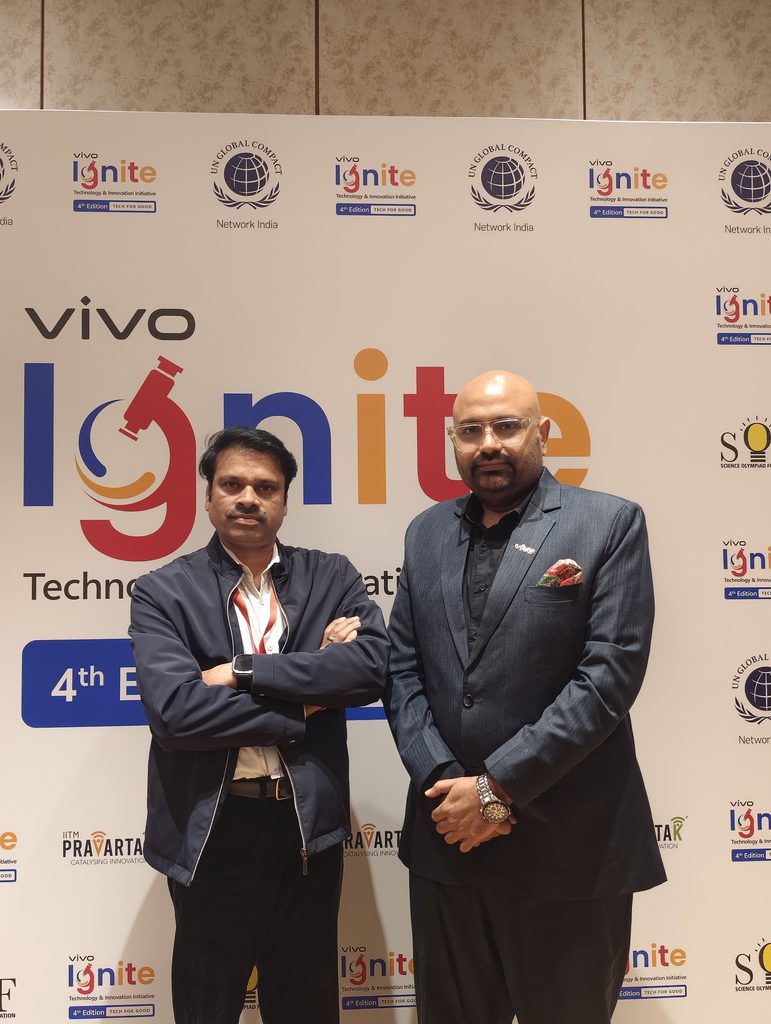
Geetaj Channana: We are bringing together the right people and institutions to create an ecosystem for young innovators. We have worked with institutions such as IIT Madras Pravartak and IIT Roorkee, besides engaging with organisations including NCERT and the UN Global Compact at different stages.
The purpose is to make students more excited about innovation and help their ideas move to the next level.
Q. How many students has vivo Ignite reached so far?
Geetaj Channana: Over four years, vivo Ignite has reached around 1.25 lakh children. In the earlier editions, we received about 3,000 to 4,000 registrations. This year, registrations grew to around 38,000–40,000.
Q. What does participation look like in the present edition?
Geetaj Channana: We received around 6,100 ideas from nearly 702 districts across India. It is encouraging that participation has come from diverse geographies and from students with different experiences and perspectives.
Q. Why is outreach to aspirational districts especially important?
Geetaj Channana: Around 92 aspirational districts have been represented in the programme. These regions can be difficult to reach, but it is important that students there also receive access to credible platforms for innovation. Our effort is to reach all aspirational districts over time.
Q: There can be a difference between registration and actual participation. What have you observed?
Geetaj Channana: Registration reflects interest, but not every student who registers submits an idea. Generally, around 20 per cent of registrations may convert into submissions. As students progress through the process, the number becomes smaller because each stage requires stronger engagement and more developed ideas.
Q: With registrations increasing, why not focus only on scaling the programme faster?
Geetaj Channana: We do not want to show only numbers. It is possible to increase registrations by spending more money, but that is not our primary objective. We want to improve the quality of mentorship and help students develop stronger ideas.
Scale will grow organically, but we will not compromise on credibility or quality.
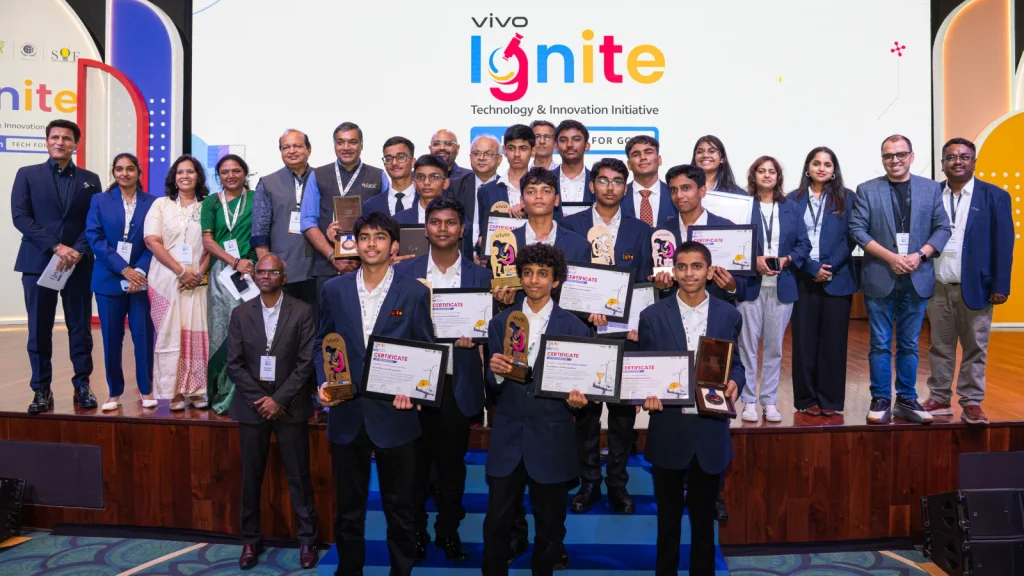
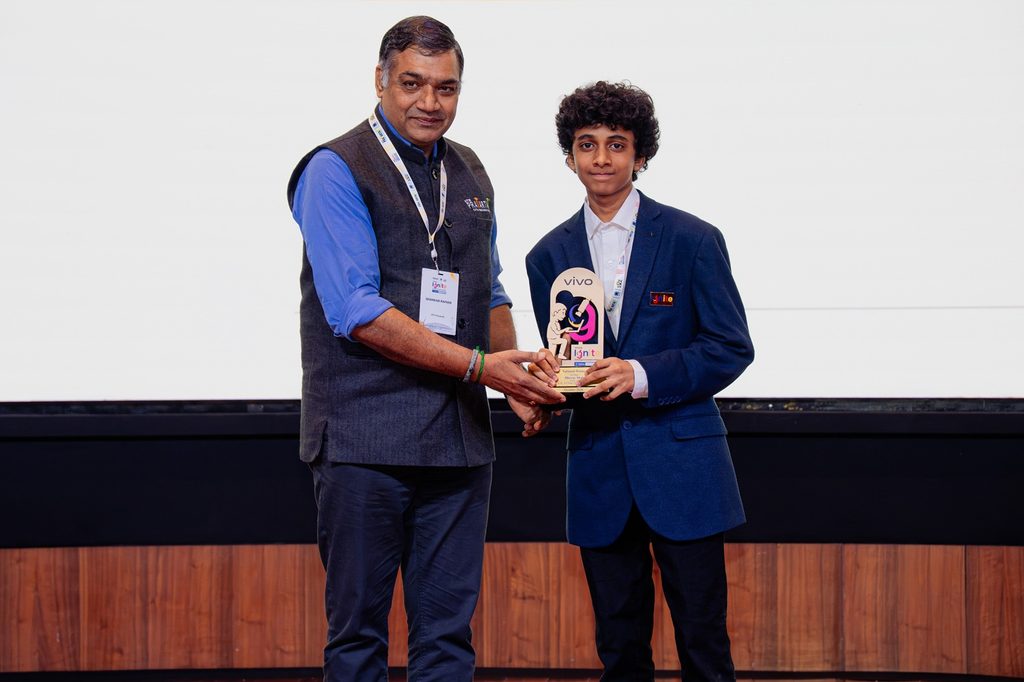
vivo India also felicitated 10 educators under its National Teacher Innovation Fellowship, recognizing innovative approaches to STEM education.
Q. How do you ensure the platform remains credible?
Geetaj Channana: Credibility is the most important thing for us. It comes from consistency, transparent processes and the quality of the programme. Our processes are audited and strengthened with the support of Grant Thornton.
We believe that content, learning material and processes should be strong enough to stand public scrutiny. A one-time initiative does not build trust; credibility is built over a period of time.
Q. How do you ensure fair and unbiased evaluation?
Geetaj Channana: There is no one from vivo involved in the evaluation process. We bring credible external experts to assess the entries because the process must remain free from bias.
The selection process narrows thousands of ideas to around 200 students. We ensure representation from different regions, and after that, students progress purely on merit.
Q. Which students can participate, and how do you approach inclusion?
Geetaj Channana: vivo Ignite is open to students from Classes 8 to 12. We focus on geographical representation, but we do not create too many categories that can unintentionally make the process biased.
India has differences of language, school type, access and location. Our aim is to create a neutral platform where a student’s merit matters more than background.
Q: What kind of journey do selected students experience after qualifying?
Geetaj Channana: The 200 students who qualify on merit receive mentorship and move towards the Achiever 30 stage. The final process identifies 10 students.
Different participants take their ideas forward in different ways. Some students from earlier editions have filed patents or are working on them. Some want to complete their studies before building a venture, while others continue working on their ideas alongside education.
We do not want to overpromise. Our responsibility is to create a credible and respected platform where students feel their ideas have been understood, recognised and supported.