

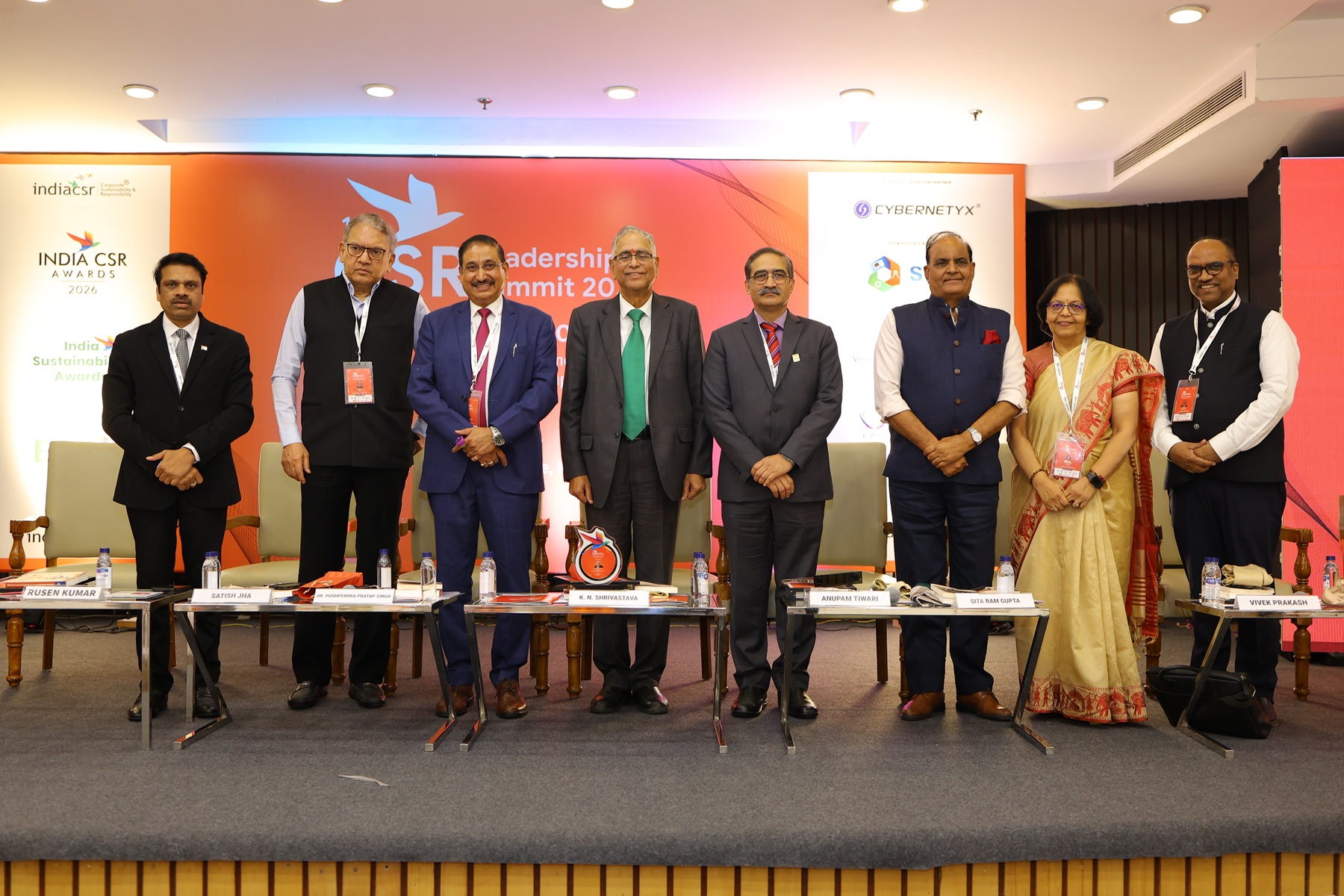


Distinguished public administrator K. N. Shrivastava called for stronger CSR investment in R&D, STEM education, remote-region development and cultural research at the 19th India CSR Summit 2026.
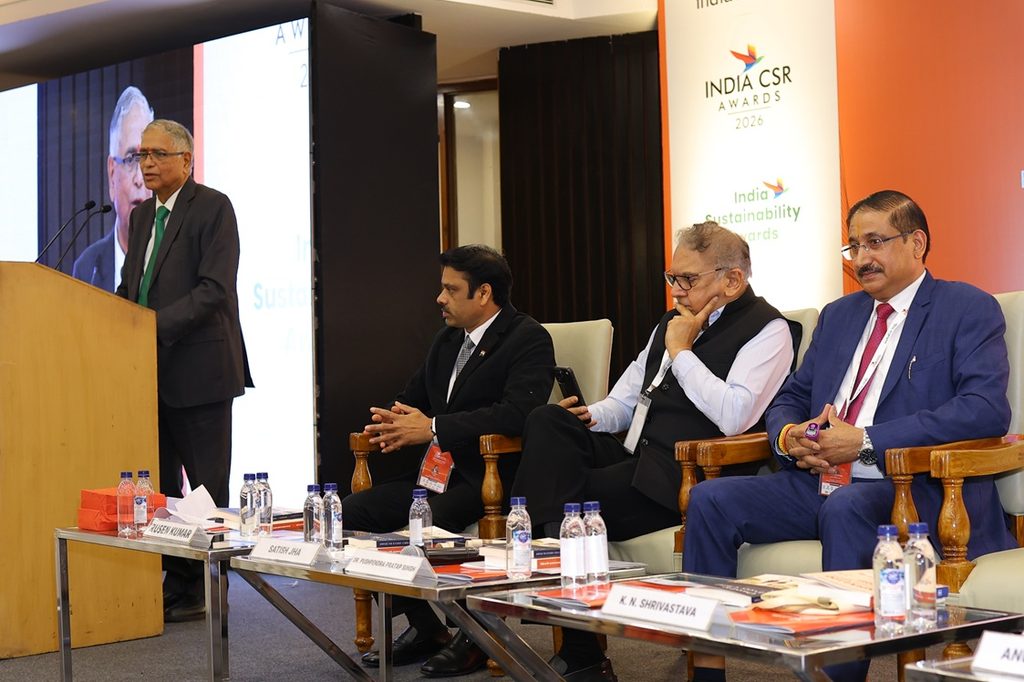
NEW DELHI (India CSR): Distinguished public administrator K. N. Shrivastava, Director, India International Centre (IIC), called for a broader and more purposeful role for corporate social responsibility (CSR) in research, innovation and inclusive development at the 19th India CSR Summit 2026. Addressing the inaugural leadership session, CSR Enabling Innovation, at the IIC on October 16, he said India’s future development journey would depend substantially on its ability to strengthen research and development (R&D), science, technology and long-term social investment. As the Chief Guest, Shrivastava situated CSR not merely as a compliance-led allocation, but as a potential source of support for areas that may otherwise remain underserved—including remote geographies, scientific research and cultural scholarship. “No country can develop if that country does not lay sufficient emphasis on R&D and STEM,” he said, urging corporate leaders, policymakers and civil-society stakeholders to think beyond immediate interventions and help build capabilities that create durable national outcomes.
Distinguished Public Service
Shrivastava brought to the session a long record of public administration and institutional leadership. An Indian Administrative Service officer of the 1978 batch from the Karnataka cadre, he served as District Magistrate in Tumkur, Bangalore, Belgaum and Uttar Kannada (Karwar). His career also includes leadership assignments in major public-sector institutions. He served as Chairman and Managing Director of Karnataka Power Transmission Corporation Limited and as common Chairman of Karnataka’s four power distribution companies from 2002 to 2004. He was Managing Director of Krishna Bhagya Jala Nigam Limited between 1999 and 2000, and the first Managing Director of Bangalore Metro Rail Corporation Limited from 2004 to 2006. He also led Hutti Gold Mines Company for five years and earlier served as Director of Bangalore Dairy. Appointed Director of the India International Centre on January 1, 2019, he has continued to engage with public policy, culture, development and institutional questions.
***
Inaugural Session Context
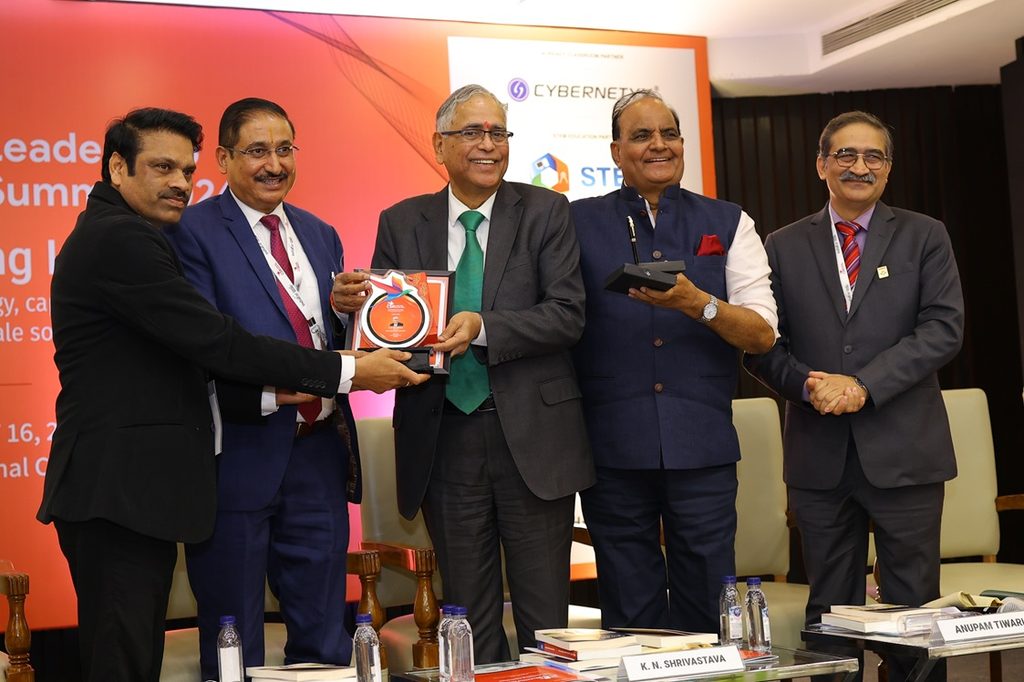
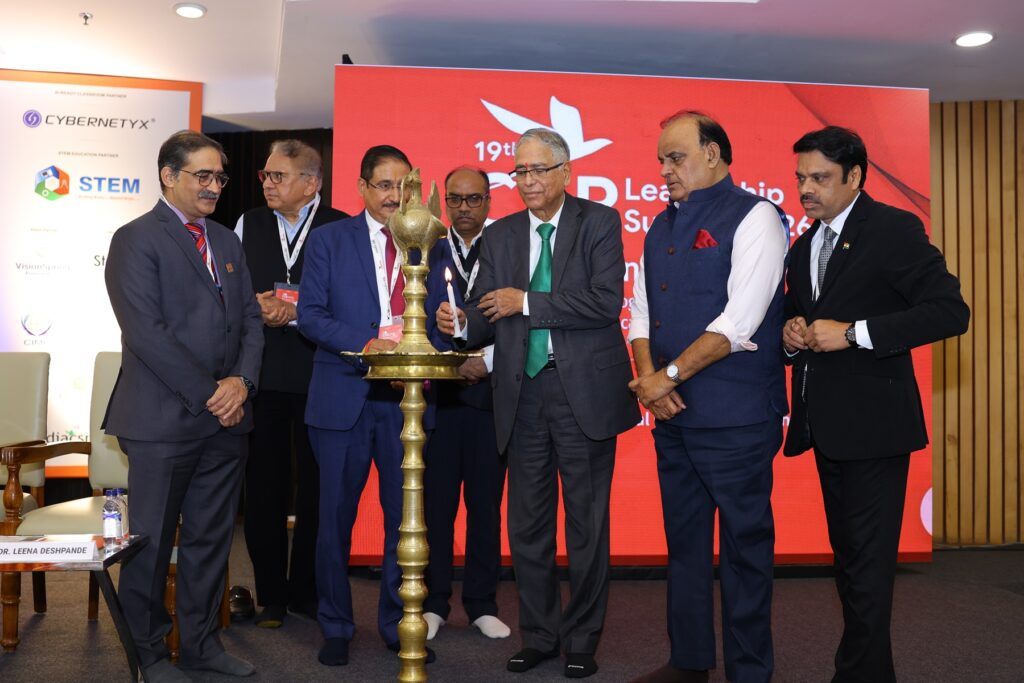
The inaugural session brought together leaders from corporate CSR, communications, sustainability and social-impact domains to discuss how ideas, technology, capital and partnerships can work together to scale development outcomes. Rusen Kumar, Founder and Editor of India CSR, delivered the welcome note. The session included a keynote address by Anupam Tiwari, Chief General Manager—CSR, Public Relations and Corporate Communications, Hindustan Petroleum Corporation Limited; and contributions from Vivek Prakash, Senior Vice President and CSR Head, Jubilant Ingrevia Limited; Dr. Leena Deshpande, Head—CSR, Bharat Forge Limited; and Dr. Pushpendra Pratap Singh, Managing Director and CEO, Logitrust Global Solutions Pvt. Ltd. The programme also witnessed the release of India@100 Resurgent Bharat: Road Map for 2047 (Sita Ram Gupta and Rusen Kumar) and Owed to Every Child by Satish Jha. Rural development veteran Sita Ram Gupta addressed the gathering, adding a development perspective to a session that linked corporate responsibility with India’s long-term social and economic aspirations.
IIC Director and inaugural session’s Chief Guest urges stronger support for research, remote-region development, sustainable livelihoods and cultural scholarship.
Remote Regions Priority
Beginning his remarks, Shrivastava appreciated the discussion around the history and purpose of CSR, particularly the concern raised about development gaps in regions with limited corporate presence. Referring to Dr. Leena Deshpande’s intervention, he said CSR planning should not lose sight of geographically remote areas, including the North-East, where the absence of large corporate operations can limit the flow of social investment. The point, he indicated, went to the heart of equitable development: the communities facing some of the most difficult access and infrastructure challenges should not be left outside the reach of organised philanthropy and CSR support. A place-based approach, he suggested, requires companies to look beyond their immediate operational footprint and identify needs through credible local partnerships. The Summit’s theme of innovation, in this context, acquired a wider meaning—innovation in reaching underserved communities, designing responsive programmes and ensuring that social investment is shaped by need rather than only by proximity.
***
Science Innovation Foundation
Shrivastava’s central message was the need to place R&D and STEM disciplines firmly within India’s development priorities. Recalling a visit by a Nobel laureate in chemistry to the IIC around three years earlier, he said the scientist had made a forceful case for investments in science, technology, engineering and mathematics. “If the focus of the country is not in STEM, definitely you are not going to really catch up in the race for development,” Shrivastava said. He argued that social progress, industrial capability and economic resilience increasingly depend on a country’s ability to generate knowledge, develop technologies and support scientific talent. For CSR leaders, this presents an opportunity to support science education, laboratories, scholarships, research fellowships, innovation hubs and locally relevant technologies. Such investments, he suggested, can be especially meaningful when they are linked to public problems—from climate resilience and healthcare to agriculture, energy access and inclusive education—rather than treated as isolated philanthropic activities.
***
Investment Gap Concern
The IIC Director expressed concern over what he described as insufficient attention to R&D investment in India. Recalling a recent discussion with a former senior official associated with the Ministry of Earth Sciences, he said that the country must reverse any decline in the priority accorded to research. The address did not cite a source for the spending estimates mentioned, but Shrivastava used the observation to underline a larger policy concern: development cannot be sustained if both government and industry fail to invest adequately in knowledge creation. “If you do not spend money on R&D, if you do not take your real competitors seriously, then where are we going to be in future?” he asked. He pointed to the role of private-sector participation in advancing the technological capabilities of leading economies and said Indian industry, too, must recognise research as an essential development investment. CSR, he indicated, can complement—not replace—public expenditure and core corporate research commitments.
***
Expanding CSR Ambition
Calling for a larger ambition around research-oriented social investment, Shrivastava said CSR should include stronger support for R&D. “CSR should also be focusing on R&D,” he said, while acknowledging that the statutory CSR allocation alone cannot meet the full scale of national research requirements. “This 2% kitty is not going to be enough to take care of the requirement of R&D,” he observed. He shared his personal view that the CSR provision should be enhanced, with additional resources specifically directed towards research and development. The proposal was presented as his perspective rather than as an announced policy position. His broader argument was that CSR can help cultivate an ecosystem of innovation when it supports universities, research institutions, science education, grassroots inventors and technologies designed for social benefit. The challenge, he suggested, is to create mechanisms that ensure such funding is rigorous, transparent and oriented towards measurable public value, while retaining the flexibility needed for research and experimentation.
***
Equitable Growth Questions
Shrivastava also raised questions about the relationship between economic growth and the persistence of unmet basic needs. He noted that while wealth may be created during periods of strong economic expansion, the benefits do not automatically reach every household or community. For him, the issue was not only the volume of resources available, but also the quality of their allocation and the long-term purpose they serve. He linked this concern to the need for productivity-enhancing investments, particularly in education, innovation, skills and livelihood systems. In his view, a stronger R&D culture can help expand the economic base and create solutions that reach beyond short-term relief. The address encouraged the CSR ecosystem to examine whether programmes are building durable capabilities for people and institutions. That means supporting outcomes such as learning, employability, enterprise, health security and access to opportunity—areas that can enable communities to participate meaningfully in growth rather than remain dependent on temporary support.
***
Sustainable Livelihoods Matter
In discussing public expenditure, Shrivastava questioned the long-term value of policies that offer only temporary relief without creating sustainable means of livelihood. He argued that development programmes must be judged by whether they enhance a family’s capacity to earn, learn and build resilience over time. His remarks were a call for greater public debate on how resources can be directed toward durable social and economic outcomes. The implication for CSR is significant: corporate programmes can go beyond one-time distribution to support skills, education, financial inclusion, producer collectives, entrepreneurship, healthcare access and local infrastructure. Such interventions require patience and partnership, but can help individuals and communities move towards self-reliance. The session’s focus on innovation reinforced this point. An innovative CSR programme is not necessarily one that uses new technology alone; it is one that solves a real problem, adapts to local conditions and leaves behind improved capacity after the project cycle has concluded.
***
Responsible Corporate Practice
Shrivastava also urged companies to remain faithful to the underlying spirit of CSR. He clarified that he was not making a general observation about all corporates, but cautioned against situations in which foundations or CSR mechanisms may be oriented primarily towards advancing business interests rather than addressing genuine social needs. “This is totally against the spirit of CSR,” he said. The observation highlighted an enduring governance question: CSR must be guided by public purpose, transparent processes and the needs of intended communities. He also recalled a view associated with former Prime Minister P. V. Narasimha Rao—that governments doing good work do not need excessive self-promotion. The larger message was one of institutional humility and accountability. Whether undertaken by government, business or civil society, development work should be assessed by its credibility and impact, not by visibility alone. For CSR practitioners, this means grounding programmes in consultation, independent evaluation and clear disclosure of outcomes.
***
Heritage Research Opportunity
The Chief Guest then turned to the importance of cultural research, drawing upon his experience as a former Director General of the Archaeological Survey of India. He said India has not done enough to research, document and present its civilisational achievements on rigorous scientific platforms before the world. “We are not really doing enough to even research about our own culture and bring forth our past accomplishments, or past achievements, on a scientific platform before the world,” he said. Shrivastava framed cultural scholarship not as an exercise in nostalgia, but as a field requiring serious research, evidence, technology and institutional support. Archaeology, epigraphy, conservation, digital documentation and interdisciplinary scholarship can deepen public understanding of India’s historical heritage while also creating educational value for future generations. He suggested that CSR support could help strengthen this area by funding research projects, archives, conservation initiatives, academic fellowships and public-access knowledge platforms.
***
Indus Script Appeal
Among the specific areas he identified was research on the Indus script. Shrivastava said the script’s continuing undeciphered status has left important historical questions open and called for a concerted research effort. He referred to the nineteenth-century decipherment of the Brahmi script as an example of how a scholarly breakthrough can open access to a vast body of historical knowledge. In his view, a similarly sustained and multidisciplinary effort on the Indus script could help advance understanding of an important part of the subcontinent’s past. He said he did not expect government action alone to meet every research need and looked towards CSR donors to support such work. “CSR is one source which I am looking towards with a lot of fervent hope,” he said. The appeal expanded the conventional CSR conversation beyond immediate welfare priorities, proposing that corporate philanthropy can also contribute to knowledge systems, heritage research and nationally relevant intellectual inquiry.
***
Books Frame Future
The session concluded with Shrivastava congratulating the authors associated with the two books released during the programme. He described India@100 Resurgent Bharat: Road Map for 2047 as a work that offers ideas and inputs on how the vision of a developed India by 2047 can be realised. “There are a lot of ideas in this book. I would recommend all of you to read it,” he said. He also spoke appreciatively of Satish Jha’s Owed to Every Child, saying that the title itself points to the responsibility society owes to younger generations. The two releases complemented the Summit’s wider message: India’s development agenda requires both a roadmap for national progress and a sustained commitment to children, youth and future citizens. In this sense, the inaugural session connected policy ambition with social responsibility, inviting corporate leaders and development practitioners to think about the legacy their investments will create.
***
Collective Action Ahead
The inaugural leadership session set a clear tone for the 19th India CSR Summit 2026: innovation must be linked to inclusion, and CSR must be connected to long-term national capability. Shrivastava’s address brought together several priorities—research, STEM education, remote-region development, sustainable livelihoods, responsible corporate practice and heritage scholarship—under a common call for more thoughtful social investment. His intervention also reinforced that CSR has value when it complements public systems, respects community needs and supports solutions that can endure. The presence of corporate leaders, social-sector professionals and policy-minded participants at the IIC reflected the growing importance of partnerships in addressing complex development challenges. As India looks towards 2047, the address suggested, the question is not only how much is spent on CSR, but where it is directed, how it is designed and whether it enables people and institutions to create a stronger, more equitable and more innovative future.
Also Read
HOPE Foundation Wins India CSR Award for Integrated Cradle-to-Career Model – India CSR



