


Conference deliberations focus on strengthening Board oversight, sectoral alignment and outcome-oriented CSR for Viksit Bharat
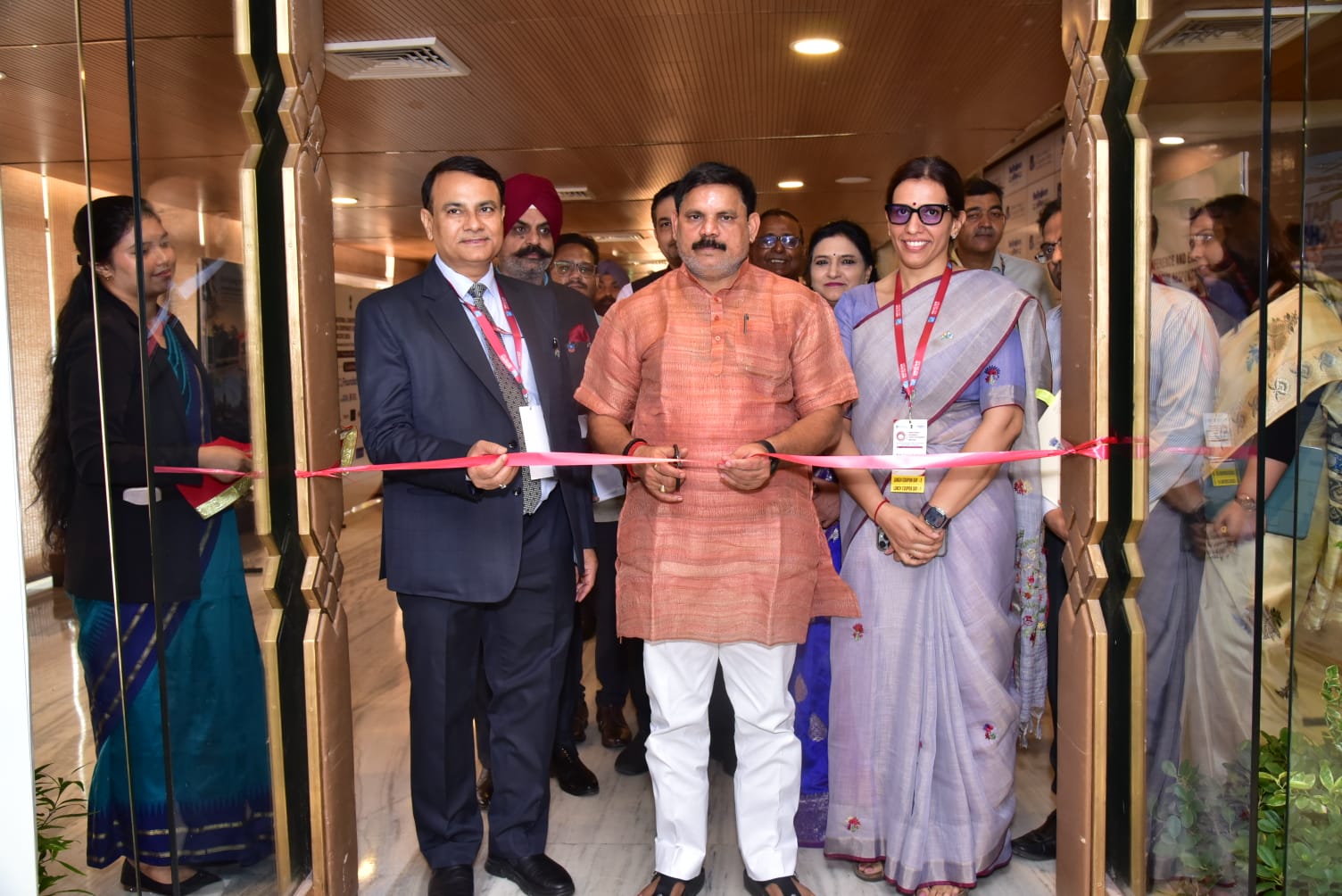
NEW DELHI (India CSR®): Satish Chandra Dubey, Minister of State, Ministry of Coal and Mines, Government of India, inaugurated the Third National Conference and Exhibition on Corporate Social Responsibility (NCCSR 2026), organised by the School of Business Environment, Indian Institute of Corporate Affairs (IICA), Ministry of Corporate Affairs, Government of India, at The Ashok, New Delhi. The two-day Conference, scheduled for 6–7 October 2026, was organised around the theme “Re-envisioning the Spirit of CSR for Viksit Bharat: From Compliance to Commitment.”
The Conference brought together senior representatives of the Government of India, public sector enterprises, private sector companies, international organisations, academia and civil society to deliberate on the evolving role of Corporate Social Responsibility in supporting national development priorities. The deliberations emphasised the need for CSR interventions to be guided by institutional responsibility, local development needs, measurable outcomes and effective convergence among stakeholders.
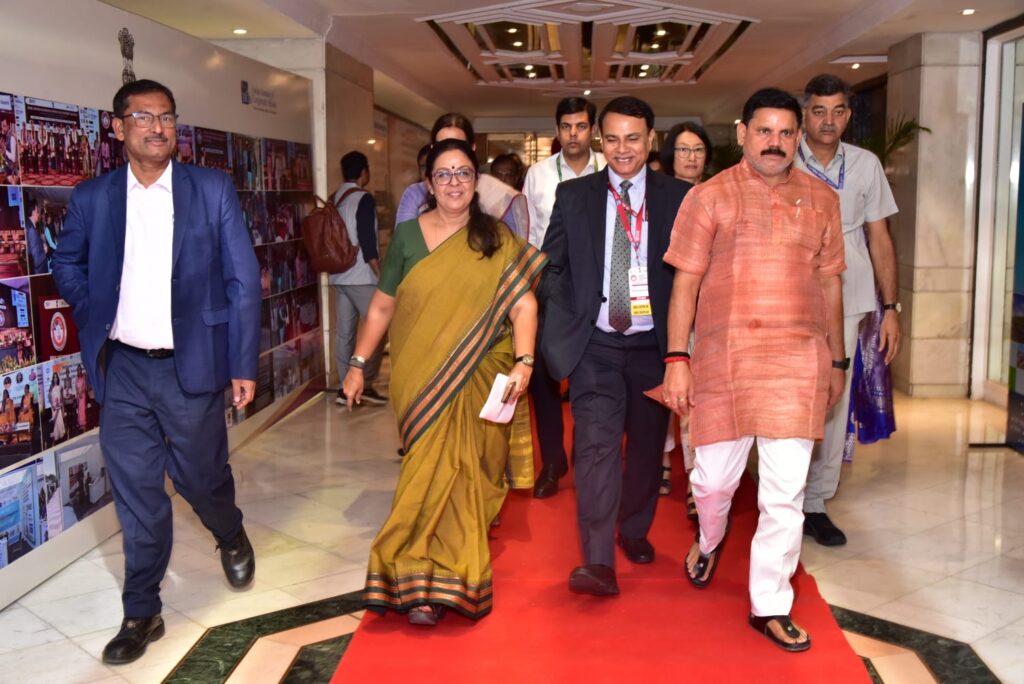
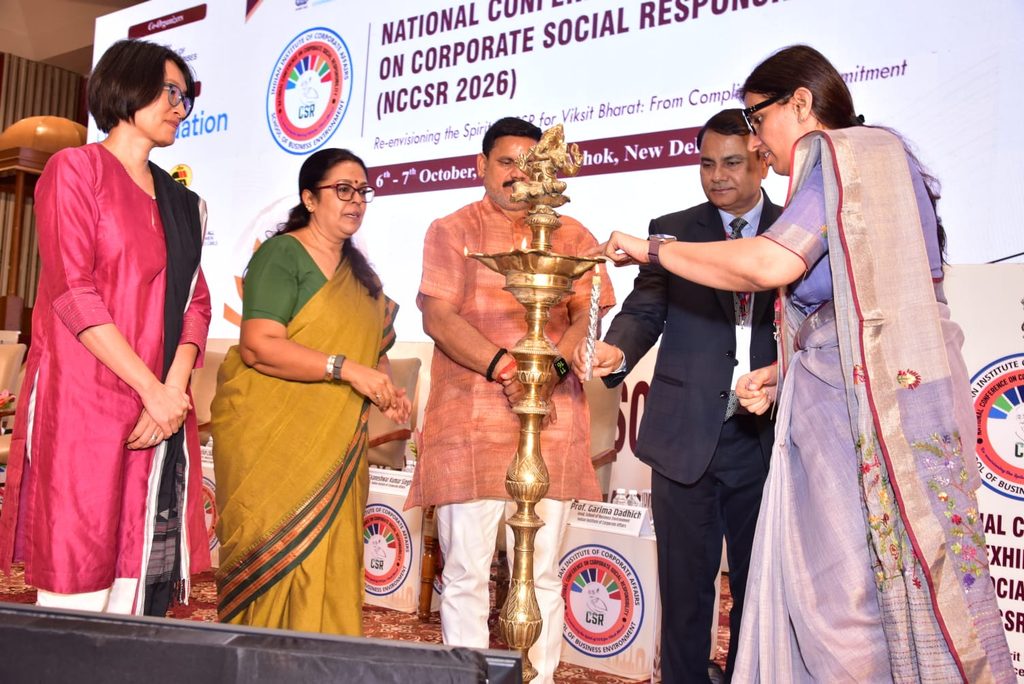
The inaugural proceedings commenced with the ribbon-cutting ceremony and inauguration of the National CSR Exhibition, followed by an exhibition tour. The exhibition featured 35 exhibitors showcasing CSR initiatives, implementation experiences and good practices from across sectors. The practices showcased at the Exhibition will be collated by IICA in a Compendium of CSR Best Practices, with a view to documenting replicable approaches and facilitating wider learning across the CSR ecosystem.
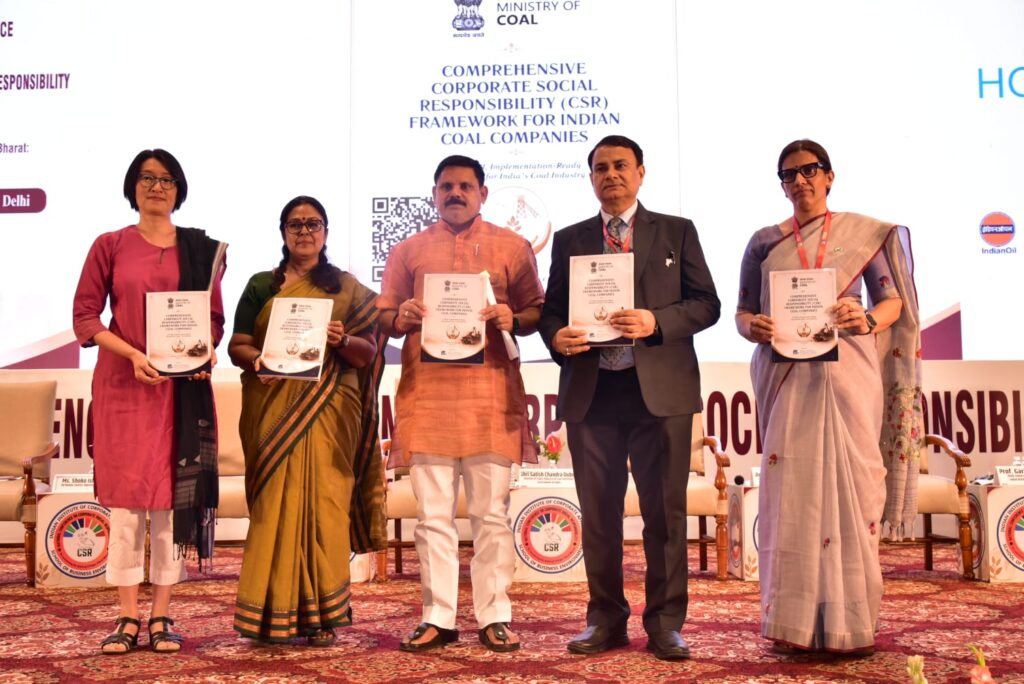
The inaugural session was graced by Dr. Pallavi Jain Govil, Secretary, Ministry of Corporate Affairs, Government of India; Ms. Shoko Ishikawa, UN Women Country Representative in India; Gyaneshwar Kumar Singh, Director General & CEO, IICA; and Prof. Garima Dadhich, Head, School of Business Environment, IICA.
In his Keynote Address, Satish Chandra Dubey, Minister of State for Coal and Mines, emphasised the close relationship between national economic growth, regional development and the well-being of communities in resource-bearing areas. He observed that economic progress acquired its fullest meaning when its benefits were reflected in “stronger communities, wider opportunity and more resilient regions”. He underlined that, for sectors closely connected with natural resources and local communities, growth and social development could not be viewed as separate objectives. On the occasion, he formally released the Comprehensive CSR Framework for Indian Coal Companies, developed to provide sector-specific direction for more structured, need-based and outcome-oriented CSR interventions in the coal sector.
The inaugural session also witnessed the release of the India CSR Factbook 2024–25, providing a consolidated reference on the evolving CSR landscape in India.
Delivering the Inaugural Address, Dr. Pallavi Jain Govil, Secretary, Ministry of Corporate Affairs, placed CSR within India’s larger corporate-governance and national-development framework. She stated that the theme of NCCSR 2026 called upon stakeholders to “look beyond the annual obligation” and consider the larger contribution that responsible enterprise could make to India’s development journey. Referring to India’s distinctive statutory CSR architecture, she emphasised that the framework combined statutory obligation with company-level responsibility, Board oversight, public disclosure and impact assessment, and that CSR represented an important expression of the collective effort required for Viksit Bharat. She also released the IICA’s first India CSR Factbook 2024–25.
In his Welcome Address, Gyaneshwar Kumar Singh, Director General & CEO, IICA, highlighted the importance of keeping CSR discussions anchored in implementation and visible development outcomes. Noting that CSR brought together Government, industry, public sector enterprises, implementing organisations, development partners and academia, he observed that “decisions may be taken in Board rooms, but their value is ultimately seen in schools, health centres, livelihood programmes, villages, towns and districts where they affect the lives of people”. He said that the National CSR Exhibition had been designed not merely to display projects but to make outcomes visible and to serve as a space for learning, replication and partnership.
The inaugural session was followed by a fireside chat on “Social Stock Exchange: Purpose, Capital & Impact”, featuring Shailesh K. Pathak, Senior Advisor – Policy, National Stock Exchange, and Prof. Garima Dadhich. The discussion examined the role of the Social Stock Exchange in connecting social purpose with capital and the importance of credible impact measurement, transparency and institutional trust in strengthening the social sector financing ecosystem.
In the post-lunch session,Ansuman Pattnaik, Additional Secretary, Ministry of Corporate Affairs, Government of India, delivered the keynote address. His address placed CSR in the wider context of corporate governance and emphasised the need for companies to approach CSR as an integral part of responsible corporate conduct and institutional decision-making. He also invited companies to register on the CSR Exchange Portal, highlighting its relevance as a mechanism for connecting CSR stakeholders and facilitating purposeful engagement.
The keynote address was followed by High-Level Panel 1 on “Board Governance and Strategic Commitment in CSR”. The panel discussed the role of Boards and senior management in ensuring strategic oversight of CSR, the importance of linking expenditure with clearly identified needs and outcomes, and the need for effective monitoring and accountability mechanisms.
The panel comprised Ashok Kumar Gupta (Retd.), CEO, Dalmia Bharat Foundation and former Chairperson, Competition Commission of India and National Financial Reporting Authority; Prof. Maneesha V. Ramesh, Pro Vice Chancellor, Amrita Vishwa Vidyapeetham; Bhaskar Chowdary Nettem, Director (Production), ONGC; Ayush Gupta, Director (Human Resources), GAIL (India) Limited; Bibhuti Ranjan Pradhan, Executive Director (Coordination and CSR), Indian Oil Corporation Limited; Dr. Purvi Mehta, Independent Director, Mahindra Agri Solutions Limited; and Ms. Ruchi Sadhana, Vice President, HCLTech. The session was moderated by Prof. Garima Dadhich.
The discussions underlined that stronger Board engagement could improve the quality of CSR decision-making by ensuring closer attention to project relevance, implementation capacity, geographic and thematic need, monitoring, evaluation and sustainability. The panel also noted the value of partnerships and professional institutional mechanisms in translating CSR commitments into durable development outcomes.
During the session, the latest edition of the SBE Magalogue, the quarterly publication of the School of Business Environment, IICA, was released. The publication brings together key developments in Responsible Business Conduct, recent and forthcoming activities of SBE-IICA, and analytical content on contemporary developments in the corporate responsibility ecosystem.
High-Level Panel 2 on “Sector-Based Approaches to CSR Aligned with SDG Priorities” examined the case for closer alignment between CSR interventions, sectoral development priorities and the Sustainable Development Goals. The session was chaired by Ms. Anita Shah Akella, Joint Secretary, Ministry of Corporate Affairs, Government of India. In her keynote address, she underlined the need for sector-specific approaches that recognise differing development challenges, institutional capacities and local priorities.
The panel included Lucas L. Kamsuan, Joint Secretary, Department of Public Enterprises, Government of India; Reetu Jain, Economic Adviser, Ministry of Power, Government of India; Dr. Chetna Shukla, Deputy Director General, Ministry of Coal, Government of India; Ruchika Gupta, Deputy Director General, Social Statistics Division, Ministry of Statistics and Programme Implementation, Government of India; Rajeev Kumar, Deputy Director General (Data & Management), Ministry of Petroleum and Natural Gas, Government of India; and Prabhakar L., EVP & Head – Social Investments, ITC. Bharat Wakhlu, Founder and President, The Wakhlu Advisory, moderated the session.
The panel deliberated on the need to move beyond uniform approaches to CSR and to recognise the distinct development contexts, operational footprints and stakeholder needs associated with different sectors by highlighting the significance of sector-specific CSR frameworks developed by IICA for the Ministry of Coal and Coal India Limited, in addressing sectoral development priorities and community needs. Additionally, it emphasised the need to strengthen CSR reporting through alignment with the Sustainable Development Goals (SDGs), enabling systematic assessment of corporate contributions to national and global development priorities.
Day 1 concluded with a broad consensus on the need to strengthen the institutional quality of CSR—from Board-level oversight and evidence-based project selection to sectoral alignment, convergence, monitoring and assessment of outcomes. The proceedings reflected the Conference theme by placing emphasis on a transition from compliance alone towards sustained corporate commitment to inclusive and measurable development.
NCCSR 2026 is being organised by the School of Business Environment, IICA, with participation from Government, public sector enterprises, corporate organisations, international institutions, academia and civil society. The Conference will continue on October 7, 2026, with sessions on technology and Artificial Intelligence in CSR, the CSR Exchange, women’s economic empowerment and the care economy, decentralised CSR for regional growth, skills and employment, followed by the valedictory session.
(India CSR®)