

India’s CSR programme has crossed ₹40,000 crore, says CII’s B Thiagarajan, who calls for faster execution, impact measurement and balanced funding.
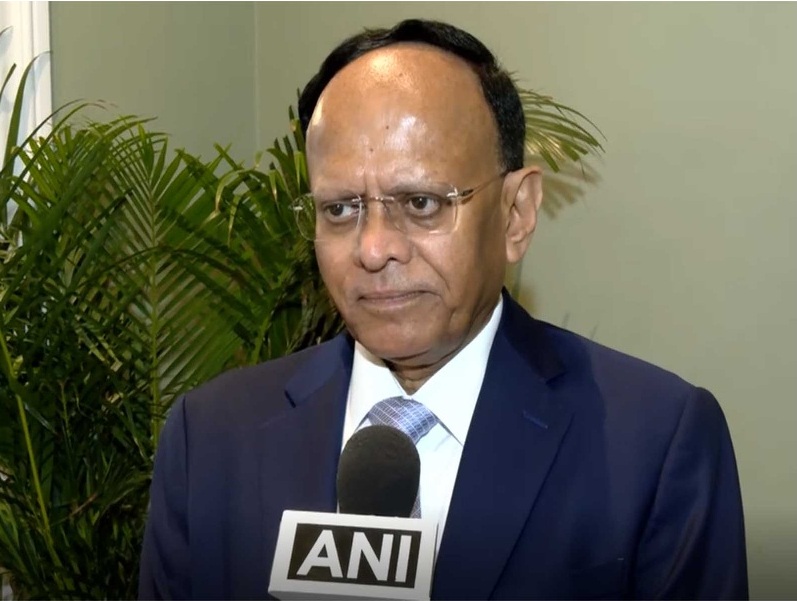
MUMBAI (India CSR): India’s corporate social responsibility (CSR) programme has crossed Rs. 40,000 crore in scale, but the next challenge is ensuring that these funds are deployed quickly, effectively and with measurable social outcomes, according to B Thiagarajan, Chairman of the CII National CSR Committee and Managing Director of Blue Star Limited. Speaking on the sidelines of the CII National CSR Summit 2026 in Mumbai, Thiagarajan said India’s CSR framework had reached a stage of regulatory maturity. The focus, he said, must now shift from compliance to execution at scale, stronger assessment and a more balanced spread of CSR resources across sectors and regions.
Regulatory Framework Matures
Thiagarajan said India should take pride in its CSR architecture, which has created one of the world’s largest structured corporate social investment programmes with active participation from the private sector. “India should be proud of the regulation that we have. I don’t think anywhere in the world such a large program has been initiated by the government with such active participation by the private sector,” he said. Noting that the programme had “crossed rupees 40,000 crores,” he indicated that the growing financial scale requires a corresponding rise in institutional capacity, programme quality and accountability. The central task is now to convert mandated CSR spending into durable development outcomes.
Scaling Delivery Systems
According to Thiagarajan, companies and implementing partners must build the ability to deliver programmes at speed without compromising quality or community relevance. “The industry now has to think about how to scale… in order to execute these programs with speed on such a large scale – that is what CII is focusing on: scaling and speed, and how it can be achieved,” he said. This places attention on stronger partnerships among corporates, non-profits, governments and communities. It also requires reliable on-ground organisations, better project planning and longer-term approaches. As CSR budgets grow, the ability to execute consistently across different geographies will increasingly determine whether corporate funds make a meaningful difference.
Measuring Real Impact
Thiagarajan said that financial allocation alone cannot be treated as a measure of CSR success. The real test lies in whether projects are implemented effectively and generate demonstrable change for people and communities. “The issue is, as the funds grow, how you will get it executed. Projects have to be executed, impact should be measured, impact should happen,” he said. His remarks underline the importance of credible baseline studies, monitoring systems, independent evaluation and transparent reporting. Companies need to assess not only the number of activities completed or beneficiaries reached, but also whether interventions improve livelihoods, learning outcomes, health access, environmental resilience or social inclusion over time.
Balancing Sectoral Support
The CII National CSR Committee Chairman also stressed the need for a wider distribution of CSR funding. He said healthcare and education often receive substantial support, while other important sectors and regions may receive comparatively less attention. “Therefore, it is in the hands of the stakeholders to step up and ensure balanced implementation,” Thiagarajan said. The observation is significant for underserved districts, marginalised communities and emerging development priorities that may not attract enough corporate attention. A balanced CSR approach would assess local needs, identify funding gaps and support partnerships that reach beyond familiar sectors. It can help ensure that geography, visibility or ease of implementation do not determine who benefits from CSR spending.
Skilling Builds Futures
Education, skilling and employability are among the largest recipients of CSR funding, with more than Rs. 6,000 crore currently flowing into these areas, according to Thiagarajan. “As far as CSR is concerned, it is about social development and whether you are creating productive individuals in society through education, skilling, and employability. Adequate work is currently happening in this space,” he said. He added that these investments can help individuals become employable or pursue entrepreneurship, contributing to broader economic activity. The emphasis is particularly relevant as India works to expand access to quality education, market-relevant skills and livelihood opportunities for young people, women and communities that remain outside formal economic systems.
Transparency Strengthens Trust
On accountability, Thiagarajan said companies are already reporting their CSR and sustainability work, but the ecosystem needs further strengthening through NGO capacity-building, accreditation and standardised impact assessment. “Our commitment is transparency in whatever we do,” he said. He pointed to the need for an impact-assessment framework that can rate and verify outcomes consistently. Such systems can help donors, implementers, communities and regulators understand what works, identify gaps and improve programme design. Greater transparency also builds public trust in CSR by moving the discussion beyond expenditure figures towards evidence of social value. It can support more informed funding decisions and encourage the replication of interventions that have proved effective.
Summit Charts Direction
The CII National CSR Summit 2026, themed “CSR NEXT: Policy, Potential and Practices,” was held at The Taj Mahal Palace in Mumbai on September 2. The programme focused on policy, emerging CSR opportunities and practices needed to create scalable development outcomes. Sminu Jindal, Managing Director of Jindal SAW Limited and Chairperson of CII’s National Committee on Empowerment of Persons with Disabilities, chaired the session, “Potential Next – Where CSR Money Should Go Next.” The official agenda described the session as an examination of emerging high-impact investment areas and a shift away from a charity lens towards partnership-led engagement.