

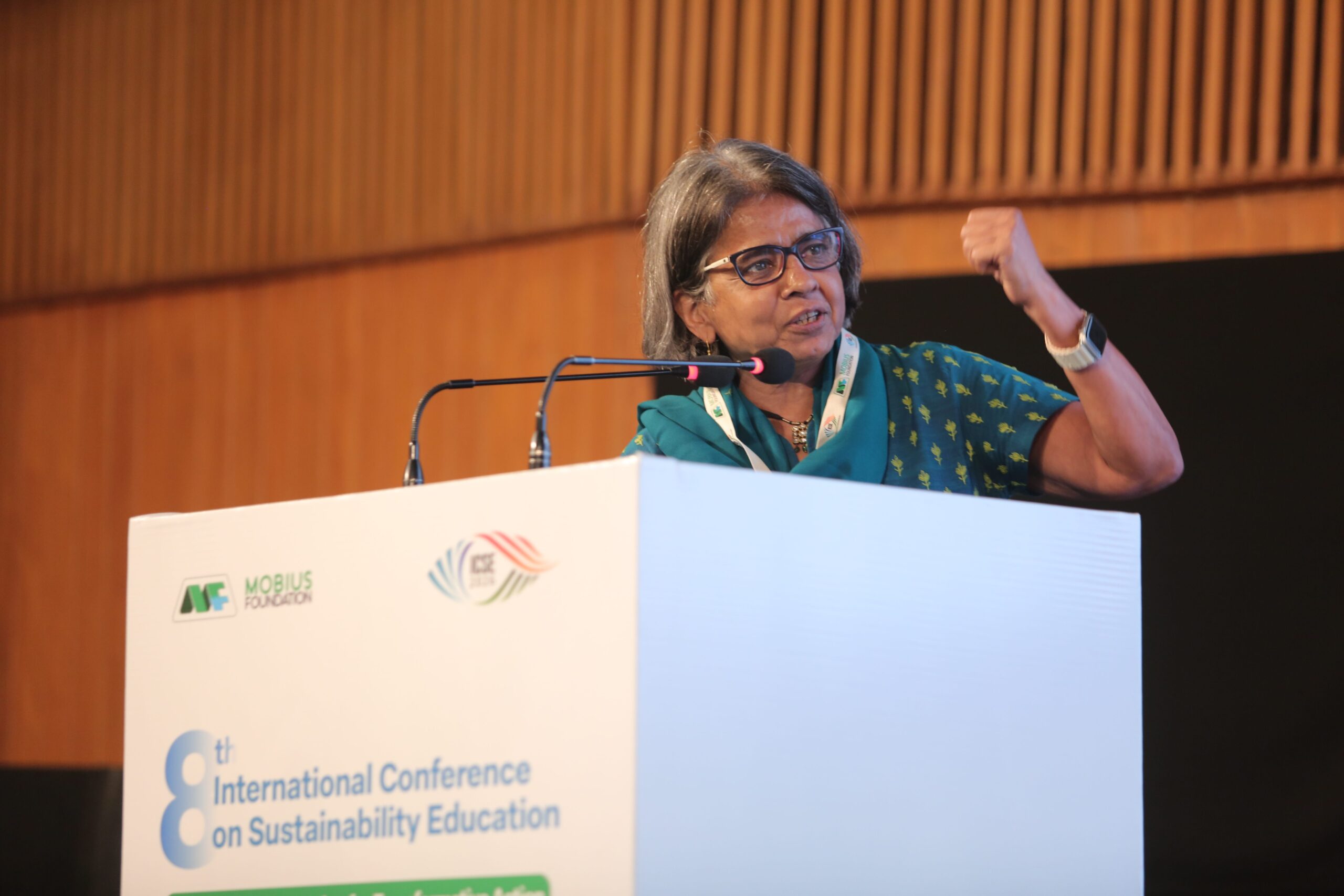



“The one thing that we do not need more of is more reports and more incremental steps to fix what is today an existential crisis.”
NEW DELHI (India CSR): Sunita Narain, Director General of the Centre for Science and Environment (CSE) and Padma Shri awardee, delivered a sharp warning on India’s environmental crisis at the inaugural session of the 8th International Conference on Sustainability Education (ICSE) 2026 in New Delhi. “The Yamuna is dead; it just hasn’t been officially cremated,” Narain said, pointing to the severe pollution levels in the river as it passes through Delhi.
Referring to CSE’s analysis of India Meteorological Department records, she said India is witnessing an extreme weather event almost every day. Linking the recent Nepal disaster to wider ecological pressures, Narain criticised the long-standing development approach that assumes rivers, mountains and natural systems can be re-engineered without consequences.
She cited dissolved oxygen readings in the Yamuna, saying the level declines from around six at the river’s entry point into Delhi to zero by the time it reaches ISBT. According to her, this is scientific evidence of the river’s ecological collapse. Narain also argued that Delhi’s air pollution cannot be addressed only by adding electric vehicles. The more fundamental solution, she said, is to rebuild efficient and accessible public transport so that people do not have to depend on private vehicles. “The one thing that we do not need more of is more reports and more incremental steps to fix what is today an existential crisis,” she said. The remarks came during the inaugural session of ICSE 2026, organised by the Mobius Foundation under the theme, “Sustainability Education for Transformative Action.”
India crosses 290 GW renewable capacity, but “the gap between commitment and implementation remains too large — Mobius Foundation chairman
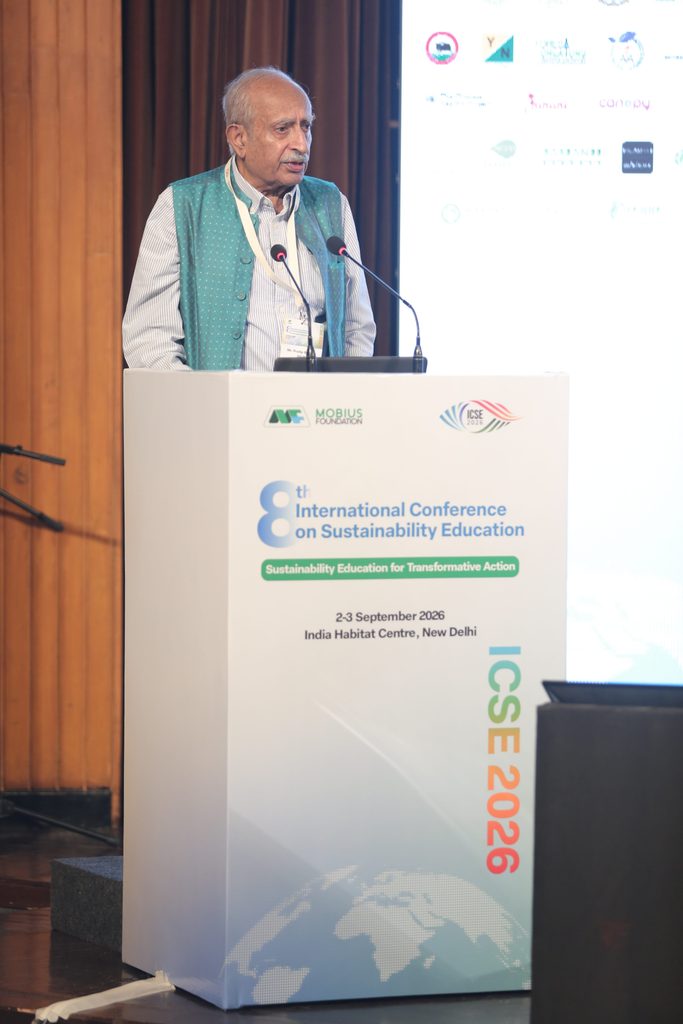
Delivering the chairman’s address, Pradeep Burman, Chairman, Mobius Foundation, said the gap between climate commitments and implementation remains too wide even as India posts real gains. “In 2025, India achieved 50 percent of its installed electricity capacity from non-fossil sources, five years ahead of the 2030 target. Our renewable energy capacity has now crossed 290 gigawatts. This is significant progress, but the journey is far from over,” he said, adding that ICSE has grown since its launch in 2019 from a youth engagement platform into a driver of climate literacy and green jobs through initiatives such as the Pani Pahar curriculum and the Mobius Young Climate Leaders Program across India’s northeast. “We want ideas that become partnerships, partnerships that become commitments and commitments that become action,” he said.
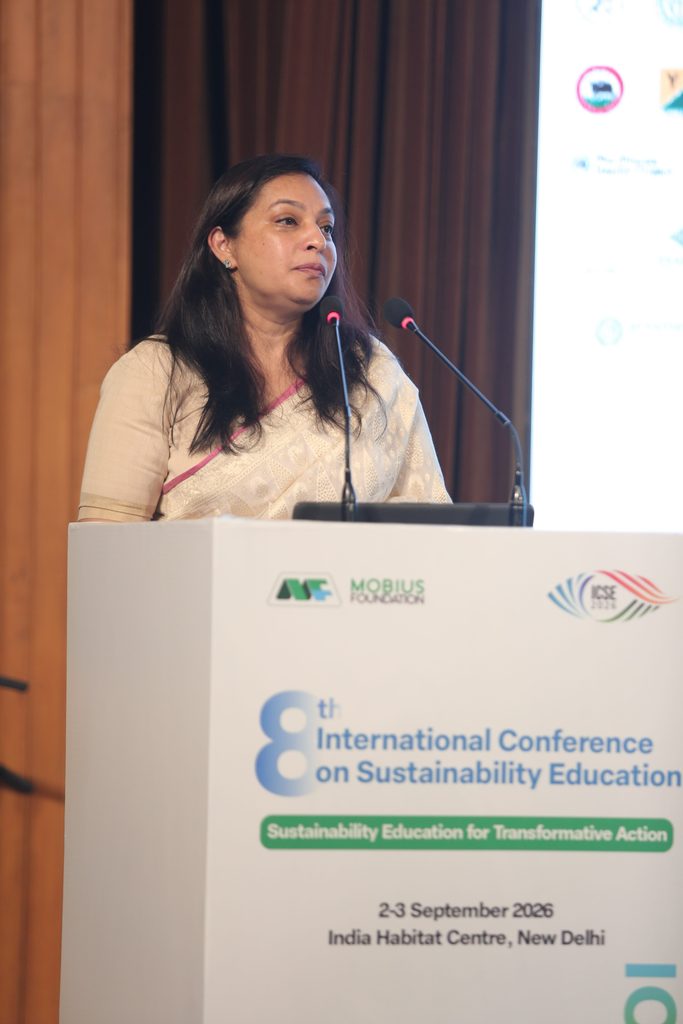
Priyanka Sharma, President and CEO, Mobius Foundation, who anchored the session, said sustainability has outgrown its old framing as a purely environmental subject. “Sustainability is no longer simply an environmental conversation. It is a conversation about how we live, how we learn, how we work, how we create prosperity and ultimately how we create well being and wellness for people and the planet,” she said, noting that this year’s agenda moves from classroom education into the green economy, covering critical minerals, e-waste and battery recycling, sustainable agriculture and green jobs.
Global leaders call for sustainability education to move from awareness to action.
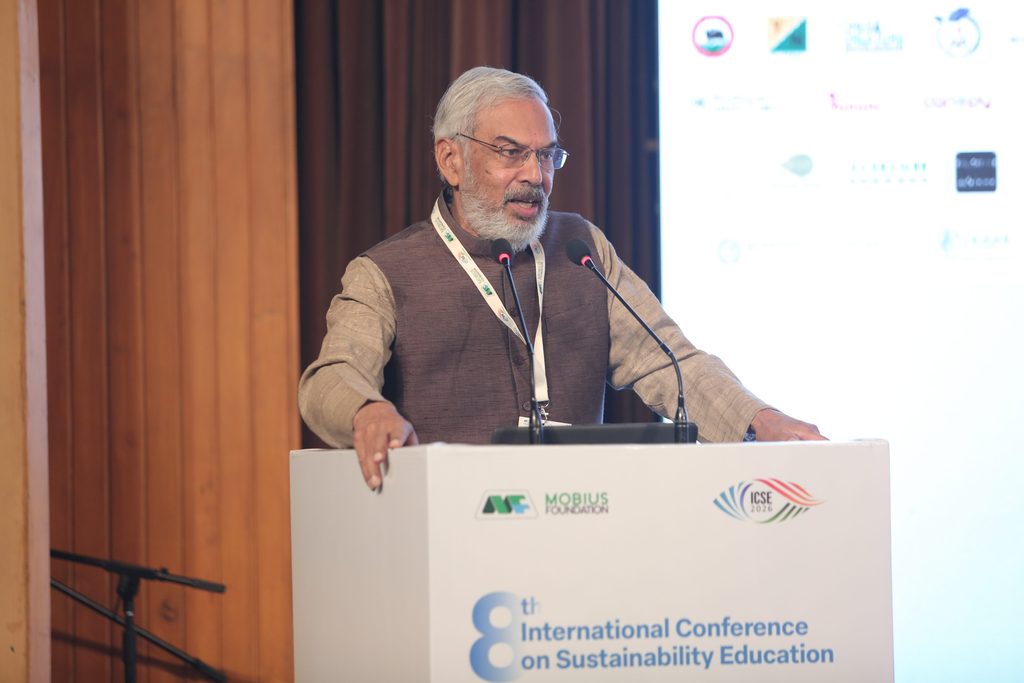
Kartikeya Sarabhai, Founder Director, Center for Environment Education (CEE) and Padma Shri Awardee, placed the conference in a longer arc, noting it falls close to the 50th anniversary of the 1977 Tbilisi conference that first defined environmental education. He recalled that India pushed to link poverty and environment at Stockholm in 1972 and introduced the word “lifestyle” into the 2015 Paris Agreement after the United States had resisted the term at Rio in 1992. He pointed to eco clubs being rolled out under Mission LiFE, a target for every Indian school to have one by 2030, and a new NCF 2023 textbook making environmental education compulsory at the 10th standard for the first time. He also proposed that every school and institution adopt one square kilometre of land to implement roughly 30 of the SDGs directly, while noting that India’s entire environmental education spend still trails the advertising budget of a single soap brand.
UNICEF warns 55 percent of India’s children face overlapping climate risks.
Dr. Vibha Dhawan, Director General, The Energy and Resources Institute (TERI), spoke directly to the students in the room, asking forgiveness on behalf of her generation for decades of resource use whose costs are now landing on the young. She traced how ordinary habits have shifted, from refilling a surahi with tap water on train journeys to reflexively buying bottled water today, and said Delhi doctors no longer see “pink lungs” in residents, comparing daily exposure to smoking 30 cigarettes. She pointed to school transport as a concrete policy gap, saying steep school bus fees push families toward sending children by private car, adding to the very traffic and emissions the buses are meant to reduce.
Prof. Bhaskar Vira, Pro-Vice-Chancellor for Education and Environmental Sustainability and Professor of Political Economy, University of Cambridge, spoke about Embers of Hope, a 10 part documentary series on India’s environmental future that he worked on with the Mobius Foundation, filmmaker Robin Roy and narrator Zeenat Aman, broadcast through the Warner Bros Discovery Network. He said the most powerful educational moments in the project came not from explaining science but from turning it into human stories, a retreating glacier becoming a story about people who depend on its water, air pollution becoming a story about children struggling to breathe. Citing a recent paper in the journal Environmental Politics, he warned against “false hope” built on the assumption that technology alone will fix the crisis, while cautioning equally against despair. “Sustainability education should therefore equip learners not only with environmental knowledge, but also with the capacity to engage as citizens in shaping those transformations,” he said.
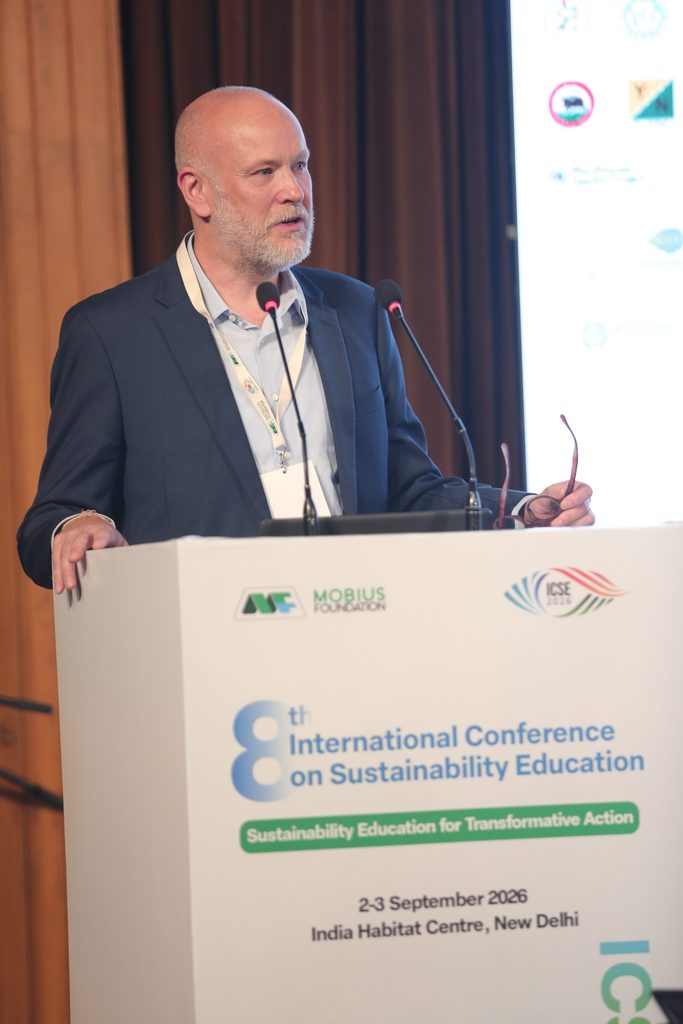
Bo Beiskjaer, Chief of Resource Mobilization and Partnerships, UNICEF, framed his remarks around what he called the climate-changed child. He said India is home to more than 470 million children, the largest child population of any country, and that UNICEF estimates 55 percent of them face multiple overlapping climate risks including heat waves, water scarcity and floods. Using the example of a hypothetical girl named Preeti born this year, he traced how climate stress could shape her schooling by 2030 and her adulthood by 2047, when India marks a hundred years of independence, and called for investment in climate-resilient water systems, noting 60 million Indian households still lack regular access to safe drinking water.
Ravi Singh, Secretary General and CEO, World Wide Fund for Nature-India (WWF India), traced WWF India’s environmental education work back to 1970, when it began with Delhi’s municipal schools before expanding into Maharashtra, Gujarat and the southern and northeastern states. He said he regularly meets alumni of those early programmes now working in government, corporate leadership and enforcement agencies, and that sustainability has since moved from the margins into the core strategy of industry bodies such as CII. “The conversation has changed in the last 15 years, it has changed in the last 10 years and then again it has changed in the last five years,” he said.
The conference continues over two days with sessions spanning climate action, green skills, technology and innovation, biodiversity and sustainable livelihoods, alongside dedicated youth programming that brings students and young climate leaders from across the country into the conversation.


