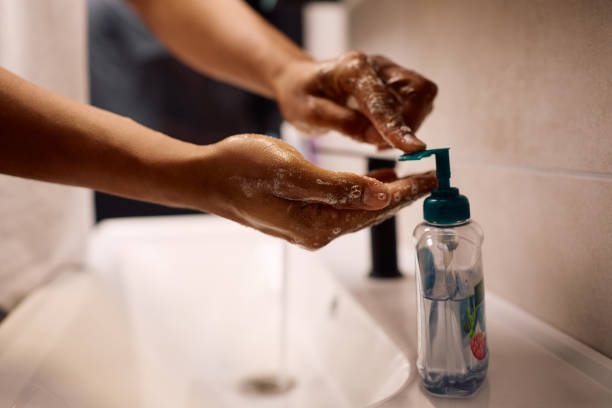



In high-traffic washrooms, most hygiene issues don’t come from cleaning lapses. They usually come from small things that don’t work the way they should.
A soap dispenser that doesn’t respond properly, dispenses unevenly, or runs empty too often can quietly break the entire handwashing process.

That’s why choosing the right soap dispenser is less about the product itself and more about how it performs in real, everyday usage.
Why This Decision Matters More Than It Seems
Hand hygiene is often talked about, but the execution depends on fixtures.
According to the World Health Organization, proper hand hygiene remains one of the most effective ways to reduce infection spread. But in shared environments, even small friction points reduce compliance.
If a soap dispenser feels unreliable, people tend to skip or rush the process. That’s where the problem actually begins.
Touchless Systems Are Now the Default
A few years ago, touchless systems felt like an upgrade. Now they’re closer to a baseline expectation.
An automatic soap dispenser removes the need to press or pump. It works with sensors, so the interaction becomes quicker and cleaner.
A sensor soap dispenser also reduces repeated contact on a single surface. In high-footfall spaces, that alone changes how hygienic the space feels.
Over time, touchless soap dispenser systems tend to stay cleaner externally as well, simply because they’re handled less.
Durability Is What Shows Up After Installation
Most units look fine on day one. The real test starts after a few weeks.
In commercial environments, a commercial soap dispenser is used continuously. That’s where build quality starts to matter.
Lower-grade units may develop loose parts, leakage, or inconsistent dispensing. Not immediately, but gradually.
A reliable soap dispenser should handle repeated usage without needing constant adjustments. This is where material and internal mechanism both matter.
Consistency Is Often Overlooked, But It Shouldn’t Be
Uneven dispensing is more common than people expect.
Sometimes too much soap comes out. Sometimes too little. Over time, this creates both wastage and user frustration.
A well-designed automatic soap dispenser maintains a consistent output. Not perfect every time, but predictable enough that users don’t notice fluctuations.
That predictability is what keeps usage smooth in busy environments.
Capacity Impacts Operations More Than Performance
This is less about the user and more about the facility team.
A low-capacity unit in a high-traffic washroom needs frequent refilling. That increases workload and also increases the chances of it running empty at peak times.
A wall mounted soap dispenser with adequate capacity reduces that pressure. It doesn’t remove maintenance, but it makes it more manageable.
Manual vs Sensor Dispensers (Where the Real Difference Lies)
This is where the decision becomes clearer.
| Factor | Manual Dispenser | Sensor-Based Dispenser |
| Contact | High | Minimal |
| Hygiene perception | Depends on cleaning | More consistent |
| Dispensing control | User-dependent | Fixed output |
| Maintenance load | Frequent | More predictable |
In low-footfall spaces, manual units might still work. But in high-traffic environments, consistency becomes more valuable than control.
Placement Still Gets Ignored Too Often
Even a good soap dispenser can feel inconvenient if it’s placed poorly.
If units are too close together, users crowd in one spot. If they’re too high or too low, it slows down usage slightly.
A wall mounted soap dispenser should feel natural to reach. That usually solves most usability issues without overthinking it.
Maintenance Should Stay Simple
No system is completely maintenance-free. But complexity makes things worse.
Some units are difficult to open or refill, which slows down routine checks. Over time, that becomes a recurring issue.
A soap dispenser that is easy to clean and refill tends to perform better over longer periods. Dust and residue build up anyway. The difference is how easy it is to manage.
Compatibility With Soap Types Matters More Than Expected
This is something facilities often realise later.
Different liquid soaps have different viscosities. Some dispensers struggle with thicker formulations.
A flexible commercial soap dispenser that works with multiple soap types gives more operational control. It avoids unnecessary restrictions during procurement.
Hygiene Impact Is Built Through Small Details
The goal is simple. Make handwashing easy and consistent.
A touchless soap dispenser reduces hesitation and improves user confidence. That alone increases the likelihood of proper usage.
Facilities moving towards more reliable systems often focus on consistency rather than adding more processes. In many cases, upgrading the soap dispenser setup itself solves a large part of the problem.
Where These Choices Become Noticeable
You’ll see the difference more clearly in high-usage environments.
Airports, where speed and flow matter.
Malls, especially during peak hours.
Hospitals, where reducing contact points is critical.
Corporate offices, where reliability is expected but rarely noticed until something fails.
Educational institutions, where maintenance needs to stay simple and scalable.
Final Thoughts
A soap dispenser doesn’t usually stand out when everything is working fine. But the moment it doesn’t, people notice immediately.
In high-traffic washrooms, that impact becomes even more visible.
The focus should stay on what actually matters during daily use. Durability, consistent output, ease of maintenance, and reduced contact.
Whether it’s a sensor soap dispenser, a touchless soap dispenser, or a standard commercial soap dispenser, the right choice is the one that works quietly in the background.
And in most cases, that’s exactly what a well-designed system should do.