


Introduction
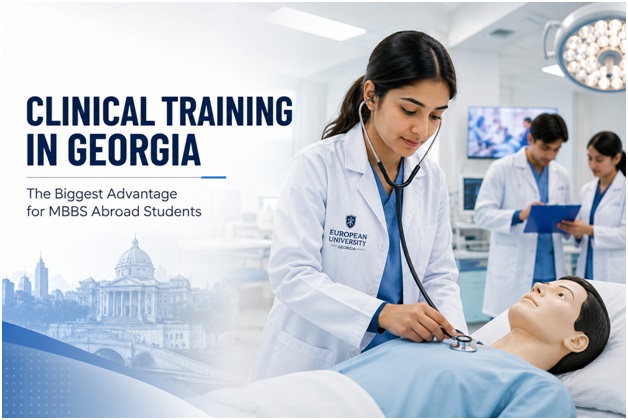
Georgia has emerged as a preferred destination for Indian students aspiring to study medicine. Among the many benefits that make this choice appealing, one stands out above the rest: clinical training in Georgia.
Hands-on practical training helps bridge the gap between classroom learning and real-world medical practice. Moreover, it equips students with the confidence and practical experience that is needed to succeed in a clinical environment and excel in licensing exams like India’s FMGE and NExT.
The majority of the medical programs in Georgia follow a well-defined six-year curriculum that naturally increases clinical exposure, ensuring students transition from foundational knowledge to practical patient care. This special emphasis on real-world training is why many Indian families now prefer Georgia over other study-abroad destinations.
How Does Clinical Training Shape Medical Careers?
Well, clinical training is not an additional feature of medical education, but it is the heart and soul of it. Compared to theoretical studies, clinical training creates exclusive opportunities for students to experience the daily functioning of hospitals, outpatient departments, and real patient scenarios.
In Georgia, universities design medical programs that include early introduction to clinical environments and deeper involvement of students as they progress through different stages of the curriculum. At HSA EduWorld, we help medical aspirants understand these practical aspects of studying medicine abroad and make informed decisions about their medical education.
From introductory patient assessments to ward rounds and emergency medicine rotations, students learn to observe, interact, diagnose, and respond to different health issues under expert supervision. Additionally, this direct experience helps medical aspirants understand not just the science of medicine but also the human side of healthcare, including communication, empathy, and practical judgment.
Why Does Georgia’s Clinical Approach Stand Out?
Several reasons make the practical training in Georgia stand out, and some of them have been mentioned below:
● Structured Phases of Clinical Exposure
In Georgia, the MD program is equal to the MBBS degree in India, and under the Georgian medical degree, clinical training starts long before the final internship year. The majority of the medical students transition smoothly from pre-clinical subjects like anatomy and physiology into para-clinical and clinical work, where hospital rotations are an integral part.
This is a well-defined approach that ensures when students get started with their full-time hospital postings, they are already aware of the basic medical terms and are ready to apply them in real settings.
● Exposure to Modern Hospitals and Systems
Georgia’s medical universities are well-connected with government and private hospitals that follow European healthcare standards. Through these affiliations, students can easily gain exposure to well-managed clinical procedures; access high-tech diagnostic tools; and take part in patient management systems and teamwork experiences that are difficult to mimic in a classroom setting.
Additionally, this real-world exposure helps the students to build important clinical competencies, such as taking medical histories, performing physical examinations, and interpreting lab results.
● English-Medium Teaching With Practical Exposure
One of the core strengths of the MBBS program in Georgia is that the entire MBBS curriculum, including clinical training, is conducted in English. This simply means that the students don’t have to put in additional efforts to learn a new language, which also helps in overcoming the language barriers during clinical postings.
For Indian students and parents, this is reassuring as classes, clinical rounds, and case discussions will become more effective, leading to better integration and understanding of complex medical scenarios.
● Designed to Support Global Licensure Exams
There are plenty of Georgian medical programs that help in building practical exposure into a well-defined curriculum in different ways that also support preparation for international exams like NeXT (India), USMLE (USA), and PLAB (UK).
This regular exposure to real patient cases and decision-making scenarios gives the right amount of clinical insights that the examiners are looking for.
Leading medical institutions like the European University in Georgia and BAU International University offer both practical hospital experience and readiness for a global licensing framework, which makes the graduates capable of meeting the diverse regulatory standards.
Benefits of Clinical Training in Georgia
Clinical training in Georgia provides several benefits that move beyond the hospital wards, and it also helps in shaping well-rounded doctors with essential practical skills, confidence, and professional competence.
● Enhanced Diagnostic Reasoning
Clinical training not just teaches procedures, but it also helps in sharpening analytical reasoning and thought processes. Students are encouraged to think like doctors, evaluate test results, and make decisions based on evidence. This helps in deepening medical understanding beyond textbooks.
● Improved Soft Skills
Effective communication, empathy, teamwork, and leadership are all important skills for real-world clinical practice, and it develops naturally when students communicate with patients, families, and healthcare systems. Well, Georgia’s patient-centric training helps in cultivating these skills in a manner that conventional classrooms cannot.
● Confidence Through Repetition and Practice
Every clinical rotation helps in enhancing the overall confidence of a student. Whether it’s drawing blood, placing IVs, documenting case notes, or leading patient consultations, repeated exposure helps in building mastery.
Particularly in Georgia, students start interacting with patients early, which helps in creating a sense of preparedness by the time they graduate.
Wrapping Up
For parents and students planning for MBBS abroad, especially in 2026, the overall strength of the clinical training in Georgia remains one of the most important reasons to choose this destination.
Georgia’s clinical programs ensure that the students are not just academically prepared but also professionally confident. By integrating hands-on practical experience with a supportive English-medium academic environment and a curriculum aligned with global standards, Georgian medical universities equip future doctors with the important practical skills they need to succeed. Whether you plan to practice in India after NExT or explore opportunities abroad, the clinical training you receive while studying MBBS in Georgia can be a defining advantage for your medical career.