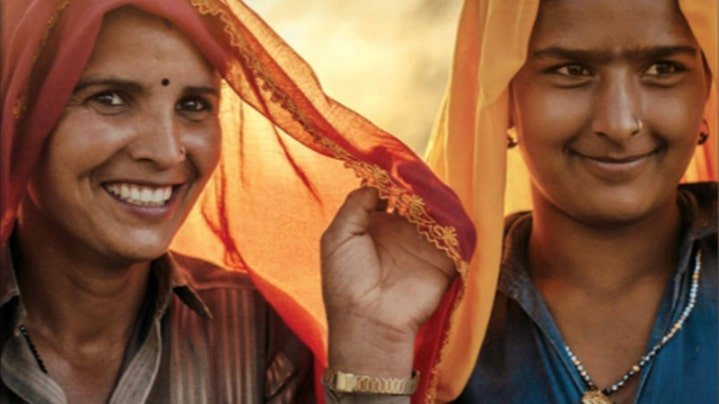



Across Madhya Pradesh, Chhattisgarh and Jharkhand, women supported by PRADAN are turning challenges into opportunity.
NEW DELHI (India CSR): As India celebrates its 80th Independence Day, the meaning of freedom is evolving beyond history and patriotism. For millions of rural women, true independence is the ability to access education, earn an income, own productive assets, lead community institutions, and shape the future of their families. Across India, women supported by PRADAN are transforming adversity into opportunity, whether by pursuing technical education, securing ownership over productive assets, becoming successful agri-entrepreneurs, or exporting produce to international markets. These stories remind us that economic and social independence are among the strongest expressions of freedom.
Young Women from Madhya Pradesh
Breaking Barriers Through Technical Education
In the tribal districts of Mandla, Dindori, and Balaghat, where limited educational opportunities have traditionally restricted young girls’ aspirations, a quiet transformation is underway. Through PRADAN’s Yuwa-Shastra programme, 24 first-generation learners have enrolled in a one-year Industrial Training Institute (ITI) course at Param ITI College in Sardarpur, Dhar district.
Many of these young women had never imagined pursuing higher education beyond their villages. Through continuous counselling and engagement with families, PRADAN helped build confidence among parents and encouraged them to support their daughters’ ambitions. Today, students like Mayavati and Yashoda Paraste are learning technical skills such as CNC operations, welding, fitting, engineering drawing, and machine handling, while preparing for future employment opportunities. Their journey represents more than education, it is about creating pathways to financial independence, challenging deep-rooted social norms, and inspiring countless other girls to dream beyond the boundaries of their villages.
Chhattisgarh’s Women
Claiming Ownership, Not Just Participation
In Chhattisgarh, the integration of Ajeevika Dabri under MGNREGA with the Lakhpati Mahila Pahalhas changed the way productive assets are owned and managed. Following sustained engagement by PRADAN, women’s collectives, and the district administration, farm ponds are now registered jointly in the names of the landowner and the woman of the household. Asset boards prominently display the woman’s name, Self-Help Group code, and LokOS ID, giving women formal recognition over assets that support their livelihoods.
In Dhamtari district alone, nearly 300 farm ponds have been planned through women’s collectives, creating irrigation potential for around 1,100 acres, while the initiative aims to establish 10,000 farm ponds across Chhattisgarh. This initiative demonstrates that independence is not only about earning, it is equally about ownership, recognition, and decision-making power.
Khemlata Bisen, Madhya Pradesh
From Financial Struggles to Community Leadership
Living in Rategaon village in Balaghat district, Khemlata Bisen struggled for years to support her family through traditional farming. Health challenges prevented her from taking up regular wage labour, making it difficult to meet household expenses and pay for her children’s education.
Everything changed when she joined Producer Groups supported by PRADAN. She learned value addition, market linkages, organic farming, and diversified cultivation of turmeric, onion, garlic, paddy, and seasonal vegetables. Today, she earns throughout the year, independently pays Rs. 20,000 annually towards her children’s education, and has emerged as a respected leader in her community. Khemlata’s journey shows how financial independence can strengthen women’s voices within families while inspiring others to follow a similar path.
From Simdega to London
Women Farmers Who Took Jharkhand’s Mangoes Global
For decades, Simdega in Jharkhand was never associated with international exports. That changed when women-led Farmer Producer Companies scripted history by exporting 1,322 kg of Amrapali mangoes to London. Supported through years of institution-building by the Rural Development Department, JSLPS, APEDA, MGNREGA, and PRADAN, women farmers learned scientific cultivation, grading, sorting, and collective marketing. They earned ₹42 per kg, significantly higher than local market prices, proving that organised women farmers can successfully compete in global markets.
Their journey from smallholder cultivators to global exporters demonstrates how collective action and institutional support can open doors to international opportunities for rural women.
Freedom Beyond the Flag
These stories span different states, livelihoods, and aspirations, yet they share one common thread, women taking charge of their futures. Whether mastering technical skills, claiming ownership over productive assets, leading agricultural enterprises, or exporting produce across continents, they are redefining what independence means in rural India. This Independence Day, these women remind us that freedom is not only about political rights; it is also about the opportunity to learn, earn with dignity, own resources, make decisions, and inspire the next generation. Their journeys represent a vision of an India where development is inclusive, women-led, and rooted in self-reliance.
© Copyright Disclaimer: All rights reserved. No part of this report may be reproduced, republished, distributed or transmitted in any form without prior written permission from India CSR®