


Walk into a restaurant in Hyderabad, Vijayawada or Visakhapatnam tonight and there is a fair chance butter chicken is on the menu. It has become a default, the dish an unfamiliar diner orders when nothing else on the card looks safe. What most people ordering it do not know is that the dish has a fairly specific origin, and that it came out of a kitchen still working out how to stop meat drying out overnight.

That kitchen belonged to Moti Mahal.
A restaurant that moved with a country
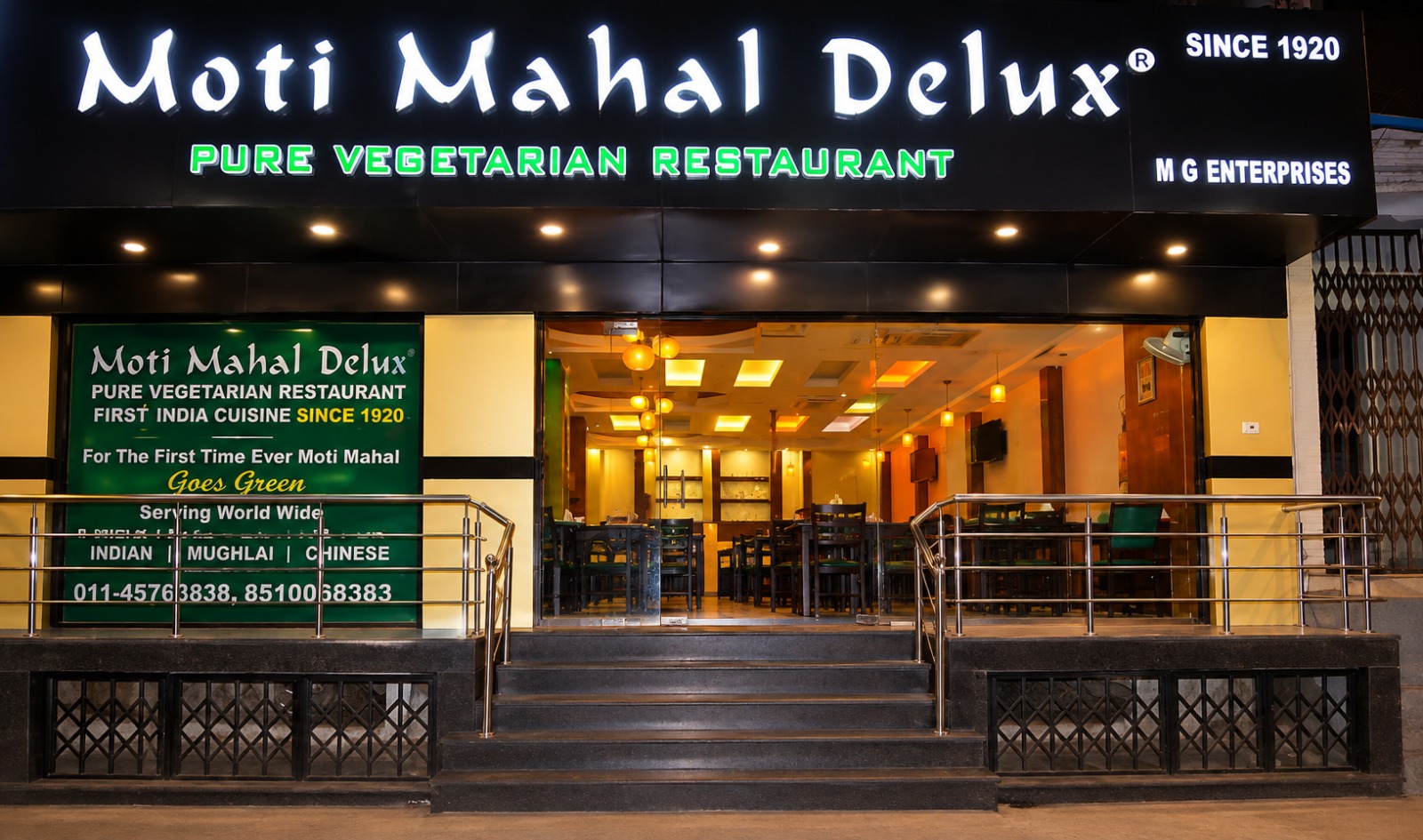
The story starts in Peshawar in 1920, in what was then undivided India. Kundan Lal Gujral worked at a small eatery run by Mokha Singh, learning the trade from the floor up. When Partition came in 1947, Gujral moved to Delhi and reopened in Daryaganj. What had been a regional eatery became, over the following decades, one of the most photographed dining rooms in the capital. Prime ministers ate there. So did visiting heads of state.
The business operates today as Moti Mahal Delux, with its head office in Kalkaji, New Delhi, and outlets across metros, state capitals and a growing number of tier 2 cities.
The oven that made it possible
The innovation that carried the restaurant was not a recipe. It was a piece of equipment used differently.
The tandoor, a clay oven, had traditionally been sunk into the ground and used mainly for bread. Gujral’s kitchen brought it up to waist height and started cooking meat in it, hanging marinated chicken on skewers inside the chamber so it cooked in dry radiant heat rather than sitting in oil. The result was tandoori chicken: fast, portioned consistently, and visually striking in a way that made it sell itself across a dining room.
Butter chicken, the dish now attached to the same kitchen, came out of a practical problem. Tandoori chicken that had not sold by the end of service dried out. Someone there started simmering the leftover pieces in a gravy of tomato, butter and cream to bring them back. The origin of the dish has since been contested in the Delhi High Court by another restaurant with its own claim to the lineage, and the question is genuinely unresolved. What is not in dispute is that the dish left that neighbourhood and went everywhere.
Why the food travelled, and the system travelled with it
Plenty of restaurants invent a good dish. Very few turn one into a category. The difference here was that the cooking method was repeatable in a way Indian restaurant food often was not at the time.
A tandoor gives a predictable result if the marinade, the resting time and the oven temperature are controlled. That makes portion sizes consistent, food cost predictable, and training possible for a cook who has not spent twenty years in the trade. Those three things are the entire basis of multi-outlet restaurant operations. Long before anyone in India was using the word franchising, this kitchen had built something that could be copied.
Kundan Lal Gujral later described his own approach as the six Ps: price, product, place, promotion, people and personalised service. Read today it is an unremarkable list. Read against a post-Partition Delhi where almost all eating out was informal and unbranded, it was a business framework several decades ahead of its market.
Feeding three generations at once
The harder problem for any hundred-year-old food brand is not heritage. It is relevance.
A Moti Mahal Delux restaurant today is serving a diner who grew up on dal makhani in the same room as a diner who has never eaten in a formal Indian restaurant and books everything through an app. The group’s answer has been to leave the anchor dishes alone and build around them: contemporary preparations aimed at younger customers, smaller portion formats and lower price points, separate café and grill identities, and the now-standard digital layer of online ordering and delivery tie-ups.
That split is worth noting for anyone running a legacy food business. The instinct with an old brand is usually to modernise the core. The evidence here points the other way. Protect the two or three dishes people came for, and let everything else move.
What restaurateurs can take from it
Three things stand out from a century of trading.
The first is that a signature dish is an asset only if it can be produced identically at scale. Ten thousand people ordering butter chicken across ten cities is worth nothing if the tenth kitchen makes it differently.
The second is that heritage is a claim customers verify. Diners can tell the difference between a menu that is old and a menu dressed to look old. Brands that treat legacy as a design theme rather than an operating standard get found out quickly.
The third is patience with geography. The group’s stated focus on state capitals and tier 2 cities tracks a shift the whole organised restaurant sector is going through. Disposable income and mall infrastructure in those markets have moved faster than restaurant supply, and the brands that arrived early have a decade of head start on the ones arriving now.
A hundred years is not really the point
Restaurants close all the time, including good ones. Surviving a century is partly luck, partly a country’s history bending in your favour, and partly the unglamorous discipline of not changing what works.
What makes this story worth telling is not the anniversary. It is that a small kitchen solving an everyday problem, how to sell yesterday’s chicken, ended up producing the dish most of the world now pictures when it thinks of Indian food. In this business, the innovations that last usually start as fixes rather than strategies.