

In this article, Anirudhya Gupta explains how the integration of HR, DEI, CSR and ESG can create inclusive employment opportunities, strengthen communities and generate lasting value for both businesses and society.
By Anirudhya Gupta
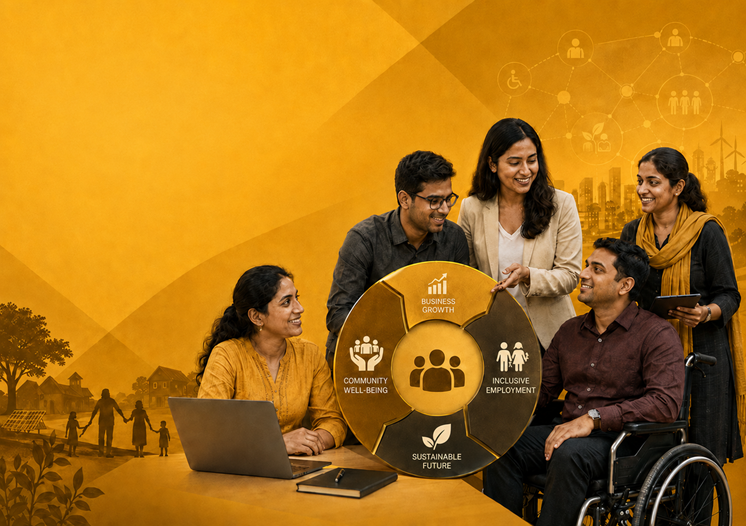
Corporate Social Responsibility (CSR) is no longer limited to funding community programmes; it is increasingly about creating lasting social value through inclusive business practices. While CSR teams drive social initiatives, Human Resources (HR) has a critical role in translating these commitments into meaningful outcomes. By promoting inclusive hiring, supporting employee volunteering, strengthening workplace accessibility, and creating opportunities for women, persons with disabilities, and underserved communities, HR can significantly amplify CSR impact.
The need is evident. India’s female labour force participation remains at just 40%, compared with 79.1% for men, while the PwD Inclusion Index 2025 reports that representation of persons with disabilities in corporate India is still below 1%. These gaps highlight that sustainable social impact requires organisations to look beyond community investments and address inclusion within their own workforce. When HR and CSR work together, organisations can create equitable employment opportunities, strengthen community development, and deliver measurable social and business value that extends far beyond compliance.
Adapting a Holistic Approach To People Practices
There are numerous opportunities for HR and DEI practices to intersect and reinforce one another. HR leaders can collaborate with DEI specialists to ensure job descriptions are inclusive, recruitment efforts reach underrepresented talent pools, interview panels are diverse, and workplace policies foster a genuine sense of belonging. Beyond recruitment, HR can strengthen employee engagement and retention by supporting employee resource groups, mentorship initiatives, leadership development programs, and recognition platforms that celebrate diverse perspectives. More importantly, organisations must recognise that inclusion is not solely an internal agenda. The principles that guide inclusive workplaces—equity, accessibility, opportunity, and belonging—are equally relevant when addressing broader social challenges.
The Convergence of DEI and CSR
Historically, HR focused on workforce diversity and employee engagement, while Corporate Social Responsibility (CSR) concentrated on community development and social investments. Today, these priorities are becoming increasingly interconnected. The “Social” dimension of ESG has brought greater attention to issues such as workforce inclusion, human rights, accessibility, community impact, and equitable economic participation. As a result, organisations are recognising that workplace inclusion and community inclusion cannot be treated as separate agendas. This convergence presents a significant opportunity to build a more integrated and sustainable model of impact—one that benefits both business and society. By aligning HR, DEI, CSR, and ESG objectives, organisations can create stronger talent pipelines, improve stakeholder trust, enhance employer branding, and deliver measurable social outcomes.
Inclusive Hiring as a Development Strategy
Research consistently demonstrates the business value of inclusion. Organisations with diverse leadership teams are more likely to outperform financially, foster innovation, and demonstrate greater resilience in rapidly changing markets. However, inclusive hiring should not be viewed solely as a workforce strategy. It can also serve as a powerful development strategy.
Many companies invest significantly in skilling and livelihood programs through CSR initiatives. Yet the true impact of these investments can be amplified when they are linked directly to employment opportunities. By creating pathways for women, rural youth, persons with disabilities, and underserved communities to access meaningful jobs, organisations can transform CSR investments into sustainable livelihood outcomes. This approach enables businesses to address talent shortages while contributing to economic inclusion and community development.
From CSR Projects to Inclusive Employment Ecosystems
Forward-looking organisations are beginning to move beyond standalone CSR projects and towards building inclusive employment ecosystems. By aligning community skilling programs, vocational training initiatives, women’s economic empowerment interventions, disability inclusion efforts, and rural livelihood programs with future workforce requirements, companies can create sustainable talent pipelines that generate long-term value. Such an integrated approach helps organisations strengthen their talent strategy, improve ESG performance, and deliver measurable social impact. More importantly, it creates a direct connection between community investments and employment outcomes, ensuring that social initiatives contribute to lasting economic
Accessibility Must Move Beyond Compliance
Accessibility remains one of the most overlooked dimensions of inclusion. While legislation and corporate commitments have progressed significantly, workforce participation among persons with disabilities remains disproportionately low. The challenge is no longer one of intent but of implementation.
Organisations must view accessibility not as a compliance requirement but as a business and talent imperative. Accessible workplaces expand talent pools, improve employee engagement, encourage innovation, and strengthen organisational resilience. HR leaders have a critical role to play in advancing accessibility through inclusive recruitment processes, accessible infrastructure, assistive technologies, flexible workplace policies, and leadership accountability mechanisms that drive meaningful progress.
Leadership Accountability Matters
While HR can serve as the catalyst for change, sustainable progress requires active commitment from business leaders, managers, and boards. Inclusion and social impact cannot remain HR-led initiatives alone. They must be embedded within organisational strategy, governance structures, leadership scorecards, and performance metrics. When leadership accountability is combined with strong HR practices, organisations are better positioned to create lasting cultural change and deliver measurable outcomes for both employees and communities.
Connecting Community Inclusion with Workplace Inclusion
One of the greatest opportunities for organisations lies in connecting community inclusion with workplace inclusion. An organisation may successfully achieve workforce diversity targets internally, yet still have limited impact on inclusive growth within the communities it serves. To create meaningful social impact, businesses must bridge this gap. Strategic collaboration between HR and CSR functions can help achieve this objective. Community skilling programs, livelihood initiatives, employee volunteering, education partnerships, and women’s empowerment interventions can all contribute to building a stronger connection between workforce inclusion and community development. By creating this continuum, organisations can generate long-term shared value while strengthening both their social impact and business performance.
The Future of Inclusive Growth
The future of inclusive growth lies in breaking traditional silos between HR, DEI, CSR, and ESG functions. Organisations that successfully integrate workforce inclusion with community development will be better positioned to address talent shortages, strengthen stakeholder trust, enhance ESG performance, and create sustainable social impact. HR leaders have a unique opportunity to become architects of this transformation—shaping not only the future of work, but also the future of society. In the years ahead, the most successful organisations will be those that recognise diversity as more than a workforce metric and CSR as more than a compliance obligation. Instead, they will view both as strategic enablers of inclusive growth, resilient businesses, and stronger communities.
About the Author: Anirudhya Gupta, VP, Partnerships, SoaulAce. He brings over 16 years of experience in Sustainable Development, CSR, and ESG, leveraging partnerships with government, international organizations, NGOs, and corporates to drive meaningful social change.
© Copyright Disclaimer: All rights reserved. No part of this report may be reproduced, republished, distributed or transmitted in any form without prior written permission from India CSR®.