




The company maintained a Board-level Sustainability and CSR Committee while undertaking voluntary food security, delivery-partner welfare and environmental initiatives.
BENGALURU (India CSR): Swiggy Limited had no statutory Corporate Social Responsibility spending obligation during the financial year 2025-26 because it recorded aggregate losses over the three immediately preceding financial years, according to the company’s Integrated Annual Report. The company reported its average net profit for CSR calculation purposes as nil. Consequently, the requirement to spend 2% of average net profit under Section 135(5) of the Companies Act, 2013, was not applicable.
Swiggy disclosed no statutory expenditure on CSR projects, administrative overheads or impact assessments during the year. There was also no unspent CSR amount or excess expenditure available for adjustment against future obligations.
Obligation Remains Inapplicable
Section 135 of the Companies Act requires eligible companies to spend at least 2% of their average net profits from the three immediately preceding financial years on prescribed CSR activities. Swiggy stated that it incurred aggregate losses during this reference period. Therefore, its prescribed CSR expenditure and total CSR obligation for FY 2025-26 were treated as not applicable.

The company did not report any surplus arising from earlier CSR projects or any amount required to be set off during the financial year. There was no statutory CSR spending on ongoing or other projects. Expenditure on administrative overheads and impact assessment was also marked as not applicable. Swiggy did not create or acquire any capital asset through CSR expenditure during the reporting period. The disclosure also stated that there was no unspent CSR amount from the three preceding financial years.
Also Read
Swiggy FY 2025-26 Revenue Rises 51%, B2C GOV Reaches Rs. 67,734 Crore – India CSR
Governance Structure Continues
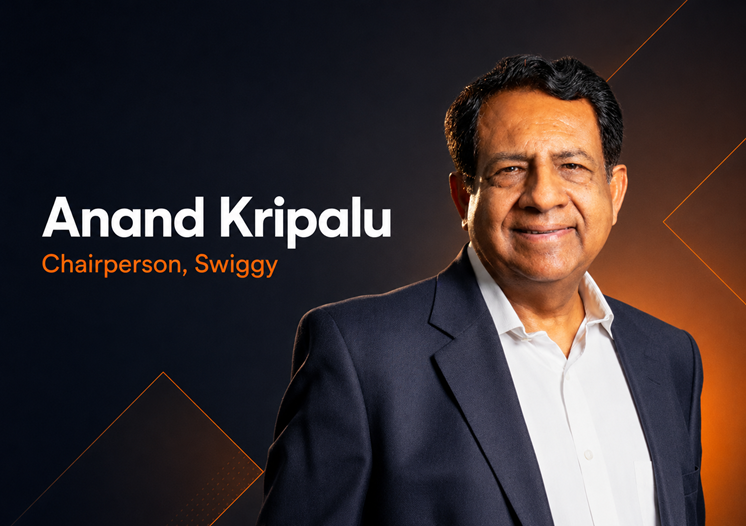
Despite having no mandatory spending requirement, Swiggy maintained a Sustainability and CSR Committee to provide Board-level oversight. The committee comprised Managing Director and Group CEO Sriharsha Majety and Independent Directors Anand Kripalu and Suparna Mitra. No meeting of the committee was conducted during FY 2025-26.
Swiggy’s CSR policy focuses on contributing to society through welfare programmes aligned with the Companies Act. The committee’s responsibilities include supporting the Board in formulating the CSR policy and reviewing its implementation and progress. The company has expanded the committee’s mandate to incorporate sustainability oversight, integrating social, environmental and governance priorities within its decision-making framework.
Voluntary Initiatives Continue
Although these activities were not reported as statutory CSR spending, Swiggy highlighted several social-impact initiatives undertaken through its platform and partnerships. The company distributed 225,995 meals to underserved communities during FY 2025-26. The programme was implemented in collaboration with Haldiram’s and the Robin Hood Army. Swiggy used its redistribution logistics capabilities to deliver refreshments to marginalised communities in Nagpur, Indore and Raipur. The initiative sought to reduce food waste while supporting food security.
The company also promoted regional culinary traditions through its hyperlocal discovery platform. It highlighted Pahari, Bihari, Goan and other local cuisines to support their visibility and commercial viability. Swiggy’s sustainability strategy is organised around three pillars—Climate, Community and Conscience. Its stated 2030 goals include engaging and upskilling one million people across its value chain and empowering 100,000 women within its ecosystem.
Partner Welfare Expands
Delivery-partner welfare remained another focus area during the year. Swiggy reported that delivery partners were covered under accident and health or life insurance programmes, with several partners also receiving maternity and loss-of-pay insurance benefits. The company provided round-the-clock teleconsultation access for delivery partners and their families. It also supported the registration of delivery workers under the government’s e-Shram programme to improve access to social-security benefits.
Swiggy said its wider community approach seeks to strengthen social protection and create more inclusive participation in the platform economy. These measures form part of the company’s voluntary sustainability and social-impact framework rather than the statutory CSR expenditure disclosed under Section 135.
Also Read
Swiggy Chairman Anand Kripalu Outlines Growth Strategy for India’s Next Consumption Era – India CSR
Environmental Actions Advance
Swiggy also reported environmental interventions across delivery mobility, packaging and digital infrastructure. The company is working towards a completely electric delivery fleet and renewable energy adoption in its direct operations by 2030. Its strategy also includes strengthening circular packaging practices across the food-delivery ecosystem.
A default “no cutlery” option for food-delivery orders helped avoid an estimated 4,797 tonnes of carbon dioxide equivalent emissions during FY 2025-26, the company said. Swiggy also launched a Responsible Packaging Website connecting restaurant partners with verified suppliers of environmentally preferable packaging products. The platform generated more than 2,600 partner leads and offered negotiated discounts on sustainable products.
Optimisation of its digital infrastructure and use of cloud services helped the company avoid more than 1,300 tonnes of carbon dioxide equivalent emissions during the year, according to its sustainability disclosures.
Compliance Position Clear
Swiggy’s FY 2025-26 CSR disclosure presents a clear distinction between statutory expenditure and voluntary social-impact initiatives. The company was not required to incur mandatory CSR expenditure because its average net profit for the prescribed calculation period was nil. It therefore had no spending shortfall requiring an explanation, transfer or remedial action.
While statutory CSR spending remained inapplicable, Swiggy continued community, welfare and environmental programmes through its operating platform and sustainability framework.
Key CSR Facts
| Particular | FY 2025-26 Disclosure |
|---|---|
| Average net profit for CSR calculation | Nil |
| Prescribed 2% CSR expenditure | Not applicable |
| Total CSR obligation | Not applicable |
| Amount spent on CSR projects | Not applicable |
| Administrative overheads | Not applicable |
| Impact-assessment expenditure | Not applicable |
| Unspent CSR amount | Not applicable |
| Capital assets created through CSR | None |
| CSR Committee meetings | None |
| Meals distributed | 225,995 |
| Committee members | Sriharsha Majety, Anand Kripalu and Suparna Mitra |



