

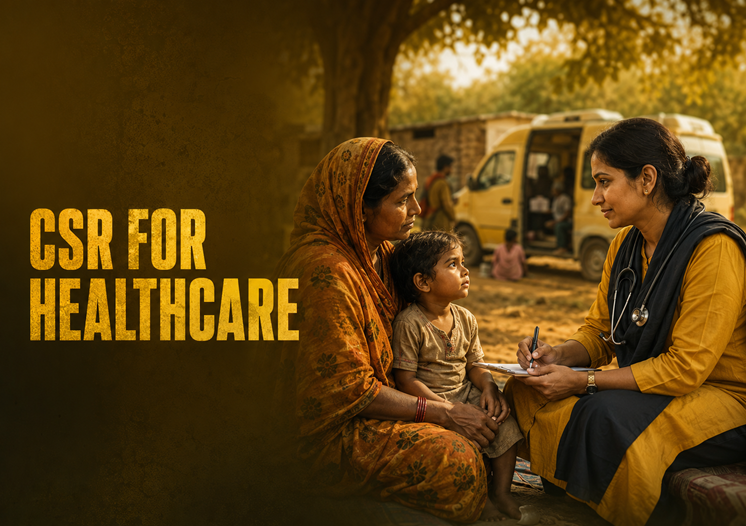



CSR can help close India’s healthcare divide by strengthening primary care, mobile health services, diagnostics and preventive healthcare in underserved communities.

By Sunanda Rangarajan
India’s healthcare system has made remarkable progress in recent years. From advanced hospitals and digital health platforms to AI-powered diagnostics and technology-enabled care, the sector is evolving rapidly. However, this progress has not reached everyone equally. Millions of people, particularly those in rural and underserved communities, continue to face barriers to quality healthcare due to limited infrastructure, shortages of healthcare professionals, low health awareness, and financial constraints.
While government initiatives have strengthened healthcare access across the country, addressing these disparities requires collective action. Corporate Social Responsibility (CSR) has emerged as a powerful catalyst in this effort. Today, CSR extends far beyond charitable donations or one-time interventions. It offers organisations an opportunity to leverage their expertise, resources, and technology to create sustainable improvements in community health.

Moving Beyond Traditional CSR
Healthcare-related CSR has traditionally focused on organising free medical camps or donating medical equipment. While these efforts continue to play an important role, organisations are increasingly adopting long-term, community-centric approaches.
Many companies are investing in preventive healthcare programmes that promote regular health check-ups, vaccination drives, maternal and child healthcare, nutrition awareness, and early detection of lifestyle diseases. These initiatives also promote health and encourage health-seeking behaviour through sustained awareness, empowering individuals to seek timely care before conditions become severe. Preventive and promotive healthcare interventions often deliver the greatest long-term impact by reducing the burden of disease and improving overall community well-being.
CSR-supported interventions such as mobile medical units, door-to-door healthcare services, and telehealth options help expand access to quality healthcare in underserved communities. By bringing doctors, medicines, diagnostic services, and healthcare consultations closer to patients, these initiatives reduce access barriers, enabling earlier diagnosis and timely treatment.
Harnessing Technology to Expand Access
Technology is transforming healthcare delivery, and CSR has an important role to play in ensuring these innovations benefit underserved populations. Telemedicine, remote consultations, digital health records, and AI-enabled health solutions are helping bridge geographical barriers by connecting patients in remote regions with specialists located in urban centres. This not only reduces travel costs and waiting times but also enables continuity of care for patients who previously had limited access to medical expertise.
However, technology alone cannot solve healthcare inequity. Digital literacy and community awareness are equally important. CSR initiatives that educate communities on using digital healthcare platforms can improve adoption, build trust, and maximise the impact of healthcare technology.
Addressing the Social Determinants of Health
Healthcare outcomes are shaped by far more than hospitals and medicines. Education, nutrition, sanitation, livelihood opportunities, and financial stability all influence an individual’s overall well-being. Recognising this, many CSR programmes are integrating healthcare with skill development, women’s empowerment, and community education initiatives. Supporting self-help groups, promoting nutrition awareness, improving sanitation practices, and encouraging preventive healthcare create lasting behavioural change that benefits entire communities. By addressing these broader social determinants, organisations can contribute to healthier, more resilient populations while strengthening community development.
Collaboration Drives Sustainable Impact
Improving healthcare access cannot be achieved by any single stakeholder alone. Sustainable progress depends on collaboration between corporates, healthcare providers, NGOs, government agencies, and local communities. Partnerships enable organisations to combine technical expertise, healthcare knowledge, local insights, and resources to design programmes that address real community needs. Whether supporting primary healthcare centres, strengthening healthcare infrastructure, training frontline healthcare workers, or expanding digital health services, collaborative approaches often create greater and more sustainable impact than isolated efforts.
Measuring Impact Beyond Numbers
CSR has also evolved in how success is measured. Rather than focusing solely on the number of beneficiaries reached or health camps conducted, organisations are increasingly adopting outcome-based approaches that prioritise long-term community health improvements. This includes staying invested in communities long enough to achieve measurable outcomes, such as improved health-seeking behaviour, better preventive care, stronger maternal and child health, and sustainable reductions in disease burden, rather than simply reporting output metrics.
Indicators such as improved immunisation coverage, better maternal and child health, increased preventive screenings, stronger community awareness, and improved healthcare accessibility provide a more meaningful assessment of impact. Measuring outcomes instead of activities ensures that CSR investments create lasting value rather than temporary interventions.
The Road Ahead
Building an equitable healthcare system is a shared responsibility. While government policies lay the foundation, the private sector can make a meaningful contribution by investing in preventive healthcare, digital health access, community infrastructure, capacity building, and cross-sector partnerships. For organisations operating within the healthcare ecosystem, CSR presents an opportunity to extend their impact beyond business operations and contribute to stronger, healthier communities. By combining innovation, collaboration, and a long-term commitment to community well-being, businesses can help reduce healthcare disparities and improve access to quality care across India.
At its core, meaningful CSR is not about short-term charity. It is about creating sustainable systems that continue to improve lives long after individual programmes conclude. When businesses, governments, healthcare providers, and civil society work together, quality healthcare becomes not just an aspiration, but a reality for every individual, regardless of where they live.
About the Author
Sunanda Rangarajan, Chief Executive Officer, Omega Forum for Social Impact (OFSI
Copyright@indiacsr


