





Tata Trusts CEO Siddharth Sharma Counters Chaos Narrative, Reaffirms Commitment to Nation-Building
NEW DELHI (India CSR): Tata Trusts, one of India’s oldest and most influential philanthropic institutions, has announced a significant increase in its charitable spending for the current fiscal year. The organization will raise its philanthropic outlay to Rs. 2,000 crore in FY26, compared to approximately Rs. 1,600 crore in the previous year. This move underscores the Trusts’ enduring commitment to social development and nation-building, even as its leadership pushes back against narratives of internal discord.
As India navigates complex socio-economic challenges, Tata Trusts’ initiatives in healthcare, education, and community development will remain vital. With its historic legacy and renewed vigor, the Trusts continue to embody the spirit of philanthropy that has defined the Tata Group for generations.
Legacy of Philanthropy
Founded more than a century ago, Tata Trusts has been a cornerstone of India’s philanthropic landscape. Long before the Corporate Social Responsibility (CSR) mandate was introduced in 2014, the Trusts were channeling dividends from Tata Sons into social upliftment. This 122‑year legacy has positioned the organization as a pioneer in areas such as healthcare, education, rural development, and women empowerment.

The Trusts’ model is unique: as majority shareholders in Tata Sons, they reinvest dividends into initiatives that directly impact communities across India. This approach ensures that philanthropy remains central to the Tata Group’s ethos.
CEO’s Clarification on “Chaos Narrative”
In recent weeks, media reports have suggested internal challenges within Tata Trusts. However, CEO Siddharth Sharma has firmly rejected these claims. Writing on LinkedIn, Sharma emphasized that the Trusts’ mission is philanthropy, not internal disputes.
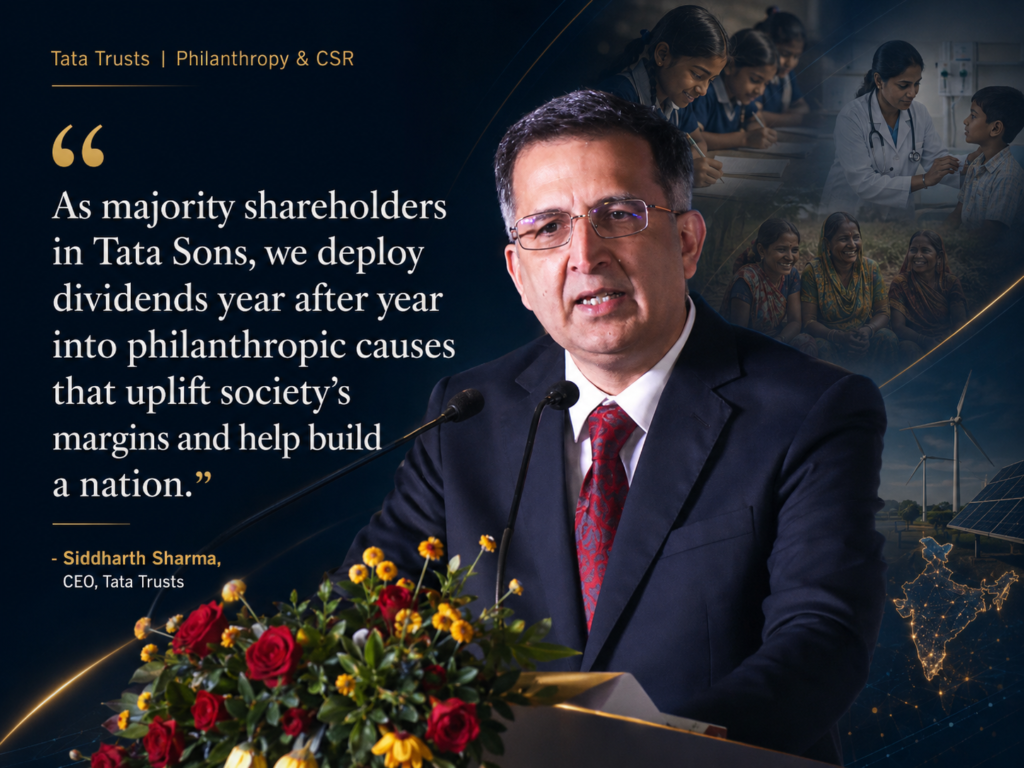
“As majority shareholders in Tata Sons, we deploy dividends year after year into philanthropic causes that uplift society’s margins and help build a nation,” Sharma stated.
He criticized the amplification of unverified narratives, calling it “both the reality and the tragedy of our times.” His remarks highlight the Trusts’ determination to remain focused on their social mission rather than being distracted by speculation.
Focus Areas of Spending
The increased spending will be directed toward several critical sectors:
- Healthcare: Tata Trusts has already established affordable cancer care facilities in Assam, Maharashtra, Jharkhand, Andhra Pradesh, and Uttar Pradesh. The new fiscal allocation will expand these efforts, ensuring wider access to treatment.
- Education: Plans are underway to establish a world-class university for undergraduate studies, aimed at nurturing talent and fostering innovation.
- Infrastructure for Social Good: A multi-speciality hospital in Central India is also on the agenda, designed to provide advanced medical services to underserved regions.
- Community Development: Continued investment in rural livelihoods, skill development, and women empowerment programs will remain a priority.
Strategic Importance
The decision to raise philanthropic spending comes at a time when India faces pressing challenges in healthcare, education, and employment. By committing ₹2,000 crore, Tata Trusts is not only reinforcing its legacy but also setting a benchmark for corporate philanthropy in India.
This move also reflects the Trusts’ alignment with national priorities, including universal healthcare, skill development, and inclusive growth. In doing so, Tata Trusts continues to play a pivotal role in bridging gaps where government initiatives alone may not suffice.
The Tata Trust
Established in 1892, Tata Trusts are India’s oldest and among Asia’s largest philanthropic institutions. For more than a century, they have played a pioneering role in creating lasting change in the lives of communities across India.
Inspired by the vision of Founder Jamsetji Tata and guided by a legacy of proactive philanthropy, Tata Trusts work to advance equity, resilience, and shared progress. Their efforts focus on catalysing systemic and sustainable change across key areas such as healthcare, nutrition, education, water, sanitation and hygiene, urban and rural livelihoods, and socio-economic development.
Through institution-building, strengthening of public systems, and collaborative action, the Trusts develop meaningful solutions that combine tradition with innovation. By nurturing grassroots initiatives, empowering changemakers, and building partnerships, Tata Trusts continue to touch lives across India and contribute to inclusive national development.
As India navigates complex socio-economic challenges, Tata Trusts’ initiatives in healthcare, education, and community development will remain vital. With its historic legacy and renewed vigor, the Trusts continue to embody the spirit of philanthropy that has defined the Tata Group for generations.


