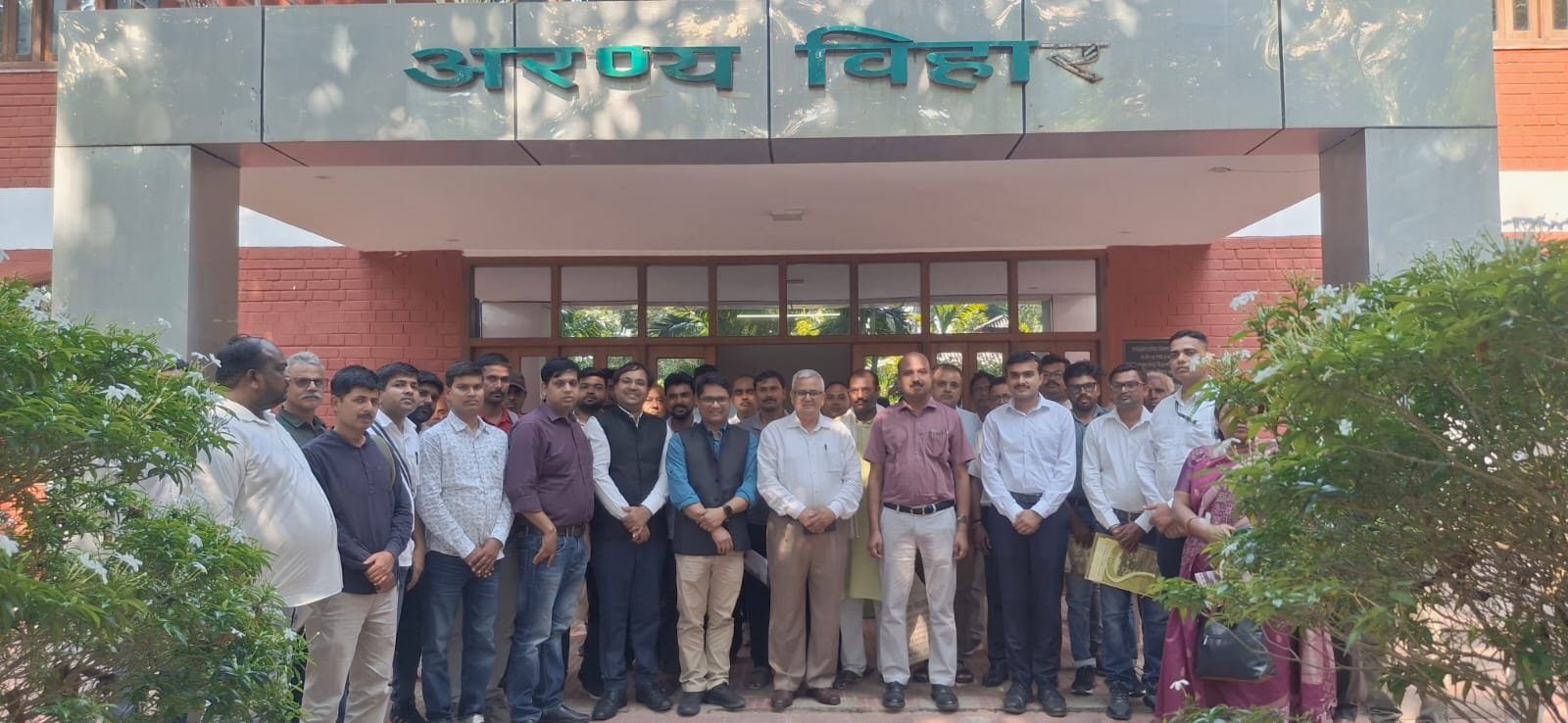


BHAGALPUR (India CSR): A Stakeholder Consultation Workshop on Trade, Value Addition, and Marketing of Biological Resources was organised today at Bhagalpur by Chandragupt Institute of Management Patna (CIMP) in collaboration with the Bihar State Biodiversity Board (BSBB) in the District Forest Office campus of Bhagalpur. The workshop was conducted as part of the ongoing study titled “Harvesting & Collection, Trade & Marketing (including Value Addition) of Biological Resources in the Assigned Areas in Bihar” assigned by the Bihar State Biodiversity Board to Chandragupt Institute of Management Patna.
The consultation aimed to bring together key stakeholders associated with medicinal plants and biological resources to deliberate upon challenges, opportunities, and policy interventions required for strengthening sustainable livelihoods, biodiversity-based enterprises, and market linkages in Bihar.
The workshop witnessed participation from officials of the Bihar State Biodiversity Board, Forest Department, Bihar Agricultural University, Biodiversity Management Committees (BMCs), farmers, traders, traditional Vaidya practitioners, researchers, and representatives from civil society organisations.
Delivering the inaugural address, Hemkant Roy, IFS (Retd.), Joint Director, Bihar State Biodiversity Board, highlighted the importance of biodiversity conservation alongside livelihood generation. He emphasised the initiatives being undertaken by BSBB to facilitate organised trade and marketing of medicinal plants and other biological resources. He encouraged farmers, traders, and local entrepreneurs to register with the Bihar State Biodiversity Board to avail institutional support and strengthen formal market participation.
Ashutosh Raj, Divisional Forest Officer, Bhagalpur, stated that the Forest Department is committed to supporting sustainable harvesting, trade, and promotion of medicinal plants and biodiversity-based livelihoods.
Dr. Sachin and Dr. Monika Patel from Bihar Agricultural University (BAU), Sabour, discussed the scientific aspects of medicinal plant cultivation and highlighted the role of the university in providing quality planting materials, scientific guidance, and technical support to farmers and growers. They informed participants that farmers may directly connect with the university for support related to medicinal plant cultivation and other scientific interventions. Dr. Jeta Singh, Director, Tapovardhan Naturopathy Kendra, Bhagalpur, deliberated upon the importance of biological resources and medicinal plants in promoting holistic health and wellness in daily life. He proposes to have a Mandi for Medicinal produces in Bhagalpur.
During the technical session, Prof. Sibananda Senapati, Prof. Debabrata Samanta, Prof. Nitish Nigam, Atul Pratap, and Manish Kumar from CIMP presented preliminary findings from the ongoing study. The study highlighted several challenges in the medicinal plant value chain ecosystem, including limited market access, lack of scientific testing and certification facilities, weak branding and packaging support, inadequate awareness regarding formal processes, and fragmented institutional coordination. At the same time, the study identified significant opportunities for strengthening medicinal plant clusters, scientific value addition, sustainable harvesting practices, and market linkages for local producers and traditional practitioners.
The interactions and discussions with farmers, traders, traditional Vaidya practitioners, BMC members, researchers, and other stakeholders highlighted several critical challenges in the medicinal plant and biological resource ecosystem. Participants emphasised the need for greater awareness, capacity-building, and structured training programmes on scientific cultivation, sustainable harvesting, processing, packaging, branding, certification, and market linkage, especially for medicinal plants. Traders and traditional Vaidya practitioners particularly stressed the importance of awareness generation, branding, and promotion of medicinal products to enhance their acceptance and competitiveness in national and global markets.
The stakeholder consultations also underscored the need for stronger convergence and institutional coordination among departments and organisations such as Forest, Agriculture, AYUSH, Biodiversity Management Committees, universities, research institutions, and local entrepreneurs for developing an integrated and sustainable ecosystem for biodiversity-based economic development in Bihar.
The valedictory address was delivered by Dr. S. Kumarasami, Regional Chief Conservator of Forests, Bhagalpur. During the valedictory session, Ajay Kumar and Sanjay Kumar from Pirpainti were awarded business licenses by the Bihar State Biodiversity Board for undertaking medicinal plant-based trade and value-added activities. The licenses were formally handed over by Hemkant Roy and Dr. S. Kumarasami.
(India CSR)