

• India CSR Awards 2026
  • India CSR Leadership Summit
  • Guest Posts
Thursday, August 13, 2026
India CSR
  • Home
  • Corporate Social Responsibility
    • Art & Culture
    • CSR Leaders
    • Child Rights
    • Culture
    • Education
    • Gender Equality
    • Around the World
    • Skill Development
    • Safety
    • Covid-19
    • Safe Food For All
  • Sustainability
    • Sustainability Dialogues
    • Sustainability Knowledge Series
    • Plastics
    • Sustainable Development Goals
    • ESG
    • Circular Economy
    • BRSR
  • Corporate Governance
    • Diversity & Inclusion
  • Interviews
  • SDGs
    • No Poverty
    • Zero Hunger
    • Good Health & Well-Being
    • Quality Education
    • Gender Equality
    • Clean Water & Sanitation – SDG 6
    • Affordable & Clean Energy
    • Decent Work & Economic Growth
    • Industry, Innovation & Infrastructure
    • Reduced Inequalities
    • Sustainable Cities & Communities
    • Responsible Consumption & Production
    • Climate Action
    • Life Below Water
    • Life on Land
    • Peace, Justice & Strong Institutions
    • Partnerships for the Goals
  • Articles
  • Events
  • हिंदी
  • More
    • Business
    • Finance
    • Environment
    • Economy
    • Health
    • Around the World
    • Social Sector Leaders
    • Social Entrepreneurship
    • Trending News
      • Important Days
        • Festivals
      • Great People
      • Product Review
      • International
      • Sports
      • Entertainment
    • Case Studies
    • Philanthropy
    • Biography
    • Technology
    • Lifestyle
    • Sports
    • Gaming
    • Knowledge
    • Home Improvement
    • Words Power
    • Chief Ministers
No Result
View All Result
  • Home
  • Corporate Social Responsibility
    • Art & Culture
    • CSR Leaders
    • Child Rights
    • Culture
    • Education
    • Gender Equality
    • Around the World
    • Skill Development
    • Safety
    • Covid-19
    • Safe Food For All
  • Sustainability
    • Sustainability Dialogues
    • Sustainability Knowledge Series
    • Plastics
    • Sustainable Development Goals
    • ESG
    • Circular Economy
    • BRSR
  • Corporate Governance
    • Diversity & Inclusion
  • Interviews
  • SDGs
    • No Poverty
    • Zero Hunger
    • Good Health & Well-Being
    • Quality Education
    • Gender Equality
    • Clean Water & Sanitation – SDG 6
    • Affordable & Clean Energy
    • Decent Work & Economic Growth
    • Industry, Innovation & Infrastructure
    • Reduced Inequalities
    • Sustainable Cities & Communities
    • Responsible Consumption & Production
    • Climate Action
    • Life Below Water
    • Life on Land
    • Peace, Justice & Strong Institutions
    • Partnerships for the Goals
  • Articles
  • Events
  • हिंदी
  • More
    • Business
    • Finance
    • Environment
    • Economy
    • Health
    • Around the World
    • Social Sector Leaders
    • Social Entrepreneurship
    • Trending News
      • Important Days
        • Festivals
      • Great People
      • Product Review
      • International
      • Sports
      • Entertainment
    • Case Studies
    • Philanthropy
    • Biography
    • Technology
    • Lifestyle
    • Sports
    • Gaming
    • Knowledge
    • Home Improvement
    • Words Power
    • Chief Ministers
No Result
View All Result
India CSR
No Result
View All Result
Home Business

Why OtterMind Fits Evidence-Heavy CSR Reporting

India CSR by India CSR
in Business
Reading Time: 7 mins read
India CSR
Share Share Share Share
WhatsApp icon
WhatsApp — Join Us
Instant updates & community
Google News icon
Google News — Follow Us
Get our articles in Google News feed
india csr awards
ADVERTISEMENT

CSR teams rarely lose a reporting week because nobody can write a paragraph. They lose it when a field note, a spreadsheet, a board decision, and the current narrative sit in different places. A workspace such as OtterMind matters when those pieces must become an editable report that another person can review.

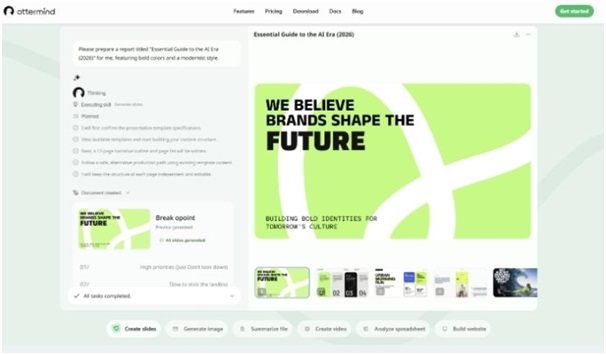
Ottermind approaches the problem as an AI agent workspace for real work. It keeps project context, connects tools, and carries work across web, desktop, and mobile. That sounds broad, so the useful question for a CSR or ESG team is narrower: does the workspace reduce the number of times people rebuild the same context before a decision?

19th India CSR Leadership Summit 2026
ADVERTISEMENT

Reporting Breaks When Evidence Loses Its Home

A CSR report has a strange production shape. It is part narrative, part evidence register, part management decision, and part public record. One person may hold the project brief, another may own the budget sheet, and a partner may send the latest field update as a document or image. A writer can turn those inputs into smooth prose and still leave the team with a fragile report if nobody can trace how a statement reached the page.

The failure is usually a context reset. Someone opens a new chat, pastes a few paragraphs, forgets the earlier decision, and asks for a cleaner version. Later, a reviewer asks why a number changed. The team then searches old threads instead of reviewing the actual report. The writing may improve while the evidence trail gets weaker.

A test protocol for this kind of work should therefore begin before anyone judges the prose. Put the brief, the latest data, the meeting record, and the required output in one task. Ask whether the result keeps the right names, periods, units, and unresolved questions visible. If the first draft can look fine but a source row disappears, the document is not ready for circulation.

That distinction gives Ottermind a practical role. The product is not the policy owner and it does not turn an unsupported figure into an approved impact claim. Its value is to keep the materials used for a task near the work produced from them, so a human reviewer has a clearer starting point.

The Source Pack Matters Before The Prompt

Tasks can accept Word documents, Excel spreadsheets, CSV files, PDFs, and common image formats such as JPG, PNG, GIF, and WebP. That range fits the way social-impact work actually arrives. A formal indicator table may be an Excel file, a partner update may be a PDF, and a photograph may carry the only visible clue about a site visit. Treating those items as one source pack changes the review question from “What did the writer remember?” to “What did the task have available?”

The source pack still needs a human owner. Label the reporting period, identify which file is authoritative, and mark any figure that remains provisional. Those decisions are not a feature claim. They are the minimum discipline that keeps an agent from making a tidy but misleading summary out of mixed versions.

An Editable Report Is A Better Handoff

The product describes its outputs as editable results. That matters for CSR work because a report rarely ends with the first generated version. A programme lead may change the scope, a finance reviewer may correct a unit, and a communications team may need a shorter public explanation. An editable handoff lets those people work on the same artefact instead of passing a finished-looking paragraph through another chain of copy and paste.

The observable result to look for is simple: can the reviewer find the decision points and amend the document without starting over? If not, the tool has created another reading surface, not a durable working document. Any section that invents a partner, merges two reporting periods, or hides an unresolved number should be discarded before committee circulation. That is a quality gate, not a stylistic preference.

Turn A Quarter Into A Reviewable Task

The documented starting path is deliberately short: create an account and sign in, define the task in the task bar, then receive the result as the agent plans and executes the workflow. A CSR team can keep that path useful by writing the task around a decision rather than a vague request for “a report.”

A better objective names the period, the source pack, the audience, and the output. For example, ask for a board-ready summary of a defined programme period, with a separate list of missing inputs and a short explanation of what still needs review. The exact wording will vary, but the structure prevents the agent from treating a public narrative as the only deliverable.
India CSR

Set The Objective Around A Decision

“Summarise this project” leaves the most important choice unstated. “Prepare a review of whether the next phase has enough evidence to scale” gives the task a direction. The second version tells the workspace why it should connect the field notes, budget data, and previous decisions. It also gives the human reviewer a clear reason to reject a polished but unsupported conclusion.

That approach suits research and synthesis, data processing, content creation, and meeting recap work, which the workspace lists among its common task types. The categories are less important than the handoff between them. A meeting recap can expose an unresolved action; a data task can surface the relevant row; a writing task can turn the confirmed material into a report section.

Keep Human Sign-Off Visible In Review

AI assistance becomes risky when a clean paragraph looks like a final approval. The review should ask who owns each claim, which source supports it, and whether the report makes a promise that the programme team can actually defend. Ottermind says critical actions require user approval and that agent work remains visible. Use that boundary as part of the workflow rather than treating it as an obstacle.

The cost of skipping this step appears later as rework. A reviewer who cannot see how an output was assembled has to reconstruct the context, question the same numbers again, and often ask for a new version. The task may have saved drafting time while adding a second review cycle.

What The Workspace Changes In A Working Day

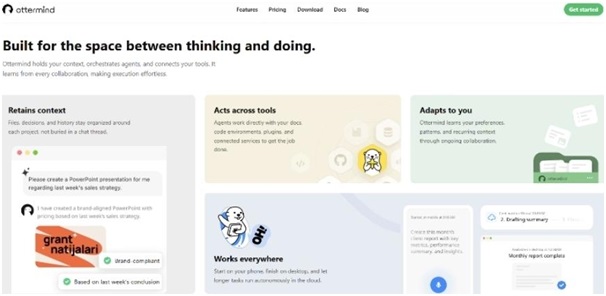
The useful change is keeping a project’s files, conversations, decisions, and history together instead of treating each request as a fresh beginning. The workspace also supports cross-platform progress: a task can start on a computer, be checked on a phone, and continue without rebuilding the project context.

That matters when CSR work crosses roles. A programme manager may make the decision, an analyst may check the figures, and a communications lead may reshape the approved material. Each person needs a different view of the same project. A shared context does not remove the need for those roles; it gives them a more stable object to review. This is the point at which OtterMind ai can be judged by the quality of the handoff, not by the novelty of the interface.

It also changes what “finished” means. A finished task should leave a usable report, a clear list of unresolved items, and enough context for the next person to make a responsible edit. If it leaves only a fluent summary, the team has gained prose but not a working record.

A Review Grid For Evidence-Heavy Work

Before a report moves from an agent workspace to a leadership or public review, use a small grid that separates the source problem from the writing problem. The grid keeps the review concrete without pretending that one score can replace professional judgment.

Work itemWhat the task can organiseWhat a human must confirm
Programme evidenceFiles, summaries, extracted figures, and open questionsPeriod, unit, source owner, and whether the figure is final
Meeting decisionsActions, themes, and a draft decision briefWho agreed, what remains conditional, and what was not decided
Public narrativeEditable sections built from approved materialAccuracy, tone, consent, and the strength of every claim

The table is useful because it gives each kind of output a different acceptance test. A report can be well written and still fail the source check. A clean data extraction can still fail the consent check. The task is complete only when the output reaches the standard required by the people who own the work.

India CSR

The Practical Case For A Context Workspace

Ottermind fits CSR and ESG teams that repeatedly turn mixed project material into reports, decks, summaries, and reviewable decisions. Its strongest case is the reduction of context rebuilding: files and project history stay close to the task, while the result remains editable across devices.

It is less useful as a substitute for an impact methodology, a finance controller, or a safeguarding review. Those responsibilities still belong to people with the authority to verify the evidence and approve the claim. For teams willing to keep that line clear, the workspace offers a sensible working surface for the messy middle between source material and finished reporting.

Tags: OtterMind
SETU Bandhan
ADVERTISEMENT
India CSR Image 1 India CSR Image 2

CSR, Sustainability, and ESG success stories hindustan zinc
ADVERTISEMENT
India CSR

India CSR

India CSR® is the largest media on CSR and sustainability offering diverse content across multisectoral issues on business responsibility. It covers Sustainable Development, Corporate Social Responsibility (CSR), Sustainability, and related issues in India. Founded in 2009, the organisation aspires to become a globally admired media that offers valuable information to its readers through responsible reporting.

Related Posts

India CSR
Business

The Ultimate Checklist for Choosing a High-Quality Plant-Based Protein

India CSR
Business

Manjari Madhura Agrawaal Embraces Past Life Regression Therapy

India CSR
Business

KRAFTON India Unveils Fresh BGMI Redeem Codes Featuring Exclusive Mecha Ant Backpack

India CSR
Business

Konsachem: Goa’s vibrant Rice Harvest Festival

India CSR
Business

Bean to Bar : A Monsoon Celebration at Taverna, Taj Cidade de Goa – Heritage

India CSR
Business

From the Eastern Mediterranean to the Coast of Goa

Load More
bba
ADVERTISEMENT

Interviews

Akanksha Sharma, Vice President – Sustainability, Subcontinent, Central Asia, Levant and; Egypt DP World
Interviews

DP World’s Sustainability Strategy: Building Greener, Inclusive Logistics in India

by India CSR

Responsible leadership means taking a long-term view, acting with transparency and ensuring that growth creates value for people, communities and...

Read moreDetails
Dr. V.K. Raju

Every Premature Baby Deserves the Right to Sight: Dr. V.K. Raju, Chairman, Goutami Eye Institute & Founder, Eye Foundation of America

India CSR Interview with George Muthoot George, Deputy Managing Director of Muthoot Finance

Muthoot Finance CSR Is About Empowerment, Not Dependency: George Muthoot George

Hardeep S. Brar - BMW Group India CEO

Skills Are the Starting Line, Jobs Are the Finish Line: BMW Group India CEO Hardeep S. Brar

Load More
Ad 1 Ad 2 Ad 3 Ad 4 Ad 5 Ad 6
ADVERTISEMENT

CSR UPDATES

CSR: M3M Foundation Takes ‘Ek Ped Maa Ke Naam’ Forward with a Community-Led Green Movement in Gurugram

ONGC Pledges ₹25 Crore for Assam Flood Recovery, Focuses on Schools and Relief Fund

Saraf Furniture Pledges to Hire 500 Flood-Affected Individuals from Assam

Bosch India Spark of Joy Supports Over 5,500 Underprivileged Children

Keelkattalai Lake Restoration Brings New Life to Chennai’s Urban Ecosystem

Indian Overseas Bank Contributes ₹50 lakh to Assam Chief Minister’s Relief Fund under CSR

STEM Learning STEM Learning STEM Learning
ADVERTISEMENT
Facebook Twitter Youtube LinkedIn Instagram
India CSR Logo

India CSR is the largest tech-led platform for information on CSR and sustainability in India offering diverse content across multisectoral issues. It covers Sustainable Development, Corporate Social Responsibility (CSR), Sustainability, and related issues in India. Founded in 2009, the organisation aspires to become a globally admired media that offers valuable information to its readers through responsible reporting. To enjoy the premium services, we invite you to partner with us.

Follow us on social media:

Subscribe to Our Newsletter

Don't miss out on the latest updates in corporate social responsibility. Subscribe to our newsletter at indiacsr.in and be part of the positive change.
Please enable JavaScript in your browser to complete this form.
Loading

  • About India CSR
  • Team
  • India CSR Awards 2026
  • India CSR Leadership Summit
  • Partnership
  • Guest Posts
  • Services
  • ESG Professional Network
  • Content Writing Services
  • Business Information
  • Contact
  • Privacy Policy
  • Terms of Use
  • Donate

Copyright © 2026 - India CSR | All Rights Reserved

No Result
View All Result
  • Home
  • Corporate Social Responsibility
    • Art & Culture
    • CSR Leaders
    • Child Rights
    • Culture
    • Education
    • Gender Equality
    • Around the World
    • Skill Development
    • Safety
    • Covid-19
    • Safe Food For All
  • Sustainability
    • Sustainability Dialogues
    • Sustainability Knowledge Series
    • Plastics
    • Sustainable Development Goals
    • ESG
    • Circular Economy
    • BRSR
  • Corporate Governance
    • Diversity & Inclusion
  • Interviews
  • SDGs
    • No Poverty
    • Zero Hunger
    • Good Health & Well-Being
    • Quality Education
    • Gender Equality
    • Clean Water & Sanitation – SDG 6
    • Affordable & Clean Energy
    • Decent Work & Economic Growth
    • Industry, Innovation & Infrastructure
    • Reduced Inequalities
    • Sustainable Cities & Communities
    • Responsible Consumption & Production
    • Climate Action
    • Life Below Water
    • Life on Land
    • Peace, Justice & Strong Institutions
    • Partnerships for the Goals
  • Articles
  • Events
  • हिंदी
  • More
    • Business
    • Finance
    • Environment
    • Economy
    • Health
    • Around the World
    • Social Sector Leaders
    • Social Entrepreneurship
    • Trending News
      • Important Days
      • Great People
      • Product Review
      • International
      • Sports
      • Entertainment
    • Case Studies
    • Philanthropy
    • Biography
    • Technology
    • Lifestyle
    • Sports
    • Gaming
    • Knowledge
    • Home Improvement
    • Words Power
    • Chief Ministers

Copyright © 2026 - India CSR | All Rights Reserved

This website uses cookies. By continuing to use this website you are giving consent to cookies being used. Visit our Privacy and Cookie Policy.
