

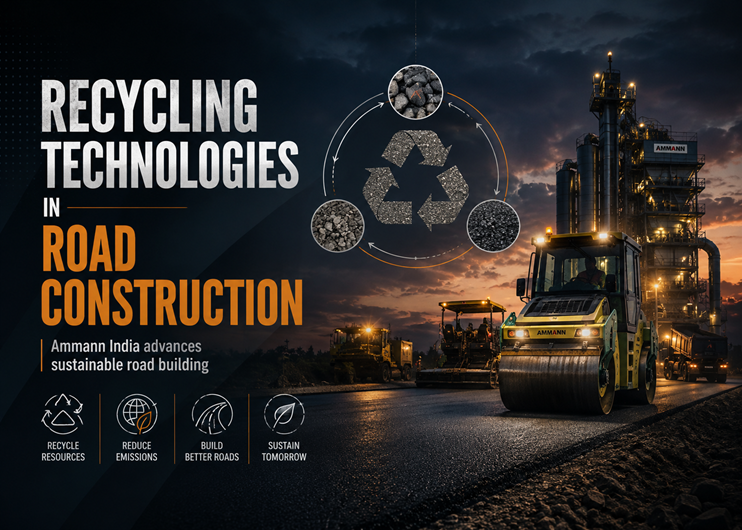


Ammann India brings industry stakeholders together in Hyderabad to advance sustainable road-building practices
HYDERABAD (India CSR): India’s road construction industry is standing at an important turning point. The country needs more roads, wider highways, stronger urban corridors, and faster connectivity. But it also faces a serious question: Can India continue to build by consuming more and more virgin resources, or can it create a new model where old road material becomes the foundation of new infrastructure?
This question formed the core of a seminar on “Recycling Technologies in Road Construction” hosted by Ammann India at Novotel Hi Tech City, Hyderabad. The event brought together more than 70 delegates from 35 organisations representing the road construction, infrastructure, research, technology, and policymaking ecosystem.
Ammann India, a leading manufacturer of road construction equipment, said it is the only company in India offering up to 60% advanced asphalt recycling solutions. Through the seminar, the company sought to create a wider dialogue on the role of recycling technologies in building sustainable, cost-efficient, and resource-conscious roads.
From Road Waste to Road Wealth
For decades, road construction has largely followed a linear model. Materials are extracted, transported, processed, used, damaged, removed, and often discarded. But recycling technologies challenge this approach.
At the centre of the discussion was Reclaimed Asphalt Pavement (RAP). RAP allows old asphalt road material to be reused in new road construction. This reduces the need for virgin aggregates and fresh bitumen. It also helps lower fuel consumption, cut material costs, and reduce the environmental impact of road projects.
The larger message was clear: old roads should not be seen as waste. They should be treated as valuable material banks.
This shift is not merely technical. It is philosophical. It changes the way road assets are understood. A road is no longer only a finished structure. It becomes a renewable resource.
Industry Must Build More with Less
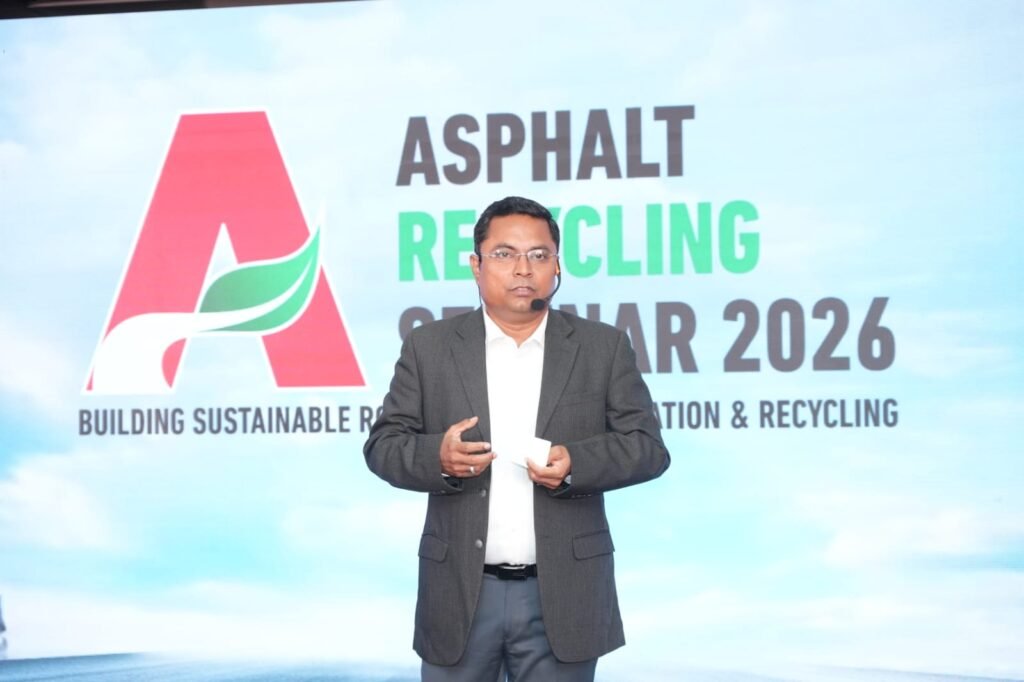
Addressing the gathering, Mr. Dheeraj Panda, Managing Director, Ammann India, said the defining question for India’s road construction industry over the next decade will not be how much infrastructure the country builds, but how much value it can create while consuming fewer virgin resources.
“The defining question for India’s road construction industry over the next decade will not be how much infrastructure we build, but how much value we can create while consuming fewer virgin resources,” he said.
He added that the industry’s competitive advantage will increasingly come from innovation, circularity, and technology-led resource optimisation.
“Solutions such as Reclaimed Asphalt Pavement (RAP) represent a fundamental shift in how we think about road assets as resources which can be renewed. Collaboration between industry, policymakers, researchers, and technology providers are critical to enable an ecosystem for recycling. Through discussions like these Ammann aims to achieve this and make recycling an integral part of road construction in India,” Mr. Panda said.
His remarks captured the central concern of the seminar. Infrastructure growth cannot be measured only in kilometres. It must also be measured in the resources saved, emissions reduced, and value recovered from existing assets.
Experts Discuss Technology and Policy
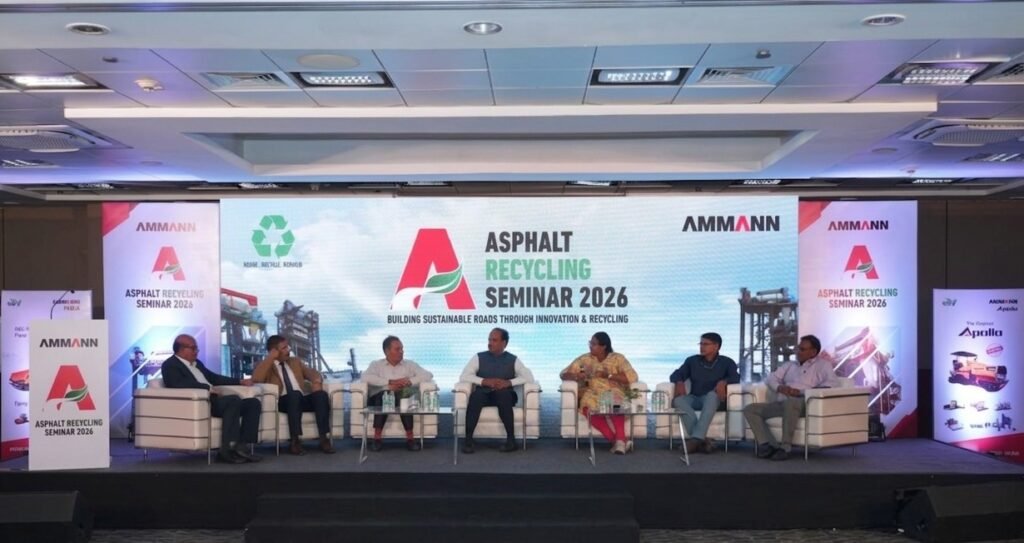
The seminar featured presentations by leading industry and academic experts. Speakers included Prasad Dayal, General Manager, Ammann India; Martinho J. Fernandes, Assistant Vice President and Product Head, Asphalt Plants, Ammann India; Dr. Dharamveer Singh, Professor at IIT Bombay; Dr. Manoranjan Parida, Former Director, CSIR-CRRI; Dr. Ramya Sri Mullapudi, Assistant Professor, IIT Hyderabad; and Rajesh Kumar Pandey, Independent Director, Vertis Infrastructure Trust.
The sessions explored several important themes, including asphalt recycling technologies, high RAP utilisation, pavement recycling practices, rejuvenator technologies, evolving policy frameworks, and the future of asphalt recycling in India.
Experts highlighted that advanced RAP technologies can substantially reduce virgin aggregate consumption. They also discussed how recycling can lower fuel use and generate cost savings while maintaining pavement quality and performance.
The discussions also underlined that wider adoption of recycling will need more than machines. It will require stronger policy support, contractor confidence, technical standards, quality assurance, and greater awareness among project owners.
Sustainability and Savings Can Move Together
One of the most important takeaways from the seminar was that sustainability and cost efficiency are not opposite goals.
In many sectors, sustainable practices are often seen as expensive. But in road construction, recycling technologies offer a practical model where environmental responsibility and financial savings can work together.
By reusing existing asphalt material, road developers can reduce dependence on fresh aggregates and bitumen. This can also reduce transportation needs and fuel consumption. It can help control project costs at a time when material prices continue to rise.
For a country like India, this is highly relevant. India’s infrastructure demand is massive. But natural resources are not unlimited. If every new road depends only on fresh extraction, the long-term environmental and economic burden will become heavier.
Recycling technologies offer a smarter path. They allow the country to build without blindly consuming.
Telangana and Andhra Pradesh Offer Strong Opportunities
The seminar also highlighted the significant opportunities for recycling-led road construction in Telangana and Andhra Pradesh.
Both states are witnessing continued investment in transportation infrastructure. The growth of highways, urban roads, industrial corridors, and regional connectivity projects is creating strong demand for advanced road construction technologies.
Ammann India said it commands an estimated 50% market share across Telangana and Andhra Pradesh and has supported several road infrastructure projects in the region. With its technology portfolio and local presence, the company said it continues to work closely with contractors and project stakeholders to advance sustainable construction practices.
The region can play an important role in demonstrating the value of recycling technologies. Successful adoption in high-growth infrastructure markets can encourage wider acceptance across India.
Recycling Needs an Ecosystem
The seminar made it clear that recycling in road construction cannot become mainstream through isolated efforts.
Technology providers must offer reliable solutions. Contractors must develop the confidence to use recycled material. Researchers must validate performance under Indian conditions. Policymakers must create supportive frameworks. Project owners must include recycling in planning and procurement.
Only then can recycling move from discussion to implementation.
This is why platforms such as the Hyderabad seminar are important. They bring different stakeholders into one conversation. They help create trust, exchange knowledge, and identify practical barriers.
The future of road recycling depends on collaboration.
Roads Must Become Part of the Circular Economy
The idea of recycling technologies in road construction is closely linked with the larger concept of circular economy.
In a circular model, materials are not discarded after one use. They are recovered, renewed, and reused. This reduces waste and improves resource productivity.
Road construction has strong potential to adopt this model. Every old pavement contains aggregates and bitumen that can be recovered. Every road rehabilitation project can become an opportunity for material reuse. Every damaged road can become a source for future construction.
This approach can transform the economics and ethics of infrastructure development.
It asks a deeper question: Should progress always mean extracting more from nature, or can progress also mean using what we already have more intelligently?
Ammann India’s Role in Sustainable Infrastructure
At the national level, Ammann India said it remains at the forefront of asphalt recycling innovation.
Ammann India Private Limited is a subsidiary of the Swiss-based Ammann Group. Headquartered in Ahmedabad, Gujarat, the company manufactures advanced construction equipment, including compaction equipment, asphalt and concrete mixing plants, and paving solutions.
The company said its technologies are designed to support India’s evolving infrastructure requirements while improving productivity, efficiency, and environmental performance.
Through its comprehensive product portfolio and aftermarket support network, Ammann India continues to contribute to the development of highways, roads, airports, and other critical infrastructure projects across the country.
A Roadmap for Responsible Infrastructure
The seminar concluded with a shared commitment among participants to strengthen collaboration and accelerate the adoption of recycling technologies in road construction.
The message from Hyderabad was timely and thought-provoking. India must build. But India must also rethink how it builds.
The future of road construction will not be defined only by speed, scale, and budget. It will also be defined by resource wisdom. It will be defined by the ability to convert old materials into new value. It will be defined by the discipline to reduce waste and the imagination to make infrastructure circular.
A road connects places. But a recycled road connects development with responsibility.
As India expands its infrastructure network, recycling technologies can help ensure that progress does not come at the cost of excessive resource consumption. The road ahead must be wider, stronger, and faster. But it must also be wiser.



