


Initiative Improves Haemoglobin Levels, Empowers Women and Girls, and Strengthens Community Nutrition Practices
NEW DELHI (India CSR): ITC Ltd., in collaboration with the Institute for Global Development (IGD), has completed five years of Project Samposhan, a flagship initiative under ITC’s Social Investment Programme aimed at combating anaemia among women and adolescent girls. The programme has reached more than 1.3 lakh beneficiaries across three districts of Uttar Pradesh, showing measurable improvements in haemoglobin levels and nutrition awareness, the company informed.
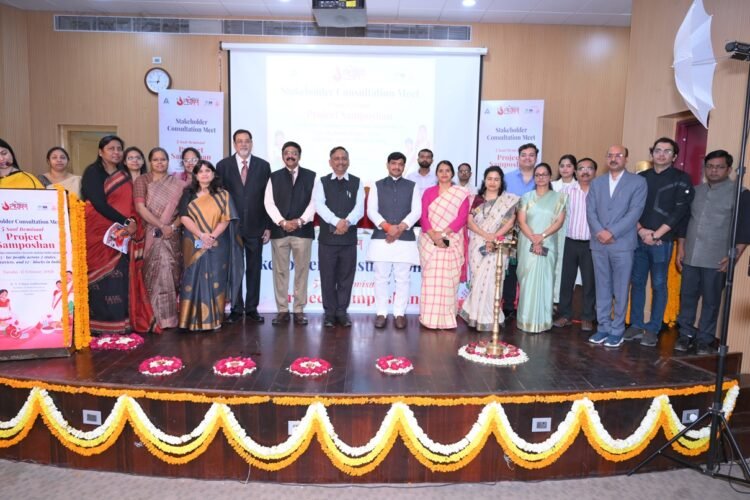
To mark this milestone, ITC organised a Stakeholders Consultation Meet on Anaemia on February 17, 2026, at the K. N. Udupa Auditorium, Institute of Medical Sciences (IMS), Banaras Hindu University (BHU), Varanasi. The forum brought together government representatives, academic institutions, healthcare experts, community leaders, development partners, frontline workers and media to review the project’s impact and discuss future scale-up strategies.
Launched in 2021, Project Samposhan focuses on evidence-based, inclusive and community-driven interventions to address iron deficiency, one of the primary causes of anaemia in India, the company informed.
Key Facts at a Glance
| Key Aspect | Details |
|---|---|
| Initiative | Project Samposhan |
| Implementing Organisation | ITC Ltd. |
| Knowledge Partner | Institute of Medical Sciences (IMS), BHU |
| Development Partner | Institute for Global Development (IGD) |
| Launch Year | 2021 |
| Milestone | 5 Years of Implementation |
| Beneficiaries Reached | Over 1,30,000 women and adolescent girls |
| Geography | Three districts in Uttar Pradesh |
| Core Focus | Anaemia prevention and nutrition awareness |
| Key Innovation | Promotion of Iron-fortified iodised salt |
| Event Location | IMS BHU, Varanasi |
| Event Date | February 17, 2026 |
Evidence-Based Community Transformation
Project Samposhan was conceived to address one of India’s most persistent public health challenges—anaemia among women and adolescent girls. Through a structured multi-stakeholder approach, the programme combines nutrition awareness, behavioural change communication, community engagement, and scientific interventions. Over the past five years, the project has achieved tangible health outcomes. Participants have reported improved haemoglobin levels, better dietary practices, and greater awareness of iron deficiency and nutrition.
The initiative emphasises empowering communities rather than delivering short-term interventions. Women and adolescent girls are trained to adopt healthier diets, recognise symptoms of anaemia, and incorporate iron-rich foods and fortified products into their daily nutrition.

Progress and Partnerships
The anniversary consultation meeting at BHU served as a platform to review the project’s progress and discuss future strategies for scaling its impact. The Director of the Institute of Medical Sciences, BHU, appreciated the project’s contribution and its alignment with national priorities. “Over the past decade, the Government of India has made transformative efforts to make India anaemia-free through initiatives such as T3 screening camps, public awareness campaigns, and funding under the Anaemia Mukt Bharat programme,” the Director noted.
The gathering highlighted how collaborations between corporate institutions, academia, development organisations, and communities can accelerate progress toward national health goals.
Early Diagnosis and Treatment
The Institute of Medical Sciences, BHU played a crucial role in providing scientific support and medical expertise throughout the programme. The Dean of IMS, BHU, highlighted the institute’s efforts in promoting early diagnosis and timely treatment of anaemia, both at hospital facilities and through outreach programmes in community health centres. Experts including Prof. Dr. Ravi Shankar and Hari Shankar emphasised that Project Samposhan demonstrates the power of long-term community-centric partnerships.
They noted that the initiative has helped strengthen local healthcare ecosystems while encouraging communities to take ownership of their nutritional health.
Scientific Insights
The consultation event also featured knowledge sessions by Dr. Raghu, Director of the National Institute of Nutrition (NIN), and Dr. Seema Puri, former Professor at IHME, who discussed emerging research and policy perspectives on anaemia prevention. These sessions highlighted the importance of nutrition-sensitive interventions, dietary diversity, and scientific monitoring in tackling anaemia sustainably.

Double-Fortified Salt
A unique aspect of Project Samposhan has been the promotion and evaluation of double-fortified salt (DFS)—iron-fortified iodised salt designed to improve iron intake. According to ITC, DFS can meet nearly 25 percent of the average daily iron requirement, making it an effective and scalable nutritional intervention.
Anuj Rustagi, Chief Executive Staples (Aashirvaad), ITC Ltd., highlighted the significance of the initiative. He said, “Iron deficiency is one of the leading causes of anaemia, affecting a large section of children and women of reproductive age. Through Project Samposhan, we adopted a systematic multi-stakeholder approach to address iron deficiency-led anaemia in communities.”
He added that partnerships with IGD and IMS BHU have been instrumental in achieving measurable community outcomes.
Rustagi also noted that the project helped address technical challenges related to manufacturing and consumer acceptance of iron-fortified salt, providing important insights for wider adoption.
Stories of Change
One of the most powerful moments of the anniversary event was the sharing of beneficiary stories from rural communities. Women and adolescent girls described how the programme helped them understand nutrition, iron deficiency, and the importance of balanced diets. Many beneficiaries reported increased energy levels, improved health, and greater confidence in managing family nutrition, demonstrating the deeper social impact of the initiative.
National Health Goals
Project Samposhan aligns closely with the Government of India’s Anaemia Mukt Bharat mission, which aims to significantly reduce anaemia prevalence across the country. By combining corporate resources, academic research, and grassroots engagement, the initiative reflects a growing trend in India where CSR programmes contribute directly to national development priorities. ITC’s Social Investment Programme continues to focus on nutrition, health, sustainable livelihoods, and community empowerment across multiple states.
Scaling Impact and Innovation
As Project Samposhan enters its next phase, ITC and IGD plan to expand successful interventions, strengthen community partnerships, and integrate digital tools and behavioural science approaches. Future plans include scaling best practices to new regions, deepening research collaborations, and enhancing community-led monitoring systems. With anaemia remaining a major health challenge in India, initiatives like Project Samposhan demonstrate how sustained partnerships and science-backed interventions can deliver lasting change.
Awareness Changed Lives
In several villages across Uttar Pradesh, adolescent girls participating in Project Samposhan began regular haemoglobin testing, nutrition sessions, and dietary awareness programmes. Through community workshops and household counselling, families learned about iron-rich foods, fortified salt, and balanced diets. Within a few years, health workers observed visible improvements in haemoglobin levels and reduced symptoms of fatigue among participants.
The transformation extended beyond health. Girls who once struggled with weakness and school absenteeism began attending classes regularly and participating actively in community activities. The programme demonstrates that nutrition awareness combined with accessible solutions can create long-lasting improvements in community health.
(India CSR)