• India CSR Awards 2025
  • India CSR Leadership Summit
  • Guest Posts
Friday, January 16, 2026
India CSR
  • Home
  • Corporate Social Responsibility
    • Art & Culture
    • CSR Leaders
    • Child Rights
    • Culture
    • Education
    • Gender Equality
    • Around the World
    • Skill Development
    • Safety
    • Covid-19
    • Safe Food For All
  • Sustainability
    • Sustainability Dialogues
    • Sustainability Knowledge Series
    • Plastics
    • Sustainable Development Goals
    • ESG
    • Circular Economy
    • BRSR
  • Corporate Governance
    • Diversity & Inclusion
  • Interviews
  • SDGs
    • No Poverty
    • Zero Hunger
    • Good Health & Well-Being
    • Quality Education
    • Gender Equality
    • Clean Water & Sanitation – SDG 6
    • Affordable & Clean Energy
    • Decent Work & Economic Growth
    • Industry, Innovation & Infrastructure
    • Reduced Inequalities
    • Sustainable Cities & Communities
    • Responsible Consumption & Production
    • Climate Action
    • Life Below Water
    • Life on Land
    • Peace, Justice & Strong Institutions
    • Partnerships for the Goals
  • Articles
  • Events
  • हिंदी
  • More
    • Business
    • Finance
    • Environment
    • Economy
    • Health
    • Around the World
    • Social Sector Leaders
    • Social Entrepreneurship
    • Trending News
      • Important Days
        • Festivals
      • Great People
      • Product Review
      • International
      • Sports
      • Entertainment
    • Case Studies
    • Philanthropy
    • Biography
    • Technology
    • Lifestyle
    • Sports
    • Gaming
    • Knowledge
    • Home Improvement
    • Words Power
    • Chief Ministers
No Result
View All Result
  • Home
  • Corporate Social Responsibility
    • Art & Culture
    • CSR Leaders
    • Child Rights
    • Culture
    • Education
    • Gender Equality
    • Around the World
    • Skill Development
    • Safety
    • Covid-19
    • Safe Food For All
  • Sustainability
    • Sustainability Dialogues
    • Sustainability Knowledge Series
    • Plastics
    • Sustainable Development Goals
    • ESG
    • Circular Economy
    • BRSR
  • Corporate Governance
    • Diversity & Inclusion
  • Interviews
  • SDGs
    • No Poverty
    • Zero Hunger
    • Good Health & Well-Being
    • Quality Education
    • Gender Equality
    • Clean Water & Sanitation – SDG 6
    • Affordable & Clean Energy
    • Decent Work & Economic Growth
    • Industry, Innovation & Infrastructure
    • Reduced Inequalities
    • Sustainable Cities & Communities
    • Responsible Consumption & Production
    • Climate Action
    • Life Below Water
    • Life on Land
    • Peace, Justice & Strong Institutions
    • Partnerships for the Goals
  • Articles
  • Events
  • हिंदी
  • More
    • Business
    • Finance
    • Environment
    • Economy
    • Health
    • Around the World
    • Social Sector Leaders
    • Social Entrepreneurship
    • Trending News
      • Important Days
        • Festivals
      • Great People
      • Product Review
      • International
      • Sports
      • Entertainment
    • Case Studies
    • Philanthropy
    • Biography
    • Technology
    • Lifestyle
    • Sports
    • Gaming
    • Knowledge
    • Home Improvement
    • Words Power
    • Chief Ministers
No Result
View All Result
India CSR
No Result
View All Result
Home News

Aspirational Districts and Blocks: Development Must Move from Projects to People

India CSR by India CSR
January 15, 2026
in News
Reading Time: 7 mins read
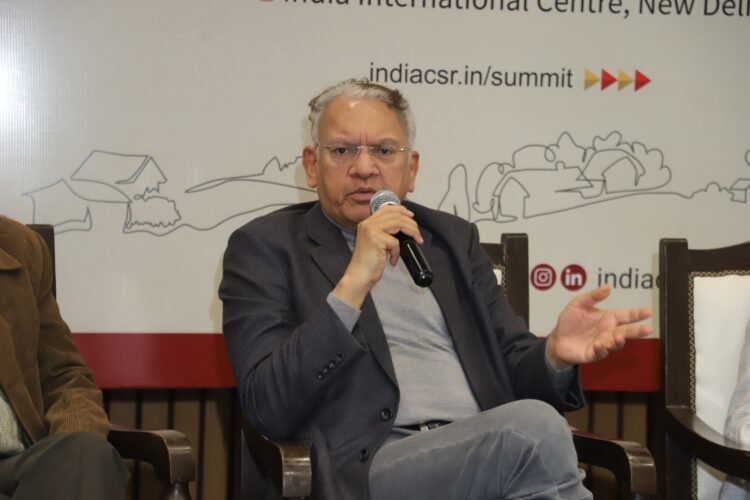
Satish Jha at India CSR Summit in New Delhi

Satish Jha at India CSR Summit in New Delhi

Share Share Share Share
WhatsApp icon
WhatsApp — Join Us
Instant updates & community
Google News icon
Google News — Follow Us
Get our articles in Google News feed

By Satish Jha

As India sets its sights on becoming a developed nation by 2047, the centenary of Independence, few questions are as consequential as this: how will development actually reach those who have been waiting the longest? Not in speeches, dashboards, or pilot projects—but in lived capability, dignity, and agency. The Government of India, through NITI Aayog, deserves credit for recognising this challenge early. The Aspirational Districts Programme (ADP), launched in 2018, and its successor, the Aspirational Blocks Programme (ABP), represent an important shift in thinking.

They acknowledge that national averages conceal deep local deprivation, and that progress must be geographically targeted, outcome-oriented, and data-informed.
By identifying 112 districts and later 500 blocks that lag on key indicators—health, nutrition, education, agriculture, financial inclusion, infrastructure—the state has attempted to focus attention where it matters most.

Yet recognition is not resolution. After decades of well-intentioned interventions, a hard truth remains: most government programmes designed to support the poorest Indians are poorly designed for the complexity of development itself. They often confuse activity with progress, management with transformation, and speed with sustainability.

This is where corporate social responsibility—if reimagined seriously—can play a decisive role.

One of the central weaknesses of India’s development architecture lies in the uncritical import of business metrics into social transformation. Targets, dashboards, rankings, and timelines—useful in operating enterprises—have come to dominate welfare and development programmes.

But development is not a quarterly result.

It is slow, non-linear, and deeply human. It does not respond well to metrics that prioritise administrative convenience over lived outcomes. Too often, success is measured in terms of funds spent, assets created, sessions conducted, or beneficiaries enrolled—rather than whether a child can actually read with comprehension, whether a young adult can reason, adapt, and aspire, or whether a village has the collective capability to solve its own problems.

The Aspirational Districts and Blocks framework speaks of “outcomes,” but in practice, measurement frequently slips back into managerial proxies. What gets measured is what is easy to count, not what truly counts. Learning becomes enrollment. Health becomes service delivery. Livelihood becomes short-term skilling.

CSR programmes, when they mirror this logic, merely add parallel lanes to the same flawed highway, not recognising that development Is not a Quick Fix—and never was.

India has, metaphorically, been “boiling the water of development” since 1947. Schemes have multiplied, budgets have expanded, institutions have been created. And yet, for large sections of the population, the water has never quite reached boiling point.

The reason is not lack of effort. It is misunderstanding of critical mass.

Water does not boil at 40 or 60 degrees, no matter how long it is heated. It boils at 100 degrees. Development works the same way. Unless a threshold of capability, participation, and institutional strength is crossed, progress remains cosmetic.

Too many programmes—governmental and CSR alike—spread themselves thinly across geographies, sectors, and beneficiaries. They improve indicators at the margins without creating the density of change required to make progress irreversible. Aspirational areas, by definition, require concentration, not dispersion.

The shift from districts to blocks under ABP is a step in the right direction. But even the block may be too large a unit. The next frontier of meaningful development may well be the village—or even the citizen.

At the heart of India’s development challenge lies a simple but uncomfortable truth: we have focused more on delivering schemes than on evolving citizens.

The weakest citizen—poorly educated, poorly nourished, poorly informed—remains the system’s greatest blind spot. Most programmes assume a passive beneficiary, not an active learner. They aim to provide services, not to build agency.

Education illustrates this failure starkly. Schooling in aspirational areas often forces children into alien curricula, disconnected from their context, aspirations, or capabilities. Learning is reduced to exam-oriented cramming that measures recall, not understanding; compliance, not curiosity.

The result is tragic but predictable: years spent in school without genuine learning; certificates without confidence; skills without adaptability.

CSR investments in education frequently replicate this pattern—smart classrooms without smart pedagogy, digital content without cognitive grounding, assessments that reward memorisation rather than mastery.

If development is to endure, the focus must shift decisively from schooling to learning, from coverage to capability, from inputs to outcomes that matter in real life.

In recent years, skilling has emerged as a preferred solution for employment and livelihoods, especially in aspirational geographies. While skilling has a role—particularly for immediate income—it is not a substitute for foundational capability.

Skilling prepares individuals for yesterday’s jobs, not tomorrow’s uncertainty. It taps only a narrow slice of human potential and often locks individuals into low-agency trajectories. Without strong foundations in literacy, numeracy, reasoning, communication, and adaptability, skills age quickly.

Aspirational India does not need just employable citizens. It needs capable citizens—people who can learn continuously, adapt to change, participate meaningfully in democracy, and contribute creatively to the economy.

CSR that focuses only on skilling risks producing fast outputs but fragile outcomes.

Another persistent error in development thinking is the belief that a few well-chosen programmes can unlock transformation. In reality, development is inherently multipronged.

Education without health falters. Livelihood without learning stagnates. Infrastructure without institutions decays. Technology without human capability amplifies inequality.

The Aspirational Districts and Blocks Programme recognises this in theory through its multi-sectoral framework. But implementation often fragments into silos—each department, partner, or CSR initiative operating independently, optimising its own metrics.

What is missing is local architecture: a coherent, place-based design that integrates education, health, livelihoods, governance, and culture into a shared developmental trajectory.

Such architecture cannot be centrally imposed. It must be locally imagined, locally led, and locally owned.

Few ideas have been as enthusiastically embraced—and as superficially implemented—as the concept of “smart villages.” Too often, smartness is equated with devices, dashboards, or connectivity.

But villages do not become smart because technology arrives. They become smart when people become capable of using knowledge, making choices, solving problems, and leading collectively.

The first infrastructure that needs upgrading is not digital—it is learning infrastructure. This includes not just schools, but community learning spaces, teacher capacity, local mentors, and pathways for lifelong learning.

CSR is uniquely positioned to invest here, not as charity but as nation-building. If CSR is to matter on the road to 2047, it must evolve from project funding to developmental partnership.

This means:
1. Aligning with NITI Aayog’s Aspirational Blocks, but resisting the temptation to chase rankings or quick wins.
2. Choosing depth over breadth, committing to fewer geographies but staying long enough to cross critical mass.
3. Placing the citizen at the centre, especially the weakest—designing programmes that evolve capability, not dependency.
4. Redefining measurement, focusing on learning outcomes, cognitive growth, agency, and institutional resilience rather than activity counts.
5. Architecting locally, co-creating development pathways with district administrations, panchayats, educators, and community leaders.
6. Investing in leadership, because no development trajectory survives without local champions.

CSR must bring not just money, but skills, patience, governance discipline, and humility.

The genius of the term “aspirational” lies in its recognition of desire—the desire of people and places to do better. But aspiration without capability breeds frustration.

India’s task over the next two decades is to convert aspirational districts, blocks, villages, and citizens into able ones.

That journey cannot be rushed. It cannot be managed like a business operation. It must be cultivated—carefully, locally, and ethically.

Government has laid the groundwork by identifying where attention is most needed. CSR now has the opportunity—and responsibility—to shape how that attention translates into lasting change.

Viksit Bharat 2047 will not be built by schemes alone. It will be built when the weakest Indian becomes a confident learner, an informed citizen, and an active participant in the nation’s future.

That is not a CSR obligation. It’s a shared national project!

Disclaimer: Satish Jha was speaking at the 17th India CSR Summit 2026, themed “CSR for Aspirational Blocks Development: Vision, Action and Collaboration,” exploring how Corporate Social Responsibility (CSR) can help transform Aspirational Blocks into self-reliant, thriving, and sustainable communities. The Summit featured corporate leaders, development experts, NGOs, and government representatives to turn vision into action and partnerships into measurable impact.

About the Author

Satish Jha co‑founded Jansatta for the Indian Express Group and served as Editor of Dinamaanat The Times of India. Later, he helped bring the One Laptop per Child (OLPC) project to India and now works with schools to introduce simple, affordable technologies—what he calls a “cellphone of education”—to support learning in more than 50 K‑12 institutions.

copyright@indiacsr.in
Ambedkar Chamber
ADVERTISEMENT
ESG Professional Network
ADVERTISEMENT
India CSR Image 1 India CSR Image 2
India Sustainability Awards 2026 India Sustainability Awards 2026

CSR, Sustainability, and ESG success stories hindustan zinc
ADVERTISEMENT
India CSR

India CSR

India CSR is the largest media on CSR and sustainability offering diverse content across multisectoral issues on business responsibility. It covers Sustainable Development, Corporate Social Responsibility (CSR), Sustainability, and related issues in India. Founded in 2009, the organisation aspires to become a globally admired media that offers valuable information to its readers through responsible reporting.

Related Posts

Full-Scale Off-Site Emergency Mock Drill Held at Jindal Steel Angul
News

Full-Scale Off-Site Emergency Mock Drill Held at Jindal Steel Angul

4 days ago
Naveen Jindal Inaugurates Learning Model Labs at Jindal Steel Angul
News

Naveen Jindal Inaugurates Learning Model Labs at Jindal Steel Angul

1 week ago
CSR: SECL Partners with Sri Sathya Sai Trust to Set Up Rs 35 Cr Healthcare Skill Centre in Chhattisgarh
News

CSR: SECL Partners with Sri Sathya Sai Trust to Set Up Rs 35 Cr Healthcare Skill Centre in Chhattisgarh

1 week ago
Directorate General of Mines Safety (DGMS) Celebrates 125th Foundation Day
News

Directorate General of Mines Safety (DGMS) Celebrates 125th Foundation Day

1 week ago
AU Small Finance Bank
News

AU Small Finance Bank Drives ESG Leadership with Sustainability Report 2024–25

1 week ago
India CSR News
News

NDDB Foundation Drives Nutrition Security Through National CSR Conclave

1 week ago
Load More
Ambedkar Chamber
ADVERTISEMENT
India Sustainability Awards 2026
ADVERTISEMENT

LATEST NEWS

Explore The Best Online Tutor Jobs In Delhi For Teachers And Freshers

The Authenticity Gold Rush: Why Human-Centric Writing is the Ultimate Competitive Advantage in 2025

Addressing Male Infertility in Coimbatore: Ways Modern Medicine Can Help

Everything NRIs Need to Know About FCNR Accounts

4 Swipe Machine Security Features Every Merchant Should Know

TeaMax Café Reflects on 2025: Brewing Bold Growth Across India

Ad 1 Ad 2 Ad 3
ADVERTISEMENT
ESG Professional Network
ADVERTISEMENT

TOP NEWS

MISHTI Meet in Vijayawada Focuses on Mangrove Conservation and Coastal Livelihoods

Jobsahi Introduces Bharat-First Digital Employability Infrastructure to Redefine Technical Hiring in India

Aspirational Districts and Blocks: Development Must Move from Projects to People

ALTPORT Launches a Process-Driven Alternative Investment Platform for HNIs, UHNIs & Global Investors

London Kids Reflect 2025: 194 New Centres, One Powerful Year of Preschool Growth Across India

Pithapuram’s Transformation: Five Landmark Initiatives Led by Deputy CM Pawan Kalyan

Load More
STEM Learning STEM Learning STEM Learning
ADVERTISEMENT

Interviews

Sudeep Agrawal, CFO & Head – CSR, Ashirvad by Aliaxis
Interviews

Integrating Financial Leadership With Impactful CSR Initiatives: An Interview with Sudeep Agrawal, Ashirvad by Aliaxis

by India CSR
December 29, 2025

How Ashirvad by Aliaxis embeds sustainability into its core business strategy.

Read moreDetails
Sakina Baker, Head – CSR, Bosch Limited, and Head – Bosch India Foundation

Driving Social Innovation & Inclusive Skilling: An Exclusive Interview with Sakina Baker of Bosch India

December 1, 2025
Sita Ram Gupta speaking at the 16th India CSR Summit in New Delhi on November 21, 2025. © India CSR

Life is a Forward Progression, not a Backward Regression, Says Sita Ram Gupta

November 26, 2025
Brijesh Agarwal, Co-Founder of IndiaMART InterMESH Limited

Driving Education and Skill Development Through CSR: An Interview with Brijesh Agarwal of IndiaMART

November 10, 2025
Load More
Facebook Twitter Youtube LinkedIn Instagram
India CSR Logo

India CSR is the largest tech-led platform for information on CSR and sustainability in India offering diverse content across multisectoral issues. It covers Sustainable Development, Corporate Social Responsibility (CSR), Sustainability, and related issues in India. Founded in 2009, the organisation aspires to become a globally admired media that offers valuable information to its readers through responsible reporting. To enjoy the premium services, we invite you to partner with us.

Follow us on social media:


Dear Valued Reader

India CSR is a free media platform that provides up-to-date information on CSR, Sustainability, ESG, and SDGs. We need reader support to continue delivering honest news. Donations of any amount are appreciated.

Help save India CSR.

Donate Now

Donate at India CSR

  • About India CSR
  • Team
  • India CSR Awards 2025
  • India CSR Leadership Summit
  • Partnership
  • Guest Posts
  • Services
  • ESG Professional Network
  • Content Writing Services
  • Business Information
  • Contact
  • Privacy Policy
  • Terms of Use
  • Donate

Copyright © 2025 - India CSR | All Rights Reserved

No Result
View All Result
  • Home
  • Corporate Social Responsibility
    • Art & Culture
    • CSR Leaders
    • Child Rights
    • Culture
    • Education
    • Gender Equality
    • Around the World
    • Skill Development
    • Safety
    • Covid-19
    • Safe Food For All
  • Sustainability
    • Sustainability Dialogues
    • Sustainability Knowledge Series
    • Plastics
    • Sustainable Development Goals
    • ESG
    • Circular Economy
    • BRSR
  • Corporate Governance
    • Diversity & Inclusion
  • Interviews
  • SDGs
    • No Poverty
    • Zero Hunger
    • Good Health & Well-Being
    • Quality Education
    • Gender Equality
    • Clean Water & Sanitation – SDG 6
    • Affordable & Clean Energy
    • Decent Work & Economic Growth
    • Industry, Innovation & Infrastructure
    • Reduced Inequalities
    • Sustainable Cities & Communities
    • Responsible Consumption & Production
    • Climate Action
    • Life Below Water
    • Life on Land
    • Peace, Justice & Strong Institutions
    • Partnerships for the Goals
  • Articles
  • Events
  • हिंदी
  • More
    • Business
    • Finance
    • Environment
    • Economy
    • Health
    • Around the World
    • Social Sector Leaders
    • Social Entrepreneurship
    • Trending News
      • Important Days
      • Great People
      • Product Review
      • International
      • Sports
      • Entertainment
    • Case Studies
    • Philanthropy
    • Biography
    • Technology
    • Lifestyle
    • Sports
    • Gaming
    • Knowledge
    • Home Improvement
    • Words Power
    • Chief Ministers

Copyright © 2025 - India CSR | All Rights Reserved

This website uses cookies. By continuing to use this website you are giving consent to cookies being used. Visit our Privacy and Cookie Policy.