

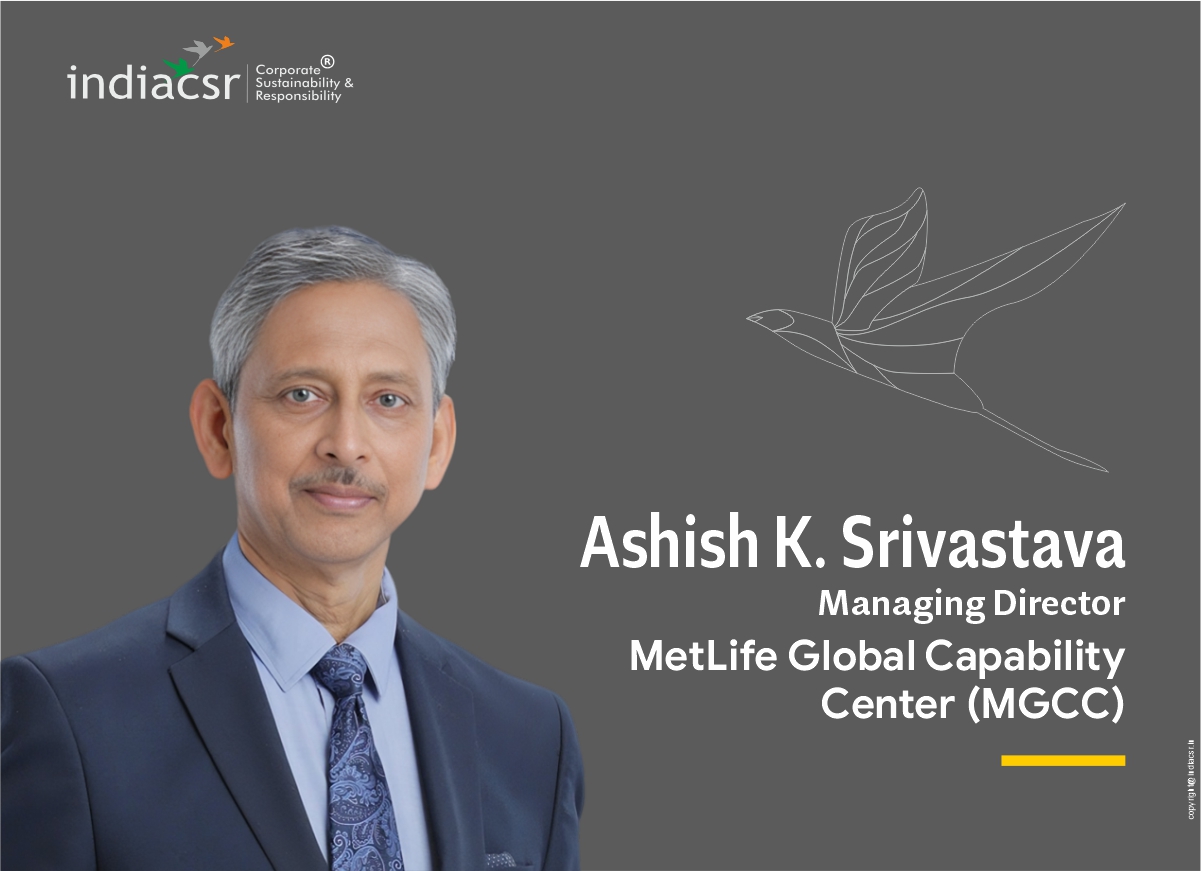



GCCs are evolving into strategic capability hubs, bringing together expertise in technology, data, innovation, talent and problem-solving.
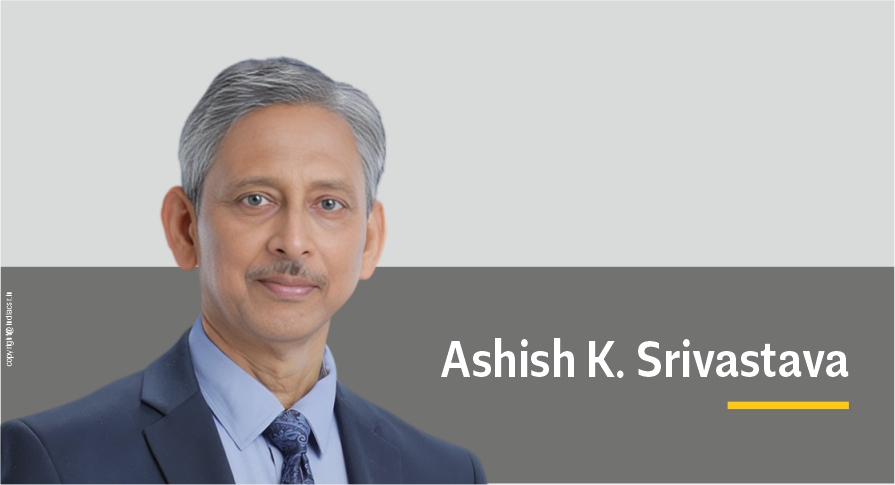
By Ashish K. Srivastava
Corporate Social Responsibility (CSR) in India is evolving beyond fulfilling a mandate toward creating meaningful, lasting impact. For organizations, the measure of CSR success is not simply about the funds invested or the number of beneficiaries reached, but whether interventions create capabilities, unlock opportunities and strengthen communities over time. At MetLife Global Capability Center (MGCC), this thinking shapes our approach to community outreach, with a focus on addressing relevant needs and enabling sustainable outcomes.
Why Purpose-Led CSR Matters Now
CSR creates the greatest value when it responds to the needs and aspirations of the communities it serves. For Global Capability Centers (GCCs), this presents an opportunity to apply strengths in technology, talent, operations and problem-solving to community priorities.
Rather than viewing CSR as a separate set of activities, organizations can approach it as an extension of their broader purpose, bringing together people, capabilities and partnerships to address social challenges. This requires a shift in perspective: from asking, “What did we do?” to asking, “What changed because we did it?”
From Activities to Sustainable Community Outcomes
Participation alone cannot define a program’s impact. In vocational skilling, success depends not only on training numbers, but also on whether participants complete their programs, acquire relevant capabilities and translate those capabilities into livelihoods and greater economic independence.
Our Sewing Machine Operator program for women in Jaipur illustrates this progression. Under this initiative, 150 women were trained with every participant successfully completing the program. More importantly, 119 women transitioned into livelihoods, reflecting a 79.3% placement rate.
These outcomes demonstrate why CSR initiatives must look beyond participation to the opportunities they create. The focus should be on enabling participants to apply their skills and build sustainable livelihoods, rather than measuring success through training numbers alone.
Designing around Evolving Community Needs
Purpose-led CSR also requires organizations to respond to changing community needs and emerging opportunities. Our electric vehicle (EV) skilling program for women in Noida illustrates this approach.
As the EV ecosystem develops, it is creating new employment and livelihood opportunities. However, accessing these opportunities require more than technical training. Mobility, digital awareness, workplace readiness and social barriers can all influence participation.
The program trained 81 women, exceeding its target of 60. Of these, 60 secured learner licenses and 59 gained access to employment or self-employment opportunities.
The experience reinforces the importance of designing programs around the practical barriers participants face while preparing them for emerging sectors. This means looking beyond technical training to address the wider challenges that may limit access to employment and livelihood opportunities. By accounting for these barriers from the outset, organizations can embed inclusion as an integral part of program design rather than treating it as an afterthought.
The same principle applies to mental well-being. Our work with students and teachers in Noida focuses on creating safe spaces, building resilience and strengthening support systems. The objective is not simply to conduct awareness sessions, but to create an environment where individuals feel comfortable recognizing challenges and seeking help.
Building Partnerships and Accountability
Community programs are more effective when they draw on local knowledge, implementation expertise and strong community relationships. Long-term partnerships help organizations understand needs on the ground, adapt interventions and build shared ownership of outcomes.
Equally important is defining how long-term success will be measured. Traditional CSR metrics, such as funds invested, programs conducted and people reached, remain relevant but offer only a partial picture.
In skilling, employment, self-employment and improved livelihoods are stronger indicators of outcomes than training numbers alone. Similarly, in mental well-being, impact can be assessed beyond the number of awareness sessions conducted by looking at whether participants feel more comfortable discussing their concerns and seeking help. Feedback surveys before and after interventions can help measure changes in awareness of available support, comfort in seeking help and the willingness to approach trusted support systems.
Measurement must, therefore, be integrated into program design from the outset. Tracking outcomes, gathering feedback and learning from implementation enable organizations to assess what is working, identify gaps and improve their interventions. This makes accountability an ongoing process, helping programs remain relevant and responsive to the communities they serve.
The Role of GCCs in Advancing Purpose-Led CSR
GCCs are evolving into strategic capability hubs, bringing together expertise in technology, data, innovation, talent and problem-solving. Applying these capabilities to social challenges can help make CSR programs more targeted, scalable and sustainable.
At the MGCC, our CSR initiatives span women empowerment, vocational skilling, education, mental well-being and community development. Across these areas, our focus is on helping people build capabilities and participate more actively in their own progress.
The scale of this work is reflected in eight vocational training centers where more than 770 women were upskilled, over 110 women entrepreneurs were supported and more than 6,340 lives were positively impacted.
These figures reflect the breadth of our initiatives while reinforcing the larger objective: moving beyond contributions to create opportunities that help communities become more resilient and self-reliant. For GCCs, this presents a potential to apply organizational capabilities to social priorities and contribute to outcomes that extend beyond individual programs.
Looking Ahead: From Compliance to Lasting Change
The evolution of CSR does not mean moving away from compliance. It means recognizing compliance as the starting point, not the destination. Realizing the full potential of CSR requires organizations to understand community needs, design relevant interventions, build strong partnerships and remain accountable for the outcomes they seek to create.
At the MGCC, our focus will continue to be on building resilience and self-reliance through initiatives that respond to the communities we serve.
Ultimately, purpose-led CSR is not defined by the scale of activity alone. It is about creating the depth of capabilities and opportunities that enable communities to shape and sustain their own progress.
About the Author: Ashish K. Srivastava, Managing Director at MetLife Global Capability Center (MGCC).
Ashish heads MetLife Global Capability Center (MGCC). He is responsible for working with regional heads of operations and functional leaders to develop a shared services center strategy and operating model. He is in charge for building the shared services centers based on the overall strategy. His responsibilities also include adhering to the statutory and regulatory compliances to ensure the benefits of the offshoring business to India are realized. Ashish has led PNB MetLife India and was an Executive Member on the Board of PNB MetLife. Prior to this role, Ashish worked with Coca Cola, TATA Group, HSBC, The Times of India Group, and IBL Group (Mauritius) across sectors and geographies. He has also served as Director on the Board of an HSBC subsidiary in India. Ashish is passionate about social causes and is committed to mobilize positive impacts in various communities. Ashish is passionate about social causes and is committed to mobilize positive impacts in various communities.



