

• India CSR Awards 2026
  • India CSR Leadership Summit
  • Guest Posts
Thursday, October 22, 2026
India CSR®
  • Home
  • Corporate Social Responsibility
    • Art & Culture
    • CSR Leaders
    • Child Rights
    • Culture
    • Education
    • Gender Equality
    • Around the World
    • Skill Development
    • Safety
    • Covid-19
    • Safe Food For All
  • Sustainability
    • Sustainability Dialogues
    • Sustainability Knowledge Series
    • Plastics
    • Sustainable Development Goals
    • ESG
    • Circular Economy
    • BRSR
  • Corporate Governance
    • Diversity & Inclusion
  • Interviews
  • SDGs
    • No Poverty
    • Zero Hunger
    • Good Health & Well-Being
    • Quality Education
    • Gender Equality
    • Clean Water & Sanitation – SDG 6
    • Affordable & Clean Energy
    • Decent Work & Economic Growth
    • Industry, Innovation & Infrastructure
    • Reduced Inequalities
    • Sustainable Cities & Communities
    • Responsible Consumption & Production
    • Climate Action
    • Life Below Water
    • Life on Land
    • Peace, Justice & Strong Institutions
    • Partnerships for the Goals
  • Articles
  • Events
  • हिंदी
  • More
    • Business
    • Finance
    • Environment
    • Economy
    • Health
    • Around the World
    • Social Sector Leaders
    • Social Entrepreneurship
    • Trending News
      • Important Days
        • Festivals
      • Great People
      • Product Review
      • International
      • Sports
      • Entertainment
    • Case Studies
    • Philanthropy
    • Biography
    • Technology
    • Lifestyle
    • Sports
    • Gaming
    • Knowledge
    • Home Improvement
    • Words Power
    • Chief Ministers
No Result
View All Result
India CSR®
No Result
View All Result
Home Business

What A Steel Melting Furnace Can Tell You About Yield And Electricity Use

India CSR by India CSR
October 22, 2026
Reading Time: 6 mins read
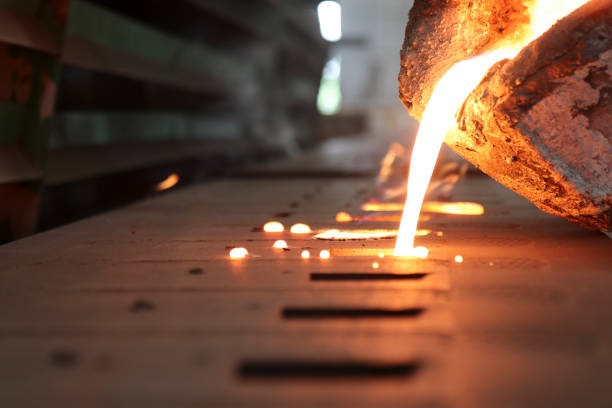
Steel Melting

Image Credit: iStock

Share Share Share Share
WhatsApp icon
WhatsApp — Join Us
Instant updates & community
Google News icon
Google News — Follow Us
Get our articles in Google News feed

A steel melting furnace report can show a lower electricity figure without proving better resource use. The comparison depends on what went into the furnace, what came out and which electrical loads the meter included. For Indian manufacturing teams reviewing energy per tonne, those boundaries are as useful as the furnace specification itself. They make a claim testable.

Charge consistency is the other starting point. A nominal vessel capacity says little about whether successive loads contain comparable material. Dinghong lists DHG steel shell and DHL aluminum shell furnace ranges, but neither label replaces a steel-grade specification or a defined production route. Responsible reporting starts by connecting the equipment to the actual heat, then keeps physical measurements separate from environmental conclusions.

Identify the steel charge before judging the heat

Identify the material first. Ask what grade is intended, how the charge is classified and which checks establish its suitability for the proposed melt, keeping that identity attached to the material as it moves from storage into the furnace and finally into the production record. Weight alone is insufficient. Treat an unidentified mixture as a gap in the record rather than assuming it matches the previous heat.

For charge consistency, use the same naming and weighing approach across the heats being compared, recording changes where they occur so that the production team can distinguish a shift in the input from a shift in equipment behaviour when the resulting figures differ. Preserve the differences. Otherwise a monthly average can hide that the comparison combines unlike jobs.

The method is modest: know the input before interpreting the output.

Shell construction does not specify the alloy

Dinghong identifies a DHG steel shell range at 0.5–20 tons and a DHL aluminum shell range at 0.1–8 tons. The shell descriptions refer to furnace construction. They do not mean that the former is exclusively for melting steel or the latter exclusively for melting aluminum. Suitability also involves the intended metal, power, frequency, coil, refractory lining, cooling and process conditions.

That distinction matters when a buyer searches for a steel melting furnace and receives offers with different shell descriptions. Ask each supplier to identify the proposed steel duty explicitly. A product-family name is a useful reference, but the application statement must do the real work. Keep the steel grade and required condition in the technical enquiry so the response can be checked against a defined job.

Separate nominal capacity from poured metal

The manufacturer’s overall melting-furnace range covers nominal batches of 0.1–20 tons. That published span describes the range offered, not the amount of accepted steel that any individual heat will deliver. Nor is a batch rating an hourly output claim. A capacity number becomes useful for production planning only after it is linked to a stated operating sequence and an output measurement.

For a DHL aluminum shell proposal, keep the shell designation in the equipment record and the weighed output in the heat record. They answer separate questions. Decide whether reported output means tapped metal, poured metal or accepted castings, then preserve that definition throughout the comparison because changing the endpoint changes the denominator even when the steel melting furnace and electricity meter remain untouched. Name the endpoint plainly.

Explain the mechanism without promising cleaner steel

The US Department of Energy explains that induction creates current in conductive material and converts it to heat through electrical resistance. Its process-heating sourcebook also describes control of melting rate and electromagnetic stirring through the coil’s power supply. This establishes a technical mechanism; it does not certify the chemistry or quality of steel produced by a particular installation.

When discussing a DHG steel shell furnace, keep evidence of the heating process separate from evidence that the metal meets its specification. A description of stirring cannot replace the required material checks. The Dinghong metal melting equipment catalogue can identify the proposed hardware, while the plant’s agreed acceptance method must establish the result. Procurement language becomes more useful when it names both responsibilities instead of compressing them into a broad quality promise.

Draw the electricity boundary around real loads

Energy per tonne combines electricity with mass. Before comparing results, name the meter and what it supplies, identify the output measurement and when it is taken, and label a calculation covering only the melting supply differently from a figure that includes cooling and other auxiliaries. Scope comes first. The arithmetic cannot repair a mismatch between the activities covered by the meter and the output used beneath it.

Holding periods need an explicit treatment as well. Record the start and finish of the measurement window so readers can see whether waiting time belongs to the reported heat or sits outside it. Otherwise an apparently better result can reflect a narrower window rather than a change in production. This is a bookkeeping choice with a technical consequence, not an argument for excluding awkward periods.

Dinghong’s separate furnace, power-supply and cooling product descriptions help illustrate why an installation contains several equipment boundaries. A resource-use report has to say how those boundaries map onto its meters.

Suppose a reporting team receives a better-looking result but discovers that the newer record ends before the holding period included in the older record. Investigate the boundary change before attributing the difference to equipment performance, and retain both original records so the explanation remains traceable when the figures are reviewed later. No saving has been established by that comparison alone. The next task is to obtain measurements with matching scope.

Closed cooling still needs water accounting

In a closed cooling tower, process fluid passes through the heat-exchange coil while spray water and air act outside it. Dinghong’s DHBH-120T lists spray-pump flow of 100 m³/h and spray-pump power of 3 kW. The flow is a circulation rating for that pump, not a statement of fresh-water consumption. It also does not state the circulation rate within the separate process-fluid circuit.

A closed process loop therefore cannot support a claim of zero water use. The external spray circuit still has evaporation and water-treatment considerations. For a factory report, identify the water measurement point and explain which circuit it serves. Keep pump ratings in the equipment schedule and measured water use in the resource account. Mixing them would turn a useful equipment specification into an unsupported environmental statistic.

Limits on carbon and productivity comparisons

An electricity comparison is not yet a carbon comparison. The latter needs an appropriate emissions basis for the electricity and a clear statement of the activities covered. This article supplies neither a project emissions calculation nor evidence of a reduction achieved by a particular furnace. A manufacturer offering several related products is not, by that fact, demonstrating an environmental result for the assembled plant.

Where it stops: heat-level figures cannot establish an annual improvement when the reporting periods cover different production conditions and those differences remain unexplained. Keep any claim as narrow as its evidence. A comparison limited to metered melting electricity deserves that label, while a claim about accepted output requires the corresponding output records. For Indian manufacturers communicating resource use to customers, an explicit boundary is more credible than an attractive percentage whose basis cannot be reconstructed.

Build a heat record that survives review

A steel heat record connects material identity, energy measurement and output definition without asking readers to reconstruct the method from scattered spreadsheets. Give the record to production and reporting staff before the comparison begins, so they agree on what each entry means. Missing fields then remain visible instead of disappearing into an average.

  • State the intended steel grade and the charge description.
  • Identify the furnace and the measured heat.
  • Record the incoming and outgoing mass definitions.
  • Name the electricity meter, included loads and measurement window.
  • Keep water measurements separate from pump circulation ratings.
  • Attach the acceptance result and explain any departure from the planned process.

Use the record to ask a specific next question. An unexplained change in charge or measurement scope needs investigation before the number becomes a performance claim. A careful account of steel melting begins with these ordinary distinctions and retains them all the way to the published result.


csr education cybernetyx
ADVERTISEMENT
India CSR Image 1 India CSR Image 2

CSR, Sustainability, and ESG success stories hindustan zinc
ADVERTISEMENT
India CSR

India CSR

India CSR® is the largest media on CSR and sustainability offering diverse content across multisectoral issues on business responsibility. It covers Sustainable Development, Corporate Social Responsibility (CSR), Sustainability, and related issues in India. Founded in 2009, the organisation aspires to become a globally admired media that offers valuable information to its readers through responsible reporting.

Related Posts

India CSR®
Business

ConnectPik Builds a Creator-to-Creator Collaboration Platform for YouTube Creators

Kumar Taurani, MD - Tips Music
Business

TIPS Reports Stellar Quarter; Q2 FY2027 Revenue Grows 35% YoY and PAT Rises 23%

From a designer handbag and a dream car to a home with a view, these are the purchases capturing India’s imagination.
Business

What Do Indians Want to Buy? The Ultimate Luxury Wishlist: 10 Things Indians Dream of Owning

India CSR®
Business

DIYguru brings Bharat eMobilityRecruitathon to Delhi: Packages up to Rs.25 LPA

India CSR®
Business

The Perfect Tile Isn’t Enough, The Right Adhesive Makes All The Difference

India CSR®
Business

How Lighting Changes Wall Texture Design: Choosing Textures That Look Better Day and Night

Load More
csr education cybernetyx
ADVERTISEMENT
bba
ADVERTISEMENT

Interviews

Vishwa Bandhu Bhattacharya, Director – Global Sustainability, Tata Consumer Products-India CSR
Interviews

Our Focus Remains on Embedding ESG Priorities into the Fabric of the Organisation: Vishwa Bandhu Bhattacharya, Director – Global Sustainability, Tata Consumer Products

by India CSR

ESG progress, renewable energy, circular packaging, water positivity and Net Zero 2040.

Read moreDetails
Dr Rajeev Gautam, President, HORIBA India @Indiacsr

“Wellness Doesn’t Replace Ambition, It Makes Ambition Sustainable”: Shilpa Bhagat, Co-Founder, Fitistan

From L to R- Olayinka Hakeem Babalola, Rotary International President (2026-27) and M. Muruganandam (MMM), Vice President (2026-27)

“Peace Is the Foundation That Allows All Other Progress to Take Root”: Rotary International

India CSR®

Interview: Ravi Mahajan on India’s Shift from Diesel to Solar-Powered Telecom Towers

Load More
Ad 1 Ad 2 Ad 3 Ad 4 Ad 5 Ad 6
ADVERTISEMENT

CSR UPDATES

LT Foods Awarded ‘Certificate of Honour’ at India CSR Awards for Sustainability Report 2024–25

Rehaan Chowdhary’s Financial Literacy Project Reaches 420 Women

SBI Foundation and IIT Madras Launch ₹4 Crore Sports Scholarship for 90 Under-19 Athletes

Maruti Suzuki to Add 1,000 Cameras Across 70 Gurugram Junctions Under ₹75 Crore ITMS CSR Project

CSR: Ingersoll Rand Supports 12,000-Sq-Metre Eco Park at Sanand

IIC Director K. N. Shrivastava Calls for CSR-Led R&D, Inclusive Innovation at India CSR Summit

STEM Learning STEM Learning STEM Learning
ADVERTISEMENT
Facebook Twitter Youtube LinkedIn Instagram
India CSR Logo

India CSR® is the largest tech-led platform for information on CSR and sustainability in India offering diverse content across multisectoral issues. It covers Sustainable Development, Corporate Social Responsibility (CSR), Sustainability, and related issues in India. Founded in 2009, the organisation aspires to become a globally admired media that offers valuable information to its readers through responsible reporting. To enjoy the premium services, we invite you to partner with us.

Follow us on social media:

Subscribe to Our Newsletter

Don't miss out on the latest updates in corporate social responsibility. Subscribe to our newsletter at indiacsr.in and be part of the positive change.
Please enable JavaScript in your browser to complete this form.
Loading

  • About India CSR®
  • Team
  • India CSR® Awards 2026
  • India CSR® Leadership Summit
  • Partnership
  • Guest Posts
  • Services
  • ESG Professional Network
  • Content Writing Services
  • Business Information
  • Contact
  • Privacy Policy
  • Terms of Use
  • Donate

Copyright © 2026 - India CSR® | All Rights Reserved

No Result
View All Result
  • Home
  • Corporate Social Responsibility
    • Art & Culture
    • CSR Leaders
    • Child Rights
    • Culture
    • Education
    • Gender Equality
    • Around the World
    • Skill Development
    • Safety
    • Covid-19
    • Safe Food For All
  • Sustainability
    • Sustainability Dialogues
    • Sustainability Knowledge Series
    • Plastics
    • Sustainable Development Goals
    • ESG
    • Circular Economy
    • BRSR
  • Corporate Governance
    • Diversity & Inclusion
  • Interviews
  • SDGs
    • No Poverty
    • Zero Hunger
    • Good Health & Well-Being
    • Quality Education
    • Gender Equality
    • Clean Water & Sanitation – SDG 6
    • Affordable & Clean Energy
    • Decent Work & Economic Growth
    • Industry, Innovation & Infrastructure
    • Reduced Inequalities
    • Sustainable Cities & Communities
    • Responsible Consumption & Production
    • Climate Action
    • Life Below Water
    • Life on Land
    • Peace, Justice & Strong Institutions
    • Partnerships for the Goals
  • Articles
  • Events
  • हिंदी
  • More
    • Business
    • Finance
    • Environment
    • Economy
    • Health
    • Around the World
    • Social Sector Leaders
    • Social Entrepreneurship
    • Trending News
      • Important Days
      • Great People
      • Product Review
      • International
      • Sports
      • Entertainment
    • Case Studies
    • Philanthropy
    • Biography
    • Technology
    • Lifestyle
    • Sports
    • Gaming
    • Knowledge
    • Home Improvement
    • Words Power
    • Chief Ministers

Copyright © 2026 - India CSR® | All Rights Reserved

This website uses cookies. By continuing to use this website you are giving consent to cookies being used. Visit our Privacy and Cookie Policy.
