

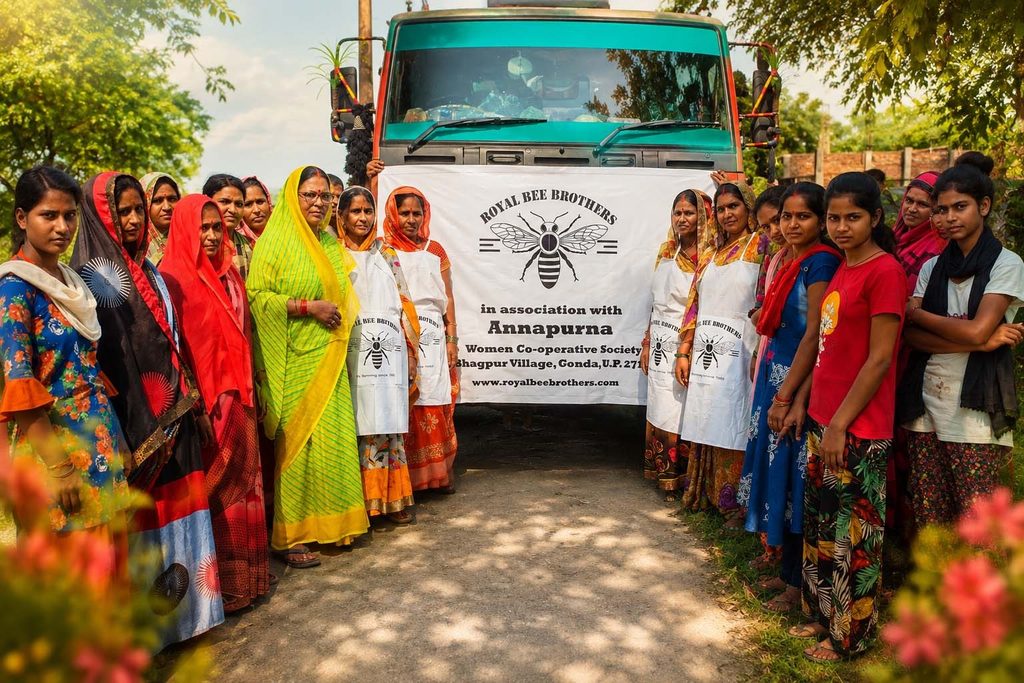


By connecting traditional forest knowledge with modern market opportunities, Royal Bee Brothers is helping women develop new skills, strengthen household incomes and build sustainable forest-based enterprises across India.
India’s forests are home to extraordinary biodiversity, traditional knowledge and communities whose livelihoods are closely connected to nature. From the forests of Central India and Odisha to the mangroves of the Sundarbans, the Himalayan landscapes of Kashmir and the forests of Northeast India, generations of local and tribal communities have developed a deep understanding of wild honey, seasonal flowering and forest produce.
Yet, the people who possess this knowledge do not always benefit proportionately when forest products reach wider markets. Limited access to buyers, training, product development and packaging can restrict the economic opportunities available to forest communities.
Royal Bee Brothers, headquartered in Gonda, Uttar Pradesh, is working to bridge this gap by connecting traditional knowledge with market access and community participation.
The company works with local and tribal communities across more than 15 forest regions in India. Through its network of 43+ women’s cooperative societies involving approximately 480 women, it aims to connect practical skills with livelihood opportunities, product development and wider markets.
Its approach recognises that sustainable business growth can create opportunities not only for honey hunters but also for women who participate in processing, beeswax production, packaging and other value-added activities.
Connecting Traditional Forest Knowledge with Market Opportunities
Wild forest honey reflects the ecological diversity of India’s landscapes. Its colour, aroma, texture and taste vary according to floral sources, seasonal conditions and the environment in which it is collected.
Traditional honey hunters develop their knowledge through years of experience. They learn to recognise flowering seasons, identify trees frequented by wild bees and understand the conditions associated with honey collection.
However, traditional knowledge alone does not guarantee better earnings. Access to organised buyers, appropriate product handling and reliable market connections can influence how much value communities receive for their work.
Royal Bee Brothers seeks to connect these skills with wider markets for Indian wild forest honey. Its regional collections include honey from Saranda, Kandhamal, Katarniaghat and the Sundarbans, alongside distinctive varieties from Kashmir and Nagaland.
By highlighting regional origins and product characteristics, the company aims to help consumers discover India’s forest honey diversity while recognising the communities associated with these products.
The approach also creates opportunities beyond honey collection, particularly for women who participate in activities associated with preparing, processing and packaging products for market.
Creating New Livelihood Opportunities for Women
For many women in rural and tribal communities, earning a regular income can be challenging when suitable local work is limited. Household responsibilities, seasonal employment and restricted access to markets can make it difficult to develop an independent source of earnings.
Royal Bee Brothers works to create opportunities through training and participation in activities such as beeswax processing, product preparation, packaging and other market-linked work.
According to the company’s reported figures, household incomes among women engaged through its community initiatives have increased approximately threefold to fourfold over the past five years.
This reported improvement reflects the company’s focus on connecting practical skills with commercial opportunities. The extent of the change can vary between households, depending on the work undertaken, the frequency of engagement and individual circumstances.
The broader objective is to help women strengthen their skills, contribute to household expenses and develop greater economic independence.
Training becomes particularly valuable when it is connected to actual work and a market for the finished products. This can help women move beyond occasional employment towards opportunities that build experience and create the potential for independent enterprise.
From Household Responsibilities to a Beeswax Enterprise: Munni Gaddi
Munni Gaddi, from Saikura village in the Saranda region of Jharkhand, represents the potential of market-linked training to create new livelihood opportunities.
Before joining Royal Bee Brothers, Munni was primarily occupied with household responsibilities and had limited opportunities to earn money beyond occasional daily-wage labour.
Her association with the company introduced her to training in wild honey harvesting and beeswax making. Through workshops and practical experience, she learned how beeswax obtained from honeycombs could be processed and supplied for further use.
Over time, Munni expanded her activities beyond beeswax production and began making different types of beeswax candles.
Today, she is reported to be one of the key beeswax suppliers in the Saranda region. Her work combines practical production skills with an understanding of how a forest-derived material can be developed into products for wider markets.
Her monthly earnings are reported to have reached approximately ₹30,000–₹40,000. This income has helped her contribute more substantially to household expenses, and her children are now attending better schools.
The opportunity has also helped her develop greater confidence and explore additional products.
Munni’s experience illustrates how women can move beyond limited earning opportunities towards skilled production and enterprise development when training is connected with market demand.
Her story also reflects the wider potential of community networks: practical skills developed by one woman can demonstrate new possibilities for others interested in similar activities.
From Traditional Honey Hunting to Better Market Access: Madvi Hidma
For Madvi Hidma, a traditional honey hunter from Bastar, Chhattisgarh, the forest represents both livelihood and knowledge.
Through experience, he has learned to recognise flowering seasons, identify trees frequented by wild bees and understand the seasonal patterns associated with wild honey collection.
Earlier, Madvi relied on traditional forest-based activities, including honey collection, to support his household. Limited access to wider markets could restrict the returns he received for the honey he collected.
Through his association with Royal Bee Brothers, Madvi has gained access to better market opportunities. According to the account provided for this article, he now earns approximately two to three times more from honey sales.
He has also learned about pollen collection, expanding his understanding of bee-derived products and exploring additional livelihood possibilities.
His experience highlights the potential of connecting traditional knowledge with suitable buyers. Better market access can help recognise the value of experienced honey hunters while creating opportunities to develop new skills.
For such relationships to generate lasting benefits, transparent sourcing arrangements, fair compensation and responsible harvesting practices remain essential.
Beyond Individual Earnings: Building Local Enterprises
The potential impact of community-based work extends beyond individual earnings. As women and other community members develop practical skills, gain production experience and understand market requirements, they may identify opportunities to establish enterprises of their own.
Royal Bee Brothers reports that additional enterprises are emerging within some of the community societies associated with its wider work.
Women’s cooperative societies can provide an organisational foundation for collective participation, knowledge sharing and the exploration of new commercial activities.
Depending on local capabilities and market demand, these opportunities may include product preparation, packaging, beeswax-based products and other activities connected with forest produce.
However, establishing an enterprise is only the beginning. Sustained success requires reliable buyers, suitable working capital, quality management and the ability to meet customer expectations.
Connecting training with actual market opportunities can help community members build experience that supports further economic activity.
The wider ambition is to help create a local economy in which community members can participate at multiple stages of the value chain rather than depending solely on the sale of raw forest produce.
Bringing India’s Wild Forest Honey to Wider Markets
Royal Bee Brothers’ regional honey collections showcase the diversity of India’s forest landscapes.
Honey from Saranda, Kandhamal, Katarniaghat and the Sundarbans reflects different regional environments and floral sources. Kashmiri white honey offers another distinctive sensory experience, while Nagaland’s stingless bee honey is known for its characteristic tangy, sour-sweet flavour.
These differences provide consumers with opportunities to explore India’s forest honey heritage while learning about the places and people associated with each product.
Product preparation, suitable packaging and clear communication about sourcing can help connect this diversity with modern markets. They can also create opportunities for community participation beyond harvesting.
For this model to remain sustainable, commercial demand must be balanced with responsible sourcing and attention to forest ecosystems. Protecting bee colonies, minimising habitat disturbance and following applicable forest regulations are important considerations.
The livelihoods of forest communities and the health of the ecosystems around them are closely connected. Responsible sourcing is therefore an important part of creating long-term opportunities.
Why Women’s Economic Participation Matters
Women’s participation in forest-based livelihoods involves more than earning money. Depending on their circumstances, additional income may help women contribute to household expenses, support their children’s education, develop savings or explore independent economic activities.
The extent of these benefits should be understood through women’s own experiences rather than assumed from participation alone.
Regular access to work, fair compensation, appropriate training and the ability to make decisions about earnings are important factors in determining whether an opportunity translates into meaningful financial independence.
For this reason, documenting individual experiences is essential. Household income records, details of work undertaken and direct accounts from participating women can help demonstrate what has changed and how benefits are distributed.
Royal Bee Brothers’ community approach seeks to connect training with practical work and market access, while creating opportunities for women to develop capabilities that may support future entrepreneurship.
The longer-term ambition is to strengthen these opportunities while measuring outcomes transparently and supporting women who wish to expand their skills or establish enterprises.
Building a Future Rooted in Forests and Communities
India’s forest communities possess knowledge and skills that can contribute to responsible forest-based enterprises. Connecting this knowledge with training, suitable buyers and opportunities for value addition can help create new livelihood possibilities.
Through its work across more than 15 forest regions, Royal Bee Brothers is seeking to connect wild forest honey, beeswax-related activities, regional product development and community participation.
The experiences of women such as Munni Gaddi and traditional honey hunters such as Madvi Hidma illustrate how market access and practical skills can open different pathways to earning and enterprise development.
The long-term impact depends on sustained demand, transparent commercial relationships, responsible harvesting and opportunities for communities to build capabilities of their own.
Ultimately, India’s wild forest honey story is not only about the product inside a bottle. It is also about the knowledge, labour and enterprise of the people who help bring it to market.
When women and traditional forest communities gain access to skills, markets and opportunities for value addition, forest produce can become a foundation for stronger local livelihoods and a more inclusive forest-based economy.
About Royal Bee Brothers
Royal Bee Brothers is an Indian wild forest honey company headquartered in Gonda and Bahraich, Uttar Pradesh. The company works with local and tribal communities across more than 15 forest regions in India, focusing on wild forest honey, regional product development and community participation.
Discover the company’s wild forest honey collection and learn more at Royal Bee Brothers.