

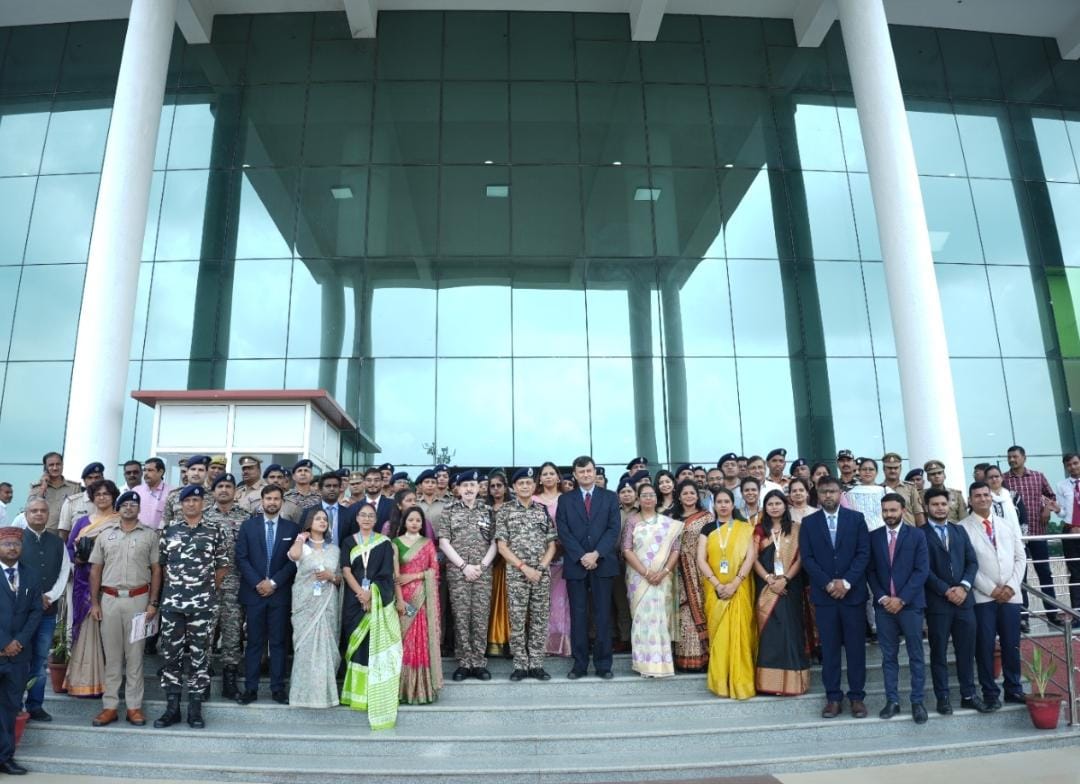



Lucknow deliberations create pathways for research, training, technology validation and responsible use of AI-led policing tools.
LUCKNOW: A new collaboration framework linking police forces, Central Armed Police Forces, defence institutions, academia, start-ups and industry is expected to support technology-enabled, accountable and citizen-oriented policing in India. The outcome emerged from deliberations held in Lucknow, where operational agencies and technology experts examined how Artificial Intelligence, data analytics, cybersecurity, digital forensics, drones, CCTV systems, counter-drone tools and Open-Source Intelligence can be applied to real policing requirements.
The discussions focused on converting field-level challenges into research-backed and validated technology solutions. They also underlined that technology adoption must be accompanied by trained personnel, institutional capacity, transparency and community trust.
Research And Validation
A key outcome is the opening of avenues for joint research, technology validation, internships and specialised training between police institutions, academic bodies and technology providers. This can help law-enforcement agencies evaluate whether a technology is relevant, reliable and suitable for operational use before wider adoption. Rashtriya Raksha University (RRU), through the Police Technology Mission, India, is positioned as an institutional bridge between operational policing needs, research, education, indigenous innovation and industry capability. The approach seeks to strengthen decision-making and operational effectiveness while keeping public accountability central.


Operational Technology Focus
The technology demonstrations examined tools relevant to multiple areas of policing and public safety. These included AI-supported analysis, predictive policing applications, cybercrime response, digital evidence examination, smart surveillance, drone monitoring and OSINT-based intelligence gathering. The focus was not only on technology displays but also on developing practical institutional linkages. Uttar Pradesh Police and Uttar Pradesh Prison Department participated prominently, helping anchor the discussion in operational realities of a large and complex state policing environment.
Strengthening Public Trust
The collaboration model places community engagement alongside technology and institutional reform. The SMART Policing vision calls for policing that combines capability and firmness with sensitivity, responsiveness, transparency and public trust. More than 400 participants, including over 200 personnel from police, CAPFs, defence and security organisations, contributed to the discussions. Participating bodies included Uttar Pradesh Police, CRPF, SSB, ITBP, Assam Rifles, NDRF, NIA, Punjab Police, Uttarakhand Police, IIT Kanpur and Babasaheb Bhimrao Ambedkar University.
The outcome is a stronger pathway for police–academia–industry cooperation that can support responsible technology adoption, improve institutional preparedness and advance citizen-oriented policing aligned with the national vision of Viksit Bharat 2047.
| Particular | Outcome |
|---|---|
| Technology adoption | Focus on AI, drones, cyber tools, digital forensics, CCTV and OSINT |
| Research linkage | Scope for joint research on operational policing requirements |
| Training | Opportunities for specialised training and internships |
| Technology validation | Platform to assess solutions before operational deployment |
| Institutional collaboration | Police, CAPFs, defence, academia, start-ups and industry brought together |
| Public value | Greater focus on responsive, transparent and citizen-oriented policing |



