

• India CSR Awards 2026
  • India CSR Leadership Summit
  • Guest Posts
Thursday, October 29, 2026
India CSR®
  • Home
  • CSR
    • Art & Culture
    • CSR Leaders
    • Child Rights
    • Culture
    • Education
    • Gender Equality
    • Around the World
    • Skill Development
    • Safety
    • Covid-19
    • Safe Food For All
  • Sustainability
    • Sustainability Dialogues
    • Sustainability Knowledge Series
    • Plastics
    • Sustainable Development Goals
    • ESG
    • Circular Economy
    • BRSR
  • SUMMIT
  • AWARDS
  • Interviews
  • SDGs
    • No Poverty
    • Zero Hunger
    • Good Health & Well-Being
    • Quality Education
    • Gender Equality
    • Clean Water & Sanitation – SDG 6
    • Affordable & Clean Energy
    • Decent Work & Economic Growth
    • Industry, Innovation & Infrastructure
    • Reduced Inequalities
    • Sustainable Cities & Communities
    • Responsible Consumption & Production
    • Climate Action
    • Life Below Water
    • Life on Land
    • Peace, Justice & Strong Institutions
    • Partnerships for the Goals
  • Articles
  • Events
  • हिंदी
  • More
    • Business
    • Finance
    • Corporate Governance
      • Diversity & Inclusion
    • Environment
    • Economy
    • Health
    • Around the World
    • Social Sector Leaders
    • Social Entrepreneurship
    • Trending News
      • Important Days
        • Festivals
      • Great People
      • Product Review
      • International
      • Sports
      • Entertainment
    • Case Studies
    • Philanthropy
    • Biography
    • Technology
    • Lifestyle
    • Sports
    • Gaming
    • Knowledge
    • Home Improvement
    • Words Power
    • Chief Ministers
No Result
View All Result
India CSR®
No Result
View All Result
Home Technology

Build a Data-Confidence Ledger Before the Sustainability Report

India CSR by India CSR
August 31, 2026
Reading Time: 7 mins read
India CSR®
Share Share Share Share
WhatsApp icon
WhatsApp — Join Us
Instant updates & community
Google News icon
Google News — Follow Us
Get our articles in Google News feed

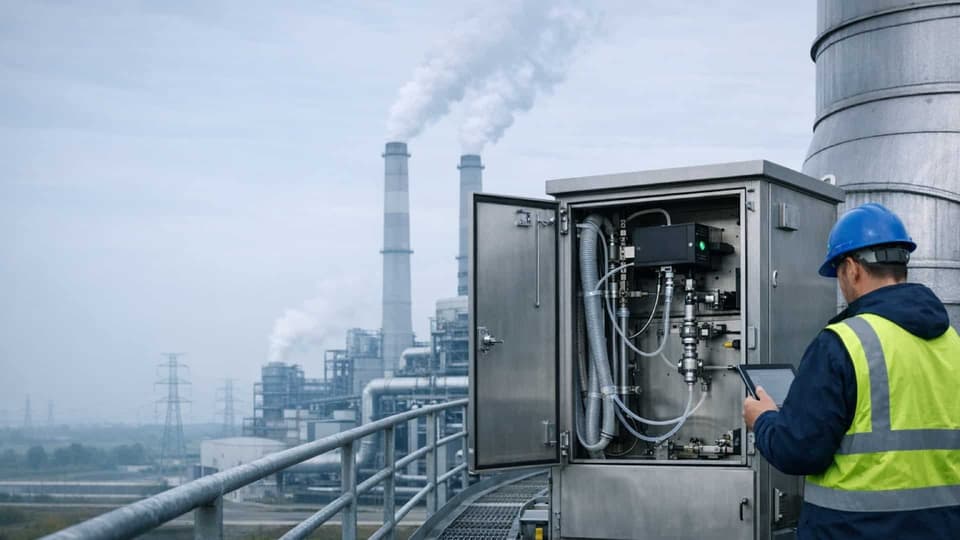
Emissions data quality cannot be added at the end of a sustainability report. The evidence chain begins where continuous emissions monitoring systems, sampling conditioning systems, SO2 NOx analyzers, and process gas analyzers create a result, how that result reaches a record, and who is allowed to judge whether the record is fit for use. Reporting teams need more than a spreadsheet of values. They need a data-confidence ledger that keeps the measurement purpose, status information, review ownership, and known limitations together until the sustainability report is drafted.

The ledger is simple in principle. For every reportable data stream, it records what the value is intended to represent, where it came from, what condition may affect interpretation, and who reviewed it. That discipline makes it harder for a polished narrative to hide an unresolved measurement question.

Set emissions data quality expectations before the sustainability report

Start with the reporting decision. One measured value may support an internal trend review, a management statement, a permit-related obligation, or a broader sustainability report. Those uses are not interchangeable. The expected traceability, review, and disclosure need to reflect the actual purpose, rather than the way a number happens to look once it has been placed in a chart.

Assign review ownership early. Operations can explain the operating context. Maintenance can identify known instrument or sample-path events. Environmental and reporting teams can decide how status information must travel into the sustainability report. Shared ownership is useful only when the handoff is explicit.

Link continuous emissions monitoring systems to their measurement context

GESHINE lists continuous emissions monitoring, sulfur dioxide and nitrogen oxides analysis, process-gas analysis, and sampling-related solutions within its gas-analysis offering. For a reporting team, that range is a reminder that a reported value comes from an arrangement, not from an isolated label. The context should identify the gas duty, the measurement route, relevant status signals, and the record owner.

Continuous emissions monitoring systems should therefore be represented in the ledger with their operating boundary. Note when the system is expected to provide information, which accompanying states affect confidence, and where those states are captured. Without context, a bare value may be easy to copy, but it is difficult to defend or investigate later.

Include sampling conditioning systems in the data lineage

Sampling conditioning systems belong in a data-confidence discussion whenever the measurement relies on an extracted sample. The reporting team does not need to design the system, yet it should know that sample transport, conditioning, service activity, and process changes may all matter to how a result is interpreted. The ledger can name the responsible technical owner and point to the relevant service or exception record.

That small connection prevents a familiar reporting error: treating a calculated or stored value as if it were independent from the physical path that produced it. Data lineage starts at the process boundary. This chain does not begin when a value arrives in a reporting application.

Give SO2 NOx analyzers a clear exception trail

SO2 NOx analyzers should be associated with a readable exception trail. When a maintenance action, diagnostic condition, or process event could influence interpretation, the ledger should retain a reference to the event and its reviewer. The aim is not to publish every engineering detail. Its purpose is to avoid a situation where a later reviewer sees a value but cannot find the condition under which it was created.

Use concise, consistent descriptions. Useful entries say what happened, when the status was recognized in the normal recordkeeping process, and who owns the next review. Avoid words such as “normal” or “verified” when no defined review has taken place. Precision in the note is more valuable than reassurance.

Keep process gas analyzers tied to the use of the value

Process gas analyzers may serve operational decisions as well as environmental or sustainability conversations. That makes the intended use essential. Values used to guide a process response may require different context from a value selected for an external disclosure. The ledger should show the use, not merely the instrument category.

Once the use is visible, teams can agree what follows the value into the reporting workflow: source reference, quality state, reviewer, exception note, and applicable limitation. This does not make every value perfect. It makes the basis for using it readable.

Learn from quality-assurance discipline without copying another rulebook

The electronic Code of Federal Regulations includes quality-assurance provisions for continuous-emissions monitoring in a defined regulatory setting. Facilities outside that setting should not treat the text as their own compliance rule. Its useful lesson is narrower: measurement, quality control, evaluation, and recordkeeping need to be distinguished rather than collapsed into a single unexamined number.

Applying that lesson as governance, a data-confidence ledger asks whether the value has context, whether an exception has an owner, and whether a reviewer can trace a statement back to the underlying record. Those questions travel well even when the applicable reporting framework is different.

Use the data-confidence ledger before narrative drafting

Data-confidence ledger for reporting review

Ledger fieldReview questionResponsible role
Intended representationWhat does the value claim to describe?Process or environmental owner.
Measurement contextWhat system and route produced it?Technical owner.
Quality or exception stateWhat must a reader know before using it?Maintenance or quality reviewer.
Disclosure useHow may it appear in the sustainability report?Reporting owner.

Review the ledger before prose is written. Missing ownership or an unresolved exception should be visible at that point, where it can be handled as a reporting decision instead of becoming an awkward qualification after publication.

Reconcile reporting language with the underlying record

Drafting should begin with what the ledger can support. If an entry is marked for review, the report writer should not convert that marker into a confident claim merely because the value is convenient or because a reporting deadline is approaching. The correct response may be to complete the technical review, describe the limitation, or omit an unsupported interpretation under the organization’s applicable reporting process.

Use consistent language for context and uncertainty. A process event is not automatically an error. A maintenance record is not automatically proof that a result is unusable. The ledger helps the responsible reviewer decide what the evidence supports and preserve that decision for a later challenge or assurance conversation.

Prepare a review trail that survives staff changes

People move between roles, and reporting cycles recur. A data-confidence ledger should therefore point to durable records rather than depend on one person’s memory. Keep source-system references, exception ownership, reviewer notes, and the approved disclosure use together. A new reporting owner should be able to understand the route from measurement context to narrative without reconstructing the prior team’s emails.

This practice also helps technical teams. When a question returns, the team can see whether it belongs to the process, sample arrangement, analyzer status, reporting treatment, or a missing review step. Better traceability reduces the temptation to solve a governance problem by rewriting a sentence.

Escalate unresolved context before publication

Set a clear escalation path for an entry whose context cannot be established. The reporting owner should know whether to seek a process explanation, a maintenance record, an environmental review, or external assurance advice. Escalation is not a failure of the ledger. It is evidence that the ledger has exposed a claim that needs a qualified decision.

Keep the final disposition with the entry. Whether the value is used, qualified, deferred, or excluded, future reviewers should see the rationale and responsible owner. That makes the sustainability report more faithful to the available evidence and easier to govern over time.

State the boundary of the reporting claim

A data-confidence ledger does not decide regulatory compliance, establish an emissions calculation method, or substitute for independent assurance. It also cannot repair an unsuitable measurement arrangement. Applicable permits, methods, safety reviews, and engineering judgments remain separate responsibilities.

The GESHINE measurement planning resources can help a team frame questions about continuous monitoring, process-gas duties, and sampling-related arrangements. A credible sustainability report still depends on the site-specific evidence, review process, and disclosure boundary chosen by the responsible organization.


csr education cybernetyx
ADVERTISEMENT
India CSR Image 1 India CSR Image 2

CSR, Sustainability, and ESG success stories hindustan zinc
ADVERTISEMENT
India CSR

India CSR

India CSR® is the largest media on CSR and sustainability offering diverse content across multisectoral issues on business responsibility. It covers Sustainable Development, Corporate Social Responsibility (CSR), Sustainability, and related issues in India. Founded in 2009, the organisation aspires to become a globally admired media that offers valuable information to its readers through responsible reporting.

Related Posts

Voice Automation
Technology

Why Voice Automation ROI Breaks Down When Enterprises Measure the Wrong Outcomes

Data Science Training
Technology

Why Choose Data Science Training In Pune Today?

Apurva AI Evolves Apurva LENS. India CSR Image
Artificial Intelligence

Apurva AI Evolves Apurva LENS into AI Platform for Development Ecosystem Learning

Energy-Efficient HVAC Solutions
Technology

A School HVAC Budget Is a Stewardship Decision About Fresh Air and Repairability

Stainless Steel Plate
Technology

Stainless Steel Plate: How Responsible Procurement Prevents Waste Before Fabrication

India CSR®
Technology

Why Vegetable Washing Waste Reduction Starts Before the Dryer

Load More
csr education cybernetyx
ADVERTISEMENT
bba
ADVERTISEMENT

Interviews

Smitha Gopalkrishnan Asia Sustainability Leader & India CSR Leader 3M India-@India CSR
Interviews

“Water Security Is a Shared Responsibility”: Smitha Gopalkrishnan on 3M India’s Water Stewardship Work

by India CSR

3M's global water risk assessment identified Ranjangaon as being located in a highly water-stressed region, due to erratic rainfall and...

Read moreDetails
Manoj Lohia, Director, Merino Industries Ltd.-India CSR

Universal Weal Through Trade: Manoj Lohia on Merino’s CSR and Sustainability Journey

Vishwa Bandhu Bhattacharya, Director – Global Sustainability, Tata Consumer Products-India CSR

Our Focus Remains on Embedding ESG Priorities into the Fabric of the Organisation: Vishwa Bandhu Bhattacharya, Director – Global Sustainability, Tata Consumer Products

Dr Rajeev Gautam, President, HORIBA India @Indiacsr

“Wellness Doesn’t Replace Ambition, It Makes Ambition Sustainable”: Shilpa Bhagat, Co-Founder, Fitistan

Load More
Ad 1 Ad 2 Ad 3 Ad 4 Ad 5 Ad 6
ADVERTISEMENT

CSR UPDATES

India Scripts History with 114 Medals at Asian Para Games 2026; Dr. Payal Kanodia Hails Athletes’ Extraordinary Feat

57% of Non-Profits Have a Female Founder; 70.24% Report Annual Budgets Above ₹1 Crore: Change Engine

Every Airbnb Stay Will Now Help Fund Free Housing for People in Crisis

Titan CSR: After 5 Decades, Akka Thangai Lake Returns as a Lifeline for 500 Farmers

vivo Ignite 2026: Surat Student Wins National Honour for AI-Powered Groundwater Innovation

Prakash Tewari Joins GFSI Board to Advance Women’s Empowerment and Inclusive Development

STEM Learning STEM Learning STEM Learning
ADVERTISEMENT
Facebook Twitter Youtube LinkedIn Instagram
India CSR Logo

India CSR® is the largest tech-led platform for information on CSR and sustainability in India offering diverse content across multisectoral issues. It covers Sustainable Development, Corporate Social Responsibility (CSR), Sustainability, and related issues in India. Founded in 2009, the organisation aspires to become a globally admired media that offers valuable information to its readers through responsible reporting. To enjoy the premium services, we invite you to partner with us.

Follow us on social media:

Subscribe to Our Newsletter

Don't miss out on the latest updates in corporate social responsibility. Subscribe to our newsletter at indiacsr.in and be part of the positive change.
Please enable JavaScript in your browser to complete this form.
Loading

  • About India CSR®
  • Team
  • India CSR® Awards 2026
  • India CSR® Leadership Summit
  • Partnership
  • Guest Posts
  • Services
  • ESG Professional Network
  • Content Writing Services
  • Business Information
  • Contact
  • Privacy Policy
  • Terms of Use
  • Donate

Copyright © 2026 - India CSR® | All Rights Reserved

No Result
View All Result
  • Home
  • CSR
    • Art & Culture
    • CSR Leaders
    • Child Rights
    • Culture
    • Education
    • Gender Equality
    • Around the World
    • Skill Development
    • Safety
    • Covid-19
    • Safe Food For All
  • Sustainability
    • Sustainability Dialogues
    • Sustainability Knowledge Series
    • Plastics
    • Sustainable Development Goals
    • ESG
    • Circular Economy
    • BRSR
  • SUMMIT
  • AWARDS
  • Interviews
  • SDGs
    • No Poverty
    • Zero Hunger
    • Good Health & Well-Being
    • Quality Education
    • Gender Equality
    • Clean Water & Sanitation – SDG 6
    • Affordable & Clean Energy
    • Decent Work & Economic Growth
    • Industry, Innovation & Infrastructure
    • Reduced Inequalities
    • Sustainable Cities & Communities
    • Responsible Consumption & Production
    • Climate Action
    • Life Below Water
    • Life on Land
    • Peace, Justice & Strong Institutions
    • Partnerships for the Goals
  • Articles
  • Events
  • हिंदी
  • More
    • Business
    • Finance
    • Corporate Governance
      • Diversity & Inclusion
    • Environment
    • Economy
    • Health
    • Around the World
    • Social Sector Leaders
    • Social Entrepreneurship
    • Trending News
      • Important Days
      • Great People
      • Product Review
      • International
      • Sports
      • Entertainment
    • Case Studies
    • Philanthropy
    • Biography
    • Technology
    • Lifestyle
    • Sports
    • Gaming
    • Knowledge
    • Home Improvement
    • Words Power
    • Chief Ministers

Copyright © 2026 - India CSR® | All Rights Reserved

This website uses cookies. By continuing to use this website you are giving consent to cookies being used. Visit our Privacy and Cookie Policy.
