

Prime Minister urges private space companies to expand technology use in agriculture, livestock, dairy, environment and public-interest sectors
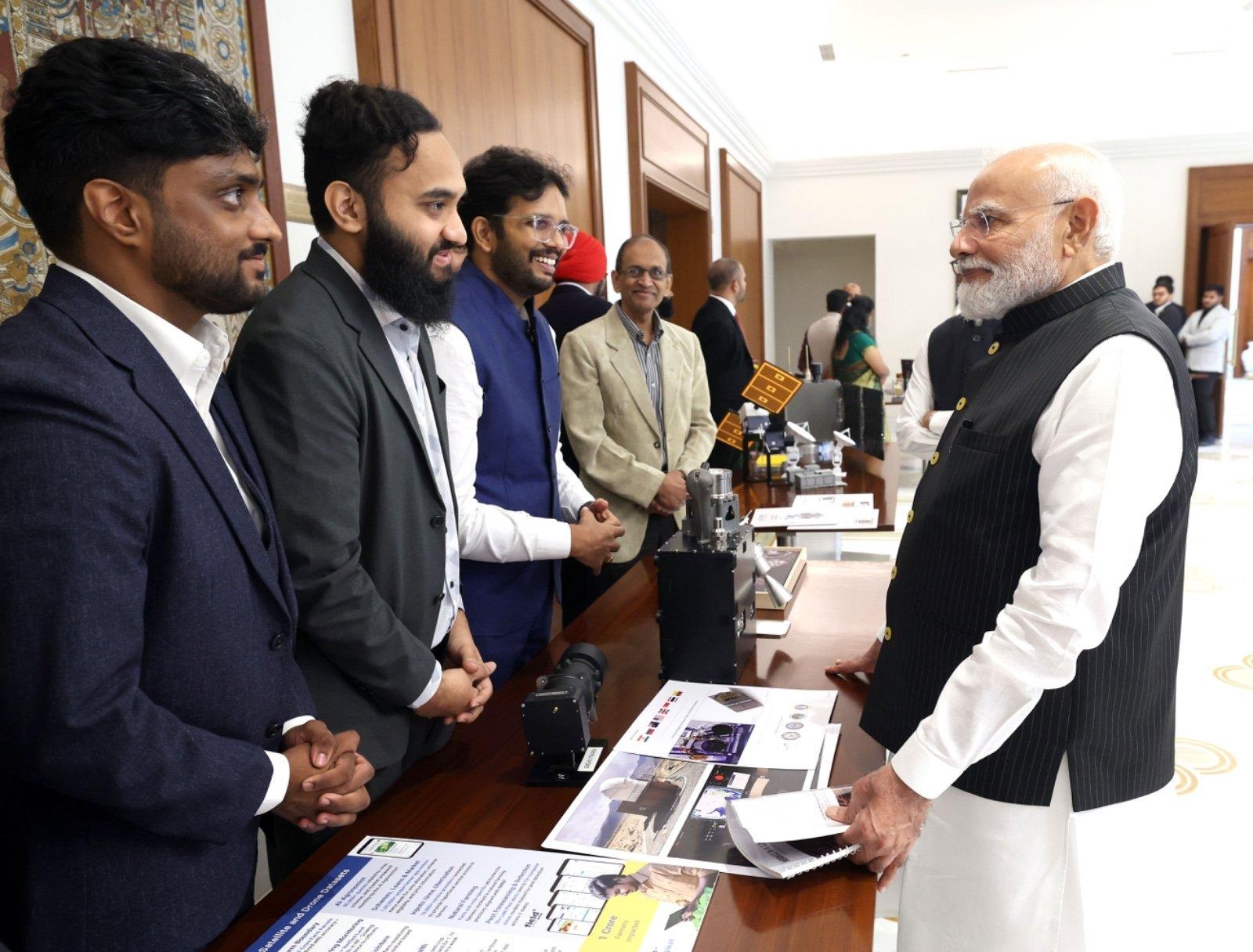
NEW DELHI (India CSR): Prime Minister Narendra Modi interacted with the CEOs and founders of 20 Indian space startups in New Delhi on August 21, 2026, urging the private space industry to expand the use of space technology in agriculture, livestock management, dairy, environment and other areas directly connected with people’s lives. The meeting included companies working in rockets, satellites, propulsion, space intelligence, debris removal and AI-based weather and climate analytics.
The participating startups included Skyroot Aerospace, Agnikul Cosmos, Pixxel, Dhruva Space, GalaxEye, PierSight, Bellatrix Aerospace, Digantara, SatSure, Suhora Technologies, Manastu Space, Astrobase, TakeMe2Space, VyomIC, Cosmoserve Space, OrbitAID Aerospace, SkyServe (HySpace), Serendipity Space, Vassar Labs and MistEO.
Wider Social Use
During the interaction, Modi asked space entrepreneurs to explore applications that can address everyday development needs.
He specifically pointed to agriculture, livestock management, dairy and environmental monitoring as areas where space-based technologies could have wider public value.
Such applications can include satellite-based monitoring, earth observation, weather data, location intelligence and other technologies that help improve decision-making across economic and social sectors.
The Prime Minister also encouraged startups to work more closely with Atal Tinkering Labs to build interest in space science among schoolchildren from an early age.
Startup Participation
The companies represented at the meeting operate across different segments of India’s private space ecosystem.
According to the Prime Minister’s Office, their activities include rocket development, reusable semi-cryogenic launch vehicles, avionics, satellites, advanced propulsion, space and defence intelligence, space debris removal, and AI-driven local weather and climate analytics.
Modi said the sector had shown confidence after India opened space activities to greater private participation and assured entrepreneurs of continued government support as they develop future capabilities.
Commercial Expansion
The interaction comes as India seeks to expand the commercial scale of its private space industry.
IN-SPACe Chairman Vivek Goenka said at a business conclave that India is targeting growth in the space economy from about $8 billion to $44 billion by 2033, with around $11 billion expected from international customers, according to the Times of India report supplied for this article.
The government has also approved a Rs 1,000 crore venture capital fund for the space sector under IN-SPACe. The fund is planned for deployment over five years, with indicative investments of Rs 10 crore to Rs 60 crore depending on the stage and potential of individual companies.
Development Applications
The emphasis on wider applications puts the private space sector in a broader development context.
Satellite and geospatial technologies can have relevance for agriculture, fisheries, climate monitoring, disaster response, weather forecasting and natural-resource management. Their impact, however, depends on adoption by government departments, businesses and community-facing institutions.
Modi also called for stronger links between the space industry and sectors outside traditional aerospace applications.
Public Impact
For India’s growing private space ecosystem, the next phase will involve not only building rockets and satellites but also demonstrating how space technologies can solve practical problems at scale.
Greater disclosure on projects addressing agriculture, climate resilience, disaster management and other public-interest areas would help measure the sector’s contribution beyond commercial growth.
The meeting also underlined the government’s intention to position private companies as an important part of India’s future space capabilities and international market presence.