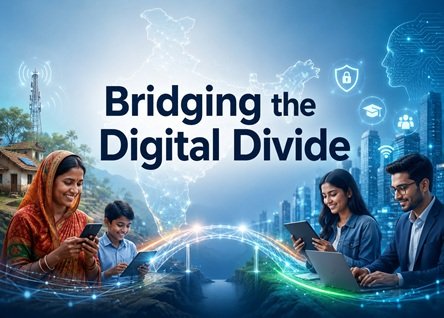


Digital divide in India with focus on digital literacy cyber resilience and AI skilling

By Girija Mukund
India’s digital transformation story is often measured through the lens of scale, internet penetration, smartphone adoption, digital payments, and expanding connectivity. While these are important milestones, the more critical question today is whether digital access is translating into meaningful outcomes for people and communities. The next phase of India’s digital journey will be defined by inclusion, resilience, trust, and the ability of citizens to participate confidently in a digital-first economy. As emerging technologies such as artificial intelligence become increasingly embedded in how people learn, work, access services, and engage with the digital economy, ensuring that individuals have the skills to navigate and benefit from these technologies will be equally important.
Over the last decade, India has made remarkable progress in building digital public infrastructure and expanding internet access into smaller towns and rural communities. According to the Ministry of Communications, India had 954.40 million internet subscribers as of March 2024, including 398.35 million rural subscribers, while 95.15% of villages had access to 3G/4G mobile connectivity as of April 2024. This scale of digital expansion has created unprecedented opportunities for economic participation, access to services, and financial inclusion.
The New Digital Divide: Capability, Trust and Safety
India’s digital economy is projected to become a major driver of national growth. The Ministry of Electronics & IT estimates that it accounted for 11.74% of national income in 2022-23 and could contribute nearly one-fifth of GDP by 2030. Yet the digital divide today is no longer just about connectivity. It increasingly exists between those who can confidently and safely participate in digital ecosystems and those who remain vulnerable despite being online.
Internet users with basic education and low income backgrounds, struggle with barriers of low digital literacy, language gaps, misinformation, and cyber fraud that limit meaningful participation online. As digital and AI-powered services expand, underserved communities risk being left behind without the skills and awareness needed to access them safely and effectively.
Why Cyber Resilience Must Become a Community Priority
Cybersecurity awareness is becoming a particularly important component of this conversation. As digital adoption accelerates, cyber risks increasingly affect individuals and communities with limited awareness of how to identify and respond to threats such as phishing, identity theft, fraudulent calls, and financial scams.
Building a resilient digital economy, therefore, requires a broader approach, one that combines infrastructure with digital literacy, awareness, and community-level capacity building. This includes equipping individuals not only with the knowledge to stay safe online, but also with the skills needed to engage with emerging technologies such as AI in meaningful and productive ways.
Industry has an important role to play here. Businesses today are uniquely positioned to contribute to digital inclusion by extending skilling initiatives, technology expertise, and awareness programs beyond traditional urban centres.
Encouragingly, grassroots skilling models are beginning to emerge across the country. Programs focused on cybersecurity awareness, AI skilling, and digital literacy are helping build local networks of digitally aware citizens who can strengthen resilience within their own communities.
For example, some industry-led initiatives, are working with women from rural and semi-urban communities to build foundational cybersecurity awareness and digital safety capabilities. Beyond helping participants protect themselves from online threats, these programs also create local digital ambassadors who can support peer learning and community awareness. AI skilling initiatives are helping learners build a foundational understanding of AI technologies and develop future-ready capabilities that can support education, employability, and entrepreneurship opportunities. Similar initiatives aimed at students and young professionals are helping strengthen cyber awareness and future-ready skills at an early stage.
From Connectivity to Meaningful Participation
As India accelerates AI adoption and digital transformation, the need for inclusive skilling will become even more urgent. AI has the potential to improve access to education, healthcare, agriculture, and public services at scale, particularly in underserved regions. But unless skilling ecosystems evolve alongside technology adoption, the benefits of digital growth may remain unevenly distributed.
Bridging the digital divide today is therefore no longer about connecting people to the internet. It is about connecting people to opportunity, security, knowledge, and economic participation.
Ultimately, the true measure of India’s digital progress will not only be the sophistication of its technology systems, but the inclusiveness of the outcomes they create.
About the Author
Girija Mukund, Director, Global Citizenship and Sustainability, India and ASEAN, Kyndryl India