

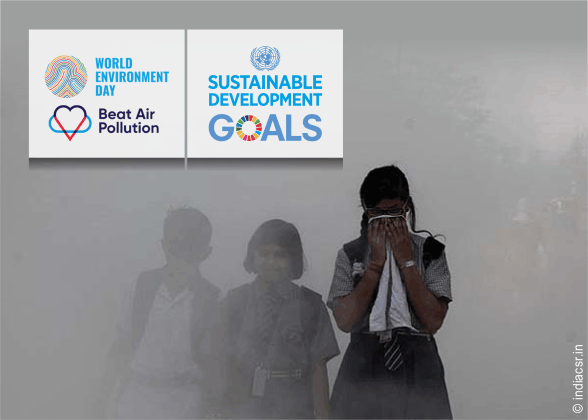


One of the greatest problems in addressing pollution-related health risks is ensuring that preventive healthcare services reach those without access.
By Aditya Kandoi
Air pollution is no longer just an environmental concern; it has become one of India’s most pressing public health and economic challenges. Recent estimates indicate that the overall economic burden associated with air pollution in India is reflected in healthcare expenditures, productivity losses, reduced workforce participation, premature mortality, and the growing burden of chronic diseases.
The scale of the challenge continues to grow. According to the World Air Quality Report 2025 released by IQAir, India continued to be one of the most polluted nations in the world, with an annual PM2.5 mean concentration of 48.9 µg/m³, more than 10 times the WHO standard of 5 µg/m³.
The growing health impact of Air pollution
Air pollution affects nearly every organ system in the human body. While respiratory illnesses remain the most recognized consequence, scientific evidence now links long-term exposure to polluted air with cardiovascular disease, stroke, diabetes, adverse pregnancy outcomes, neurological disorders, and certain cancers. Exposure to air pollution remains one of the largest environmental contributors to cardiovascular and respiratory disease globally, with South Asia carrying a disproportionately high burden.
Why preventive healthcare must be part of the solution
Traditionally, healthcare use in India has been highly reactive, with patients consulting doctors only when their symptoms became unbearable. Air pollution is altering this trend.
With growing awareness of the implications of exposure to such environments, there is a growing tendency among people to practice preventive medicine. Health examinations on an annual basis, lung function tests, and cardiovascular disease screening, among others, have gained prominence, especially among urban dwellers who are highly exposed to air pollution.
But preventive measures should not end there. They should involve public education, behavioral changes, immunization programs, workplace wellness programs, and more.
Expanding access to preventive care
One of the greatest problems in addressing pollution-related health risks is ensuring that preventive healthcare services reach those without access. This will require greater cooperation among healthcare service providers, clinics, hospitals, community organizations, and public health authorities. Health camps, outreach programs, and screening programs can go a long way toward identifying health risks and preventing them from developing into severe diseases. Another equally vital aspect in addressing the issue is making health screenings affordable for people from disadvantaged social groups.
Rising demand for respiratory and lung health screening
One of the most noticeable shifts in demand for preventive healthcare is the increased focus on respiratory health. There is a growing number of patients taking pulmonary function tests, spirometry, allergy tests, and lung function tests, whether or not they are experiencing any symptoms. People who have been ignoring their minor respiratory symptoms are increasingly seeking out specialist attention. It is essential since the respiratory illnesses that are caused by pollution usually take years to show up. Diseases like chronic obstructive pulmonary disorder and asthma can go unnoticed until major damage is done to the lungs.
Building a more sustainable healthcare ecosystem
As healthcare institutions work towards mitigating the effects of air pollution, they should not ignore the environmental impacts they themselves are making. The healthcare and diagnostics sector produces plenty of medical, pharmaceutical and electronic waste. Any improper disposal of hazardous substances may lead to further environmental harm. As such, sustainability needs to be incorporated within the healthcare practice.
Several effective approaches can help achieve that:
- Replacing conventional materials with environmentally friendly products and cutting down on the use of disposable plastics.
- Focusing on efficient management and recycling of biomedical waste in line with state requirements.
- Introducing sustainable energy solutions into operations at healthcare organizations.
- Concentrating on saving water resources within laboratories and clinical processes.
- Collaborating with sustainable suppliers as a way of procuring.
- Sponsoring awareness among healthcare providers of environmental responsibility.
Integration of sustainable practices at healthcare institutions can benefit both the environment and healthcare system itself.
Prevention must extend beyond the clinic
The concept of preventive healthcare has a great role to play in reducing the risks associated with health; however, it cannot be used as an alternative to environmental measures. It is only through collaboration among government organizations, health care organizations, industries, urban planning units, employers, and the community that progress can be achieved. Clean energy use, stringent emission policies, sustainable transportation methods, proper waste disposal, and better urban planning are some of the strategies required.
Moreover, the health sector also holds a vital position in educating people about various aspects of health and environment. Looking Ahead India’s ₹21.6 lakh crore air pollution burden demonstrates the critical relationship between environmental health, healthcare infrastructure, and economic prosperity. Although minimizing pollution at the point of origin is ideal, there is a critical need for reinforcing preventive healthcare measures as a shield against pollution-induced illnesses.
Given India’s progress in the convergence of environmental health consciousness, digital healthcare services, and preventive medicine, there exists a rare opportunity to prevent disease before it becomes a burdensome chronic condition. This strategy will ultimately save on healthcare costs, boost worker productivity, and foster greater health resilience among Indians.
About the Author: Aditya Kandoi is the Founder & CEO at Redcliffe Labs


