

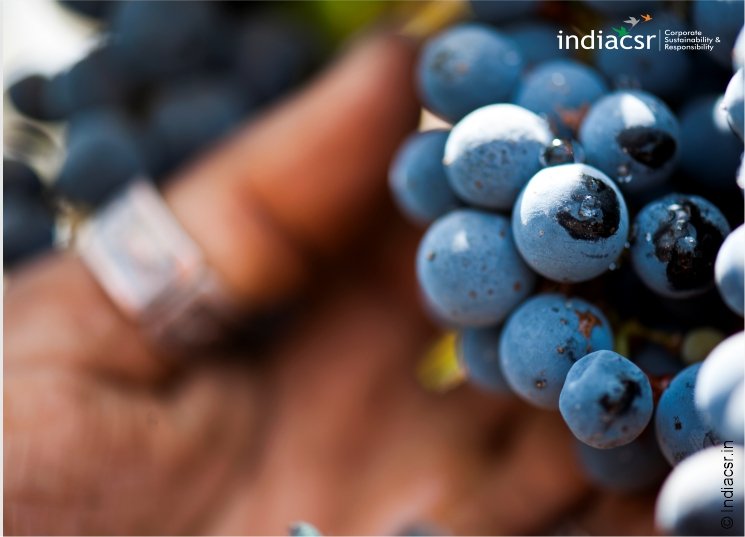


Sula Vineyards focuses on rural development, healthcare, hygiene, education and environmental sustainability.
MUMBAI: Sula Vineyards Limited, a leading Indian wine company, spent Rs. 2.01 crore on Corporate Social Responsibility activities during the financial year 2025-26, exceeding its prescribed CSR obligation under Section 135 of the Companies Act, 2013. The company’s required CSR spend for the year was Rs. 1.98 crore, calculated as 2% of its average net profit for the three preceding financial years. This resulted in an excess CSR spend of Rs. 0.03 crore, which the company has approved for carry-forward and set-off against future CSR obligations.
Key CSR Numbers for FY 2025-26
| Particulars | Amount |
|---|---|
| Average net profit for CSR calculation | Rs. 110.85 crore |
| Prescribed CSR obligation | Rs. 1.98 crore |
| CSR project expenditure | Rs. 1.91 crore |
| Administrative overheads | Rs. 0.10 crore |
| Total CSR spend | Rs. 2.01 crore |
| Excess CSR spend | Rs. 0.03 crore |
| Unspent CSR amount | Nil |
| Impact assessment | Not applicable |
| Capital assets created | No |
CSR Spend Exceeds Statutory Requirement
Sula Vineyards’ CSR expenditure in FY 2025-26 reflects full compliance with India’s statutory CSR framework. The company was required to spend Rs. 1.98 crore, but it spent Rs. 2.01 crore.
This means the company did not have any unspent CSR amount for the year. It was also not required to transfer any amount to a Schedule VII fund or an unspent CSR account. The surplus amount of Rs. 0.03 crore may be adjusted against CSR obligations of succeeding financial years, subject to the applicable provisions of the Companies Act and CSR Rules.
Focus Areas: Community, Environment and Rural Development
The company’s CSR activities were aligned with Schedule VII of the Companies Act. Its key focus areas included education, healthcare, hygiene, environmental sustainability and rural development.
Sula Vineyards has positioned its CSR approach around sustainable development and responsible business practices. The company states that integrating social, environmental and ethical responsibilities into business operations is important for long-term sustainability, inclusive growth and stakeholder value creation.
The CSR policy also places emphasis on ecological conservation, livelihood generation, improvement of the living environment around operational areas, socially responsible practices and responsible use of natural resources.
CSR Policy Built Around People, Planet and Profit
Sula Vineyards’ CSR Policy was approved by the Board of Directors on 27 May 2014 and last amended on 23 February 2022. The policy outlines the company’s CSR philosophy, guiding principles and implementation framework.
The company says it believes in achieving sustainable growth through a balanced focus on people, planet and profit. This approach is significant because Sula operates in a sector closely linked with land, water, farming communities and natural resources. Its CSR orientation, therefore, appears connected with both community welfare and environmental responsibility.
The policy guides the identification, selection, implementation, monitoring and reporting of CSR projects. It also supports the preparation of the Annual CSR Action Plan based on the recommendations of the CSR Committee.
CSR Committee Composition
As on 31 March 2026, the CSR Committee of Sula Vineyards comprised:
| Name | Position |
|---|---|
| Mr. Chetan Desai | Chairman, Independent Director |
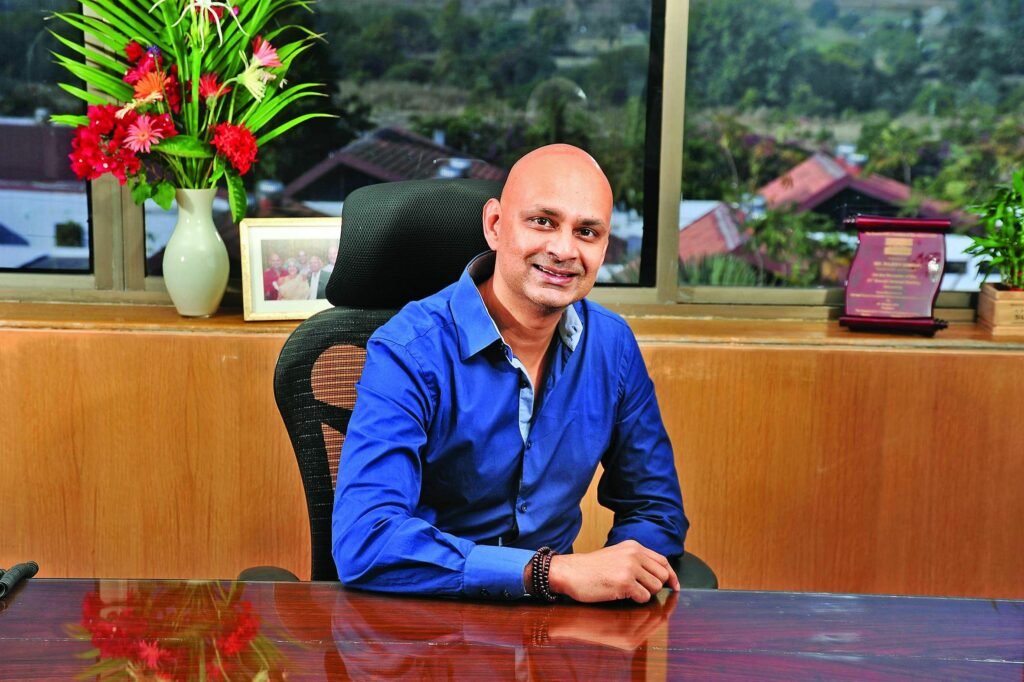
| Mr. Rajeev Samant | Managing Director and CEO |
| Mr. Deepak Shahdadpuri | Non-Executive Non-Independent Director |
| Mrs. Sangeeta Tanwani | Independent Director |
| Mr. Nicholas Cator | Non-Executive Non-Independent Director |
During the year, Mr. Chetan Desai was re-designated as Chairman of the CSR Committee with effect from 8 May 2025, replacing Mr. Rajeev Samant in that role. The remaining constitution of the committee continued unchanged.
The CSR Committee reviews and monitors the CSR activities of the company. This governance structure is important because it gives formal oversight to CSR planning, spending, monitoring and reporting.
No Unspent Amount and No Capital Asset Creation
The company reported no unspent CSR amount for FY 2025-26. It also stated that no capital assets were created or acquired through CSR funds during the financial year.
This shows that the company’s CSR expenditure was fully utilized within the year. Since there was no shortfall, the question of explaining failure to spend the required 2% did not arise.
Impact Assessment Not Applicable
The company stated that impact assessment of CSR projects was not applicable for FY 2025-26. Under CSR rules, impact assessment is required only for companies meeting specified CSR spending thresholds and project criteria. In Sula Vineyards’ case, no such applicable impact assessment was reported for the year.
What the CSR Numbers Indicate
Sula Vineyards’ CSR spending in FY 2025-26 shows a compliance-positive position. The company not only met its statutory obligation but also exceeded it by a small margin.
The amount of Rs. 2.01 crore may appear modest compared to large Indian conglomerates, but for a sector-specific company like Sula Vineyards, the relevance of CSR lies in how closely its projects are connected to its operational ecosystem. Its focus on rural development, environmental sustainability, hygiene and healthcare is meaningful because these areas directly affect local communities and ecological systems around business operations.
The company’s CSR policy language also suggests an attempt to align business growth with community well-being. This is important for companies operating in agriculture-linked industries, where long-term sustainability depends on land, water, farmers, workers and local ecosystems.
However, the available disclosure gives limited project-level details in the provided text. A stronger CSR report would ideally include names of implementing agencies, locations of projects, number of beneficiaries, measurable outcomes and long-term impact indicators. These details help readers understand not only how much money was spent, but also what changed on the ground.
Governance and Compliance View
From a governance perspective, Sula Vineyards has disclosed the composition of its CSR Committee, CSR obligation, actual spending, administrative overheads, unspent amount status and capital asset status.
The company has also provided a web link for its CSR policy, committee composition and CSR projects approved by the Board. This improves transparency and allows stakeholders to review the company’s CSR framework.
The declaration by the Managing Director & CEO and the Chairman of the CSR Committee confirms that the implementation and monitoring of the CSR policy are in compliance with the CSR objectives and policy of the company.
Sula Vineyards Limited is India’s largest wine company and a pioneer in building the modern wine culture in the country. The company’s journey began in 1996 when Rajeev Samant set up the first vineyard in Nashik, Maharashtra. Since then, Sula has played a defining role in developing India’s wine industry through product innovation, premiumisation, wine tourism and strong distribution.
The company today commands more than 60% market share in India’s domestic elite and premium grape wine category. It has a wide portfolio of over 50 wine labels across different price points and varietals. Sula has a strong presence across 23 Indian states and 7 Union Territories, with more than 25,000 points of sale across the country. The company operates five wineries across Maharashtra and Karnataka, with a total winery capacity of 19.2 million litres.
It also works with over 500 contract farmers and has more than 2,800 acres of vineyards. Beyond wine production, Sula is also a leading name in wine tourism. Its Nashik vineyard campus is among the most visited vineyard destinations globally, attracting more than 4 lakh visitors annually. With luxury vineyard resorts, tasting rooms and restaurants, Sula has successfully combined agriculture, hospitality, sustainability and lifestyle into a strong consumer brand.
Copyright@India CSR®


