

What is sustainable clothing production?
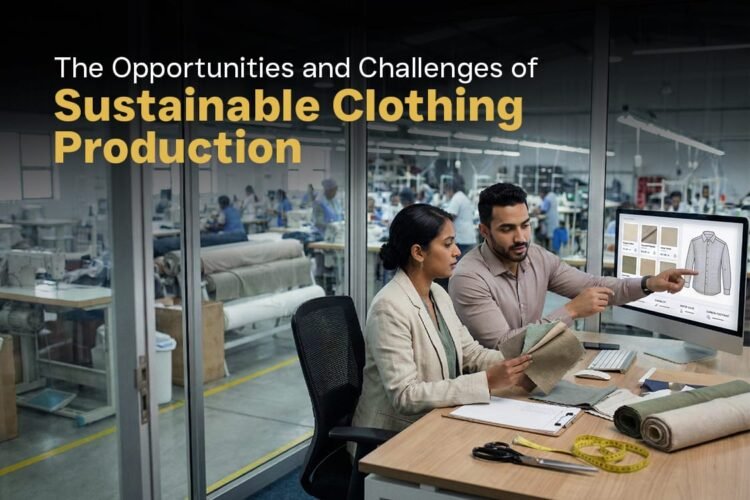
Over the years, the fashion industry has evolved rapidly.But of late, the concept of sustainability has governed the most happening trends in the industry.Sustainable clothing production refers to a process in which the designing, manufacturing, and distribution of clothes are done in ways that help to reduce environmental harm and promote ethical practices. Its main focus is to reduce waste and conserve non-renewable resources like water, energy, etc.
Sustainable clothing production is at the core of today’s fashion ethics, as it focuses on smart allocation of raw material utilization without compromising the ability of future generations to utilize the available resources.

What has pushed companies towards sustainable practices?
Companies across the world have shifted their focus towards sustainable practices. There are different reasons behind this shift. First and foremost is the growing awareness among consumers. In recent times, buyers have become very conscious of what they are purchasing, where their clothes come from, and how they are made. The mindset of buyers in current markets motivates them to support brands that align with their values and that are environmentally responsible and cause less wastage of natural resources.
Moreover, governments all over the world have become stricter with industry regulations. They are introducing new policies and also pushing businesses to adapt practices that reduce carbon emissions, help in better management of waste, and adopt cleaner production methods. Not adhering to these regulations can also lead to penalties and loss of goodwill for companies.
Lastly, there is also a growing awareness among companies that resources are limited and wants are unlimited. Investment in sustainable production of clothing is not merely about responsibility, but it also ensures long-term survival.
Scope and opportunities in sustainable fashion

Since sustainability has entered into the fashion industry, it has opened up exciting opportunities for both businesses and entrepreneurs.
- Innovation in Materials: Given the environment, the demand for eco-friendly textiles, including organic cotton and recycled fibres, has increased. It encourages innovation in both natural and synthetic materials, which is environmentally viable as well.
- Increasing Market Demand:Since there are sustainable products in the business domain, consumers are willing to pay a better price for them. It leads to the creation of a niche market, allowing brands to differentiate themselves and build a loyal customer base.
- Brand Differentiation: Sustainability offers companies the ability to provide a unique selling proposition and helps brands distinguish themselves from their competitors in the market. Any company that would position itself as a responsible and ethical brand will thrive better among today’s hyper-aware consumers.
- Technological Advancement: With the growing advancements in technology, companies can track supply chains and reduce waste. The advancements in AI have created the scope for greater transparency in the apparel production business.
Challenges of Sustainable Clothing Production
Though there are opportunities available in the sustainable fashion industry, they come with several hurdles with regard to adoption.
- Supreme costs: Eco-friendly materials that are used for sustainable production often come at a higher cost. Companies are not able to maintain competitive pricing, especially in those markets where consumers are price-sensitive.
- Limited consumer awareness: While many consumers have become very aware of the market, there is still a larger segment that is unaware of the sustainable practices. They would still want cheap goods over expensive, sustainable goods.
- Greenwashing issues: Some brands and companies make false claims. They do not follow sustainable practices, but put on marks that are incorrect. This has led to growing mistrust among consumers, making it difficult for companies to establish loyalty.
- Scalability issues: When it comes to meeting small demands, sustainability becomes implementable, but adhering to a larger audience becomes difficult. This is one of the most important challenges that companies still face. Along with that, profitability has to be kept in mind with regard to today’s competitive market as well.
Practices to improve sustainability in the fashion segment

While the challenges to adoption remain, there are viable and implementable steps that companies can still take to improve their sustainability efforts. They can invest in better materials, especially by switching to eco-friendly fabrics and reduce their dependence on harmful chemicals that are being used in the production and manufacturing processes.
Investment with regard to research and development needs to be made in this area. Again, the companies can track their supply chains and ensure that they follow ethical practices at every stage.
Companies play a big role in educating consumers about sustainability. If brands clearly communicate how their products are made and the derived benefits, it will also help them to build a loyal customer base. Similar companies within the same industry can also collaborate so that a standard quality is maintained.
Also, the companies should focus on long-term sustainability and not merely chase short-term profits. All these steps combined would help to ensure that sustainable practices are being followed in the fashion industry and challenges of sustainable clothing production are minimised.
Conclusion
The fashion industry is experiencing changes every now and then. Its shift towards sustainable clothing production has no longer remained a trend, but it has become a necessity for companies to switch to the same. While there are both opportunities and challenges present, companies with the right strategies can establish themselves perfectly with regard to sustainable fabrics in modern apparel production.
For example, Patagonia has focused on environmental responsibility as it uses recycled materials and also encourages customers to repair and reuse their clothes. Similarly, H&M has also introduced a segment called the Conscious Collection, which aims to reduce the wastage with respect to the production and also to move towards an economy that fosters a circular fashion model. These examples show how there are sustainable clothing manufacturers available and dominating the marketplace.
FAQs
1) What is sustainable clothing production?
Sustainable clothing production refers to the creation of apparel in a way that meets the demands of the current generation without compromising the ability of future generations to meet their own needs. Its target is to conserve the limited resources, reduce carbon emissions, and promote responsible consumption.
2) How expensive are these products?
These products are expensive in the sense that due to the usage of eco-friendly material and a tech-heavy production process, the costs go up, but it produces better quality products, which make them more cost-effective in the long run.
3) How will consumers help the growth of sustainable fashion?
Consumers can be made aware of the benefits that sustainable products provide. They can be encouraged to choose quality purchases, reuse or recycle their clothes regularly. Even small changes in behaviour that involves no impulse purchases could make a big difference over time.