

• India CSR Awards 2025
  • India CSR Leadership Summit
  • Guest Posts
Monday, March 2, 2026
India CSR
  • Home
  • Corporate Social Responsibility
    • Art & Culture
    • CSR Leaders
    • Child Rights
    • Culture
    • Education
    • Gender Equality
    • Around the World
    • Skill Development
    • Safety
    • Covid-19
    • Safe Food For All
  • Sustainability
    • Sustainability Dialogues
    • Sustainability Knowledge Series
    • Plastics
    • Sustainable Development Goals
    • ESG
    • Circular Economy
    • BRSR
  • Corporate Governance
    • Diversity & Inclusion
  • Interviews
  • SDGs
    • No Poverty
    • Zero Hunger
    • Good Health & Well-Being
    • Quality Education
    • Gender Equality
    • Clean Water & Sanitation – SDG 6
    • Affordable & Clean Energy
    • Decent Work & Economic Growth
    • Industry, Innovation & Infrastructure
    • Reduced Inequalities
    • Sustainable Cities & Communities
    • Responsible Consumption & Production
    • Climate Action
    • Life Below Water
    • Life on Land
    • Peace, Justice & Strong Institutions
    • Partnerships for the Goals
  • Articles
  • Events
  • हिंदी
  • More
    • Business
    • Finance
    • Environment
    • Economy
    • Health
    • Around the World
    • Social Sector Leaders
    • Social Entrepreneurship
    • Trending News
      • Important Days
        • Festivals
      • Great People
      • Product Review
      • International
      • Sports
      • Entertainment
    • Case Studies
    • Philanthropy
    • Biography
    • Technology
    • Lifestyle
    • Sports
    • Gaming
    • Knowledge
    • Home Improvement
    • Words Power
    • Chief Ministers
No Result
View All Result
  • Home
  • Corporate Social Responsibility
    • Art & Culture
    • CSR Leaders
    • Child Rights
    • Culture
    • Education
    • Gender Equality
    • Around the World
    • Skill Development
    • Safety
    • Covid-19
    • Safe Food For All
  • Sustainability
    • Sustainability Dialogues
    • Sustainability Knowledge Series
    • Plastics
    • Sustainable Development Goals
    • ESG
    • Circular Economy
    • BRSR
  • Corporate Governance
    • Diversity & Inclusion
  • Interviews
  • SDGs
    • No Poverty
    • Zero Hunger
    • Good Health & Well-Being
    • Quality Education
    • Gender Equality
    • Clean Water & Sanitation – SDG 6
    • Affordable & Clean Energy
    • Decent Work & Economic Growth
    • Industry, Innovation & Infrastructure
    • Reduced Inequalities
    • Sustainable Cities & Communities
    • Responsible Consumption & Production
    • Climate Action
    • Life Below Water
    • Life on Land
    • Peace, Justice & Strong Institutions
    • Partnerships for the Goals
  • Articles
  • Events
  • हिंदी
  • More
    • Business
    • Finance
    • Environment
    • Economy
    • Health
    • Around the World
    • Social Sector Leaders
    • Social Entrepreneurship
    • Trending News
      • Important Days
        • Festivals
      • Great People
      • Product Review
      • International
      • Sports
      • Entertainment
    • Case Studies
    • Philanthropy
    • Biography
    • Technology
    • Lifestyle
    • Sports
    • Gaming
    • Knowledge
    • Home Improvement
    • Words Power
    • Chief Ministers
No Result
View All Result
India CSR
No Result
View All Result
Home Business

The Kalra Family’s Greatest Legacy Is Not What They Built, It Is Who They Chose to Serve

India CSR by India CSR
March 2, 2026
in Business
Reading Time: 7 mins read
India CSR
Share Share Share Share
WhatsApp icon
WhatsApp — Join Us
Instant updates & community
Google News icon
Google News — Follow Us
Get our articles in Google News feed

India has always celebrated its great families.

We know their names. We know their companies, their dynasties, their empires. We know how the Ambanis transformed energy and telecommunications. How the Jindals built steel into sovereignty. How the Tatas turned industry into institution. How the Birlas, the Bajajs, the Mahindras planted their names across the skyline of modern India and into the consciousness of every Indian who has ever bought a car, paid a bill, or boarded a flight.

These are families whose legacies are written in market capitalisation. In revenue. In the number of people they employ, the sectors they dominate, the governments they influence.

India knows how to celebrate this kind of family. It has a language for this kind of success.

What it does not quite have – what it has not yet fully developed the vocabulary for – is a family like the Kalras.

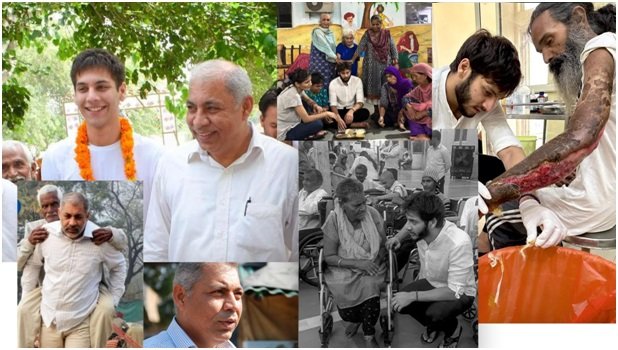
Karmayogi Shri Ravi Kalra was a revered humanitarian and environmentalist who lived a life of sewa – selfless service. In 2008, he founded The Earth Saviours Foundation to rescue and care for society’s most forgotten souls, including abandoned elders, disabled individuals, and the homeless. With no resources, he built the first shelter home from the ground up. He walked the streets himself, treated the sick, fed the hungry, and comforted the dying. He was not building a company. He was not accumulating. He was, in the most literal and unglamorous sense possible, giving everything away – his time, his money, his comfort, his life – to people the rest of the world had already decided were not worth keeping.

And when he passed, his son Jas – 21 years old, with no board of directors, no advisory council, no institutional safety net – stepped into the same current and kept swimming.

This is the Kalra family’s legacy. Not what they built. Who they chose to serve.

A Different Kind of Dynasty

There is a pattern, in India’s great families, that is so familiar it has become almost invisible.

The father builds. The son inherits and expands. The empire grows across generations, each new Ambani or Jindal or Tata adding floors to a structure whose foundations were laid before they were born. Wealth compounds. Influence compounds. The family name becomes a brand, and the brand becomes a kind of immortality.

The Kalras follow this pattern in every structural way – and invert it in every meaningful one.

Ravi Kalra was born and brought up in Delhi in a middle-class family. His father retired as a Delhi Police Inspector. There was no dynasty to inherit, no empire to expand, no family wealth to deploy. His father’s tough commando and soldier skills inspired him to achieve the prestigious 4th Dan black belt in Taekwondo Martial Arts, and he went on to become a self-defense instructor who travelled to 42 different countries. He was, by the standards of a comfortable life, already successful. Already free.

He chose, instead, to give it up.

He got his epiphany when he came upon a beggar child scouring garbage along with street dogs on a busy Delhi road. “I despised my wealth at that time. I felt as if I haven’t done anything good for society. That was the moment I decided to leave everything and to dedicate my life to seva,” he recalled.

That decision – made not from privilege but from conscience, not from inheritance but from a moment of clarity on a Delhi street – became the founding act of everything TESF is today.

Where other patriarchs of his generation were building portfolios, Ravi Kalra was building something harder to measure and harder to walk away from: a moral commitment, lived in public, every single day, to the people everyone else had stopped seeing.

And then he passed that commitment to his son.

Not a company. Not shares. Not a board seat. A commitment.

The Inversion That India Has Not Yet Fully Reckoned With

Here is the thing about India’s celebrated families that is worth stating plainly.

The Ambanis and the Jindals and the Tatas – they serve India. Their companies employ millions. Their philanthropy funds institutions. Their infrastructure connects the country. We do not diminish any of this. It is real, it is significant, and it is part of what India is.

But they serve India from a position of power. From a position of accumulation. The direction of the transaction – however generous, however well-intentioned – is always from the top down.

Wealth flowing outward from those who have it, toward those who need it.

The Kalras do something structurally different. Something that India’s language of success has not quite found the right words for.

They serve India’s most abandoned people not by donating to them from a distance, but by living in daily proximity to them. Not by funding a cause but by being the cause. Not by writing a cheque but by being present – at dawn, at midnight, in the ward, on the highway where someone has just been found unconscious, in the crematorium where a body with no name is being given its last rites with the same prayers offered to kings.

Shri Ravi Kalra Ji was deeply involved in the daily care of the residents; he changed their diapers, removed their maggots, cleaned their wounds, and fed them with his own hands, always expressing gratitude to God Almighty for the opportunity to do sewa.

A man who changed diapers and called it gratitude. Not charity. Gratitude.

That inversion – of power, of status, of the direction of service – is what makes the Kalra family genuinely unusual in the landscape of Indian public life. They did not descend from success to philanthropy. They ascended from conscience to a life of daily, unglamorous, total commitment to the forgotten.

And now a 26-year-old is carrying that forward. Alone. Without a board. Without advisors. Without ambassadors.

No Infrastructure of Legitimacy

This is the part that deserves its own paragraph, because it is genuinely extraordinary.

Organisations of TESF’s scale – 1500+ residents, two campuses, round-the-clock medical care, rescue operations across the NCR region – do not typically run like this. They have governing boards with retired IAS officers and corporate veterans. They have advisory councils with

doctors, lawyers, and policy thinkers. They have patron-in-chief slots filled by politicians or celebrities who lend their names to letterheads. They have brand ambassadors, influencer partnerships, institutional credibility conferred by association with the powerful.

TESF has none of it.

What it has, instead, is seventeen years of unbroken service. 25,000 lives rescued. 16.5 million meals served. 12,500 unclaimed bodies cremated with dignity. 10,000 people reunited with families. A facility that has never turned anyone away, never missed a meal service, never closed its gates.

The legitimacy of TESF is not conferred. It is earned. Every day. In the most direct and irreducible way possible: by doing the work.

And the young man running it – carries a quality of moral authority that no appointment, no title, and no association can manufacture.

He earned it the way his father earned it. By showing up. By not stopping.

What This Family Chose Instead

India asks a great deal of its ambitious families. It expects them to build, to accumulate, to grow, to cement their names into the fabric of commerce and industry and cultural life. It has a clear template for what a successful family looks like, and it celebrates those who fit it lavishly and loudly.

The Kalras looked at that template and made a different choice.

Not a smaller choice. Not a lesser choice. A choice that demands more, not less – more presence, more sacrifice, more daily confrontation with the hardest realities of human life than any boardroom ever asks of anyone.

They chose to cement their family’s values not in steel or telecommunications or retail, but in the unglamorous, unrelenting, morally serious work of caring for the people no one else would.

Jas believes that he draws his strength from the residents themselves. “It is not the cruelty that they faced that surprises me. It is how they still find a reason to live and grow. Despite having been exposed to the extreme cruelty this world has to offer, they remain unbreakable.”

A 24-year-old who draws his strength from the abandoned. Who inherited not an empire but a conscience. Who runs not a company but a home – for 1,500 people who had nowhere else to go.

This is the Kalra family legacy.

It will not be measured in market capitalisation. It cannot be listed on any exchange. It will not make any annual rich list or feature in any business school case study about wealth creation.

But somewhere in a ward in Bandhwari, an old man whose name nobody knew three years ago is laughing at something a friend said. And in a kitchen in Mandawar, thousands of meals are being prepared for people who once had nothing.

That is what the Kalras built.

And it is, by any honest measure, one of the most valuable things any Indian family has ever made.
India Responsible Education & AI Summit 2026
ADVERTISEMENT
Ambedkar Chamber
ADVERTISEMENT
ESG Professional Network
ADVERTISEMENT
India Sustainability Awards 2026
ADVERTISEMENT
India CSR Image 1 India CSR Image 2

CSR, Sustainability, and ESG success stories hindustan zinc
ADVERTISEMENT
India CSR

India CSR

India CSR is the largest media on CSR and sustainability offering diverse content across multisectoral issues on business responsibility. It covers Sustainable Development, Corporate Social Responsibility (CSR), Sustainability, and related issues in India. Founded in 2009, the organisation aspires to become a globally admired media that offers valuable information to its readers through responsible reporting.

Related Posts

Credibility
Business

Achieve Professional Credibility With Trusted Certifications

16 minutes ago
VerveSemi Closes $10 Million Fundraise to Accelerate Analog-AI Innovation; Transaction Managed by Six Stone Capital
Business

VerveSemi Closes $10 Million Fundraise to Accelerate Analog-AI Innovation; Transaction Managed by Six Stone Capital

52 minutes ago
Kabir Banam Tulsi: A Family Story Born in the Heart of Banaras
Business

Kabir Banam Tulsi: A Family Story Born in the Heart of Banaras

59 minutes ago
Savoring the Essence of India, Gourmet Style: Trsna Partners with Celebrity MasterChef Shipra Khanna
Business

Savoring the Essence of India, Gourmet Style: Trsna Partners with Celebrity MasterChef Shipra Khanna

1 hour ago
The Office Gap Is Real: alt.f coworking Is Building Premium Office Spaces For Rent For India’s 6 To 40 Person Small Business Teams
Business

The Office Gap Is Real: alt.f coworking Is Building Premium Office Spaces For Rent For India’s 6 To 40 Person Small Business Teams

2 hours ago
Historic Degree Distribution Ceremony of Pillai Group of Institutions Graced by Hon’ble Union Minister Nitin Gadkari
Business

Historic Degree Distribution Ceremony of Pillai Group of Institutions Graced by Hon’ble Union Minister Nitin Gadkari

3 hours ago
Load More
India Responsible Education & AI Summit 2026
ADVERTISEMENT
Ambedkar Chamber
ADVERTISEMENT
India Sustainability Awards 2026
ADVERTISEMENT

LATEST NEWS

CSR: Yamaha Donates Bus to Government Girls Home Noida

Achieve Professional Credibility With Trusted Certifications

VerveSemi Closes $10 Million Fundraise to Accelerate Analog-AI Innovation; Transaction Managed by Six Stone Capital

Kabir Banam Tulsi: A Family Story Born in the Heart of Banaras

Savoring the Essence of India, Gourmet Style: Trsna Partners with Celebrity MasterChef Shipra Khanna

CSR: NALCO Foundation Starts Skill Coaching for Land-Affected Families

Economy India Largest Media on Indian Economy and Business
ADVERTISEMENT
Ad 1 Ad 2 Ad 3
ADVERTISEMENT
ESG Professional Network
ADVERTISEMENT

TOP NEWS

CSR: Coromandel International Boosts Education Infrastructure in Sarigam

CSR: American Express Supports Magic Bus India Foundation to Equip Youth with Employability and Digital Skills

VerveSemi Closes $10 Million Fundraise to Accelerate Analog-AI Innovation; Transaction Managed by Six Stone Capital

INOXAP to Build Onsite Nitrogen Plant for TACC in Dewas

Historic Degree Distribution Ceremony of Pillai Group of Institutions Graced by Hon’ble Union Minister Nitin Gadkari

Würfel Makes History as the First Indian Modular Kitchen Brand to Win the Prestigious Good Design Award

Load More
STEM Learning STEM Learning STEM Learning
ADVERTISEMENT

Interviews

Prerrit Mansingh, Secretary, Aayom Welfare Society
Interviews

Scaling Compassion into Structured Social Change: An Interview with Prerrit Mansingh

by India CSR
February 28, 2026

Prerrit Mansingh on Aayom Welfare Society’s Legacy of Seva and Sustainable Community Transformation.

Read moreDetails
Sheena Kapoor, Head – Marketing, Corporate Communication & CSR at ICICI Lombard

ICICI Lombard at 25: Sheena Kapoor on Promise-Led CSR and Lasting Impact

February 28, 2026
Arun Jain, Founder and CMD of Intellect and Founder of Mission Samriddhi

Design Thinking for Rural India: Arun Jain’s Civilisation Economics Model

February 28, 2026
Rajani Jalan, Director, CSR & People Relations, mPokket

mPokket’s Decade of CSR Impact in West Bengal: An Interview with Rajani Jalan

February 25, 2026
Load More
Facebook Twitter Youtube LinkedIn Instagram
India CSR Logo

India CSR is the largest tech-led platform for information on CSR and sustainability in India offering diverse content across multisectoral issues. It covers Sustainable Development, Corporate Social Responsibility (CSR), Sustainability, and related issues in India. Founded in 2009, the organisation aspires to become a globally admired media that offers valuable information to its readers through responsible reporting. To enjoy the premium services, we invite you to partner with us.

Follow us on social media:


Dear Valued Reader

India CSR is a free media platform that provides up-to-date information on CSR, Sustainability, ESG, and SDGs. We need reader support to continue delivering honest news. Donations of any amount are appreciated.

Help save India CSR.

Donate Now

Donate at India CSR

  • About India CSR
  • Team
  • India CSR Awards 2025
  • India CSR Leadership Summit
  • India Responsible Education & AI Summit 2026
  • Partnership
  • Guest Posts
  • Services
  • ESG Professional Network
  • Content Writing Services
  • Business Information
  • Contact
  • Privacy Policy
  • Terms of Use
  • Donate

Copyright © 2025 - India CSR | All Rights Reserved

No Result
View All Result
  • Home
  • Corporate Social Responsibility
    • Art & Culture
    • CSR Leaders
    • Child Rights
    • Culture
    • Education
    • Gender Equality
    • Around the World
    • Skill Development
    • Safety
    • Covid-19
    • Safe Food For All
  • Sustainability
    • Sustainability Dialogues
    • Sustainability Knowledge Series
    • Plastics
    • Sustainable Development Goals
    • ESG
    • Circular Economy
    • BRSR
  • Corporate Governance
    • Diversity & Inclusion
  • Interviews
  • SDGs
    • No Poverty
    • Zero Hunger
    • Good Health & Well-Being
    • Quality Education
    • Gender Equality
    • Clean Water & Sanitation – SDG 6
    • Affordable & Clean Energy
    • Decent Work & Economic Growth
    • Industry, Innovation & Infrastructure
    • Reduced Inequalities
    • Sustainable Cities & Communities
    • Responsible Consumption & Production
    • Climate Action
    • Life Below Water
    • Life on Land
    • Peace, Justice & Strong Institutions
    • Partnerships for the Goals
  • Articles
  • Events
  • हिंदी
  • More
    • Business
    • Finance
    • Environment
    • Economy
    • Health
    • Around the World
    • Social Sector Leaders
    • Social Entrepreneurship
    • Trending News
      • Important Days
      • Great People
      • Product Review
      • International
      • Sports
      • Entertainment
    • Case Studies
    • Philanthropy
    • Biography
    • Technology
    • Lifestyle
    • Sports
    • Gaming
    • Knowledge
    • Home Improvement
    • Words Power
    • Chief Ministers

Copyright © 2025 - India CSR | All Rights Reserved

This website uses cookies. By continuing to use this website you are giving consent to cookies being used. Visit our Privacy and Cookie Policy.
Are you sure want to unlock this post?
Unlock left : 0
Are you sure want to cancel subscription?



