
• India CSR Awards 2026
  • India CSR Leadership Summit
  • Guest Posts
Monday, October 19, 2026
India CSR®
  • Home
  • Corporate Social Responsibility
    • Art & Culture
    • CSR Leaders
    • Child Rights
    • Culture
    • Education
    • Gender Equality
    • Around the World
    • Skill Development
    • Safety
    • Covid-19
    • Safe Food For All
  • Sustainability
    • Sustainability Dialogues
    • Sustainability Knowledge Series
    • Plastics
    • Sustainable Development Goals
    • ESG
    • Circular Economy
    • BRSR
  • Corporate Governance
    • Diversity & Inclusion
  • Interviews
  • SDGs
    • No Poverty
    • Zero Hunger
    • Good Health & Well-Being
    • Quality Education
    • Gender Equality
    • Clean Water & Sanitation – SDG 6
    • Affordable & Clean Energy
    • Decent Work & Economic Growth
    • Industry, Innovation & Infrastructure
    • Reduced Inequalities
    • Sustainable Cities & Communities
    • Responsible Consumption & Production
    • Climate Action
    • Life Below Water
    • Life on Land
    • Peace, Justice & Strong Institutions
    • Partnerships for the Goals
  • Articles
  • Events
  • हिंदी
  • More
    • Business
    • Finance
    • Environment
    • Economy
    • Health
    • Around the World
    • Social Sector Leaders
    • Social Entrepreneurship
    • Trending News
      • Important Days
        • Festivals
      • Great People
      • Product Review
      • International
      • Sports
      • Entertainment
    • Case Studies
    • Philanthropy
    • Biography
    • Technology
    • Lifestyle
    • Sports
    • Gaming
    • Knowledge
    • Home Improvement
    • Words Power
    • Chief Ministers
No Result
View All Result
India CSR®
No Result
View All Result
Home Business

Six Reasons Why the Monitoring and Evaluation System is Failing in Social Sector

India CSR by India CSR
December 4, 2025
Reading Time: 4 mins read
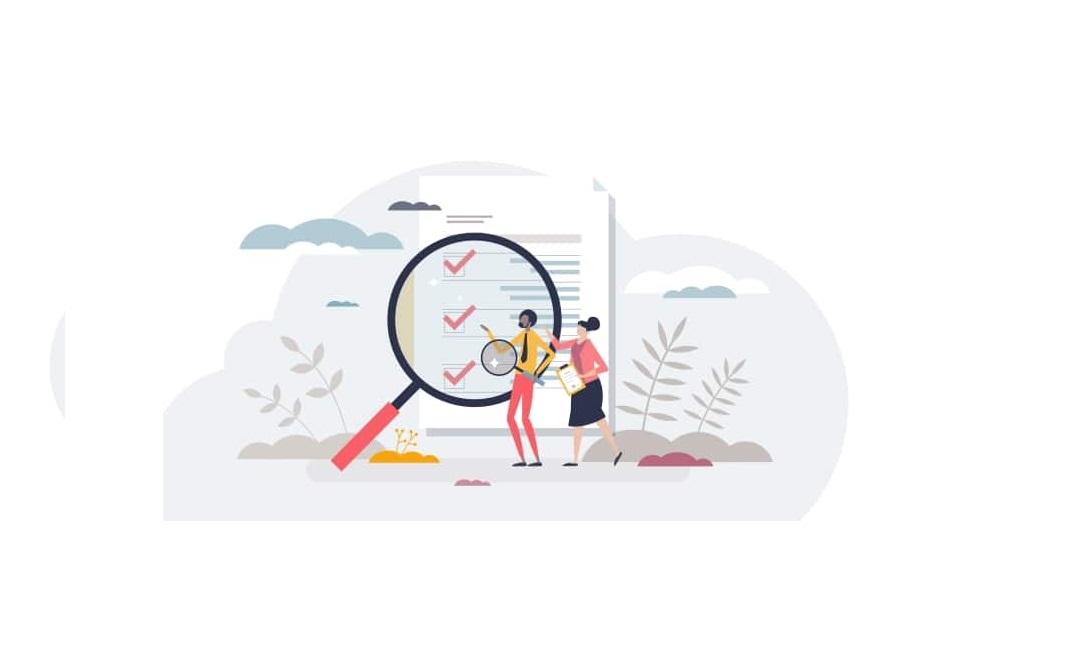
Monitoring Evaluation System
Share Share Share Share
WhatsApp icon
WhatsApp — Join Us
Instant updates & community
Google News icon
Google News — Follow Us
Get our articles in Google News feed

By Dibyendu Chaudhuri

NEW DELHI (India CSR): Non-profit organisations are increasingly recognising the importance of monitoring and evaluation (M&E) systems to track progress toward the organisational goal. Beyond project-based M&E, driven mostly by donor demands, organisations see the need for an internal M&E system to support learning and strategic alignment. Project M&E is a subset of the broader organisational M&E system.

Many organisations have an M&E unit or officer to spearhead the design, set up, and operation of the M&E system. Experiences from NGOs show that designing the M&E system is relatively straightforward, often supported by external experts. However, challenges arise post-design. In some cases, the system fails to launch due to a lack of an implementation plan; in others, it runs for a short period before collapsing, or it runs, but employees distrust the accuracy of the data, and the data is used solely for external compliance. These scenarios constitute M&E failure.

Early signs of M&E failure include employees perceiving data collection as burdensome. This can be followed by loss of interest in dashboard or reports, and the data might not be used for internal reflection or learning. Such issues can lead to system collapse. When an M&E system fails, organisations often revamp it, rearticulating their Theory of Change, creating a new M&E plan, and updating the MIS with new indicators. However, the cycle of failure often repeats. 

This article focuses on organisational M&E, where failure is most common. Project M&E, driven by donor compliance, tends to be implemented more rigorously but focuses on achievement rather than learning.    

There are sixmajor reasons for M&E failure:

Limited employee involvement in design: Although most organisations agree that M&E design should involve all the staff, particularly those working closely with the community, this process is often costly and time-consuming.  As a result, only a small group participate, and while the design may be shared for feedback, this does not lead to ownership. Employees not understanding why certain data is collected, view themselves as data providers rather than users or learners, undermining the basic objective of M&E- learning.

Complicated and or overdesigned system: Many organisations start with a simple M&E system, but it becomes complex over time, often due to more project-based funding requiring new indicators. This leads to an overload of indicators. Additionally, some organisations aim for an M&E system that serves both the organisation and the community, which is unrealistic. Organisational M&E should focus on tracking progress towards the organisational goals, while communities may have their own monitoring methods. The use of multiple, complex technologies can also cause system collapse if one data channel fails.

Theoretical rather than contextual indicators: Indicators developed from theoretical frameworks without considering context may not fit the organisation’s operational reality. For example, indicators for ‘agency’, for an Adivasi woman in Jharkhand, may differ from those for a woman in Europe. Without contextualisation based on organisational experience, collected data may lack meaning.    

Lack of focus on Employees’ growth and development: An M&E system will be sustainable if it benefits employees, especially those who are delivering the development task to communities and other organisations, by supporting their personal and professional growth through feedback or a sense of achievement. However, most often, M&E focuses on data collection and analysis rather than learning, causing employees to lose interest. 

Lack of an implementation plan: Organisations often fail to implement the M&E plans due to a lack of strategy. Unlike other projects, M&E implementation lacks rigour, leading to delay and an outdated design, ultimately a complete stoppage.

M&E as a showpiece: When the leadership or M&E team focus on showcasing the system rather than learning, the system loses its purpose. This emphasis on appearances leads to failure due to a lack of focus on employee and organisational growth.

The way to avoid failure in M&E, is to focus on employee and organizational learning. One should involve staff during the design process, discuss the pros and cons to ensure ownership and relevance. This way, people will feel connected and stay focused won’t lose interest over the time.

About the Author

Dibyendu Chaudhuri, Integrator, PRADAN.

(India CSR)
csr education cybernetyx
ADVERTISEMENT
India CSR Image 1 India CSR Image 2

CSR, Sustainability, and ESG success stories hindustan zinc
ADVERTISEMENT
India CSR

India CSR

India CSR® is the largest media on CSR and sustainability offering diverse content across multisectoral issues on business responsibility. It covers Sustainable Development, Corporate Social Responsibility (CSR), Sustainability, and related issues in India. Founded in 2009, the organisation aspires to become a globally admired media that offers valuable information to its readers through responsible reporting.

Related Posts

India CSR®
Business

Kissht launches Kissht Mitra, a mental wellness program for its employees

India CSR®
Business

Lodgestory AI Support Agent now Asks a Human mid-chat, and Phones the on-call Team When Nobody is at the Inbox

India CSR®
Business

Chandukaka Saraf Jewels Announces the Relocation of Its Kolhapur Store

India CSR®
Business

AM/NS India signs Shareholders’ Agreement to upgrade four Government ITIs in Andhra Pradesh under PM-SETU

India CSR®
Business

OPPO Presents Namrata Joshipura at Lakmē Fashion Week in Partnership With FDCI

India CSR®
Business

KRAFTON India Doubles College Campus Tour to 256 Colleges, Taking Competitive Esports to More Campuses Across India

Load More
csr education cybernetyx
ADVERTISEMENT
bba
ADVERTISEMENT

Interviews

Vishwa Bandhu Bhattacharya, Director – Global Sustainability, Tata Consumer Products-India CSR
Interviews

Our Focus Remains on Embedding ESG Priorities into the Fabric of the Organisation: Vishwa Bandhu Bhattacharya, Director – Global Sustainability, Tata Consumer Products

by India CSR

ESG progress, renewable energy, circular packaging, water positivity and Net Zero 2040.

Read moreDetails
Dr Rajeev Gautam, President, HORIBA India @Indiacsr

“Wellness Doesn’t Replace Ambition, It Makes Ambition Sustainable”: Shilpa Bhagat, Co-Founder, Fitistan

From L to R- Olayinka Hakeem Babalola, Rotary International President (2026-27) and M. Muruganandam (MMM), Vice President (2026-27)

“Peace Is the Foundation That Allows All Other Progress to Take Root”: Rotary International

India CSR®

Interview: Ravi Mahajan on India’s Shift from Diesel to Solar-Powered Telecom Towers

Load More
Ad 1 Ad 2 Ad 3 Ad 4 Ad 5 Ad 6
ADVERTISEMENT

CSR UPDATES

M3M Foundation’s Seva Campaign Reaches Over One Lakh People in a Month

Strategic CSR Investment to Unlock Bihar’s Youth and Enterprise Potential, Says Kumod Kumar at India CSR Summit

When CSR Reaches the Start Line: How NTPC’s Archery Bet Is Building a Pathway from a Family’s First Bow to the Asian Games Podium

From One iMpower Club to 5 Million Lives: M3M Foundation Celebrates Seven Years of Impact, Bringing Together Partners and Communities from Across India

NABARD Supports 21-Day Livelihood and Enterprise Development Programme for 60 SHG Women in Delhi

HSBC India commits Rs. 200 Crore to Advance Financial Literacy 

STEM Learning STEM Learning STEM Learning
ADVERTISEMENT
Facebook Twitter Youtube LinkedIn Instagram
India CSR Logo

India CSR® is the largest tech-led platform for information on CSR and sustainability in India offering diverse content across multisectoral issues. It covers Sustainable Development, Corporate Social Responsibility (CSR), Sustainability, and related issues in India. Founded in 2009, the organisation aspires to become a globally admired media that offers valuable information to its readers through responsible reporting. To enjoy the premium services, we invite you to partner with us.

Follow us on social media:

Subscribe to Our Newsletter

Don't miss out on the latest updates in corporate social responsibility. Subscribe to our newsletter at indiacsr.in and be part of the positive change.
Please enable JavaScript in your browser to complete this form.
Loading

  • About India CSR®
  • Team
  • India CSR® Awards 2026
  • India CSR® Leadership Summit
  • Partnership
  • Guest Posts
  • Services
  • ESG Professional Network
  • Content Writing Services
  • Business Information
  • Contact
  • Privacy Policy
  • Terms of Use
  • Donate

Copyright © 2026 - India CSR® | All Rights Reserved

No Result
View All Result
  • Home
  • Corporate Social Responsibility
    • Art & Culture
    • CSR Leaders
    • Child Rights
    • Culture
    • Education
    • Gender Equality
    • Around the World
    • Skill Development
    • Safety
    • Covid-19
    • Safe Food For All
  • Sustainability
    • Sustainability Dialogues
    • Sustainability Knowledge Series
    • Plastics
    • Sustainable Development Goals
    • ESG
    • Circular Economy
    • BRSR
  • Corporate Governance
    • Diversity & Inclusion
  • Interviews
  • SDGs
    • No Poverty
    • Zero Hunger
    • Good Health & Well-Being
    • Quality Education
    • Gender Equality
    • Clean Water & Sanitation – SDG 6
    • Affordable & Clean Energy
    • Decent Work & Economic Growth
    • Industry, Innovation & Infrastructure
    • Reduced Inequalities
    • Sustainable Cities & Communities
    • Responsible Consumption & Production
    • Climate Action
    • Life Below Water
    • Life on Land
    • Peace, Justice & Strong Institutions
    • Partnerships for the Goals
  • Articles
  • Events
  • हिंदी
  • More
    • Business
    • Finance
    • Environment
    • Economy
    • Health
    • Around the World
    • Social Sector Leaders
    • Social Entrepreneurship
    • Trending News
      • Important Days
      • Great People
      • Product Review
      • International
      • Sports
      • Entertainment
    • Case Studies
    • Philanthropy
    • Biography
    • Technology
    • Lifestyle
    • Sports
    • Gaming
    • Knowledge
    • Home Improvement
    • Words Power
    • Chief Ministers

Copyright © 2026 - India CSR® | All Rights Reserved

This website uses cookies. By continuing to use this website you are giving consent to cookies being used. Visit our Privacy and Cookie Policy.

