

From Charity to Capacity Building: Aayom’s Journey of Sustainable Empowerment
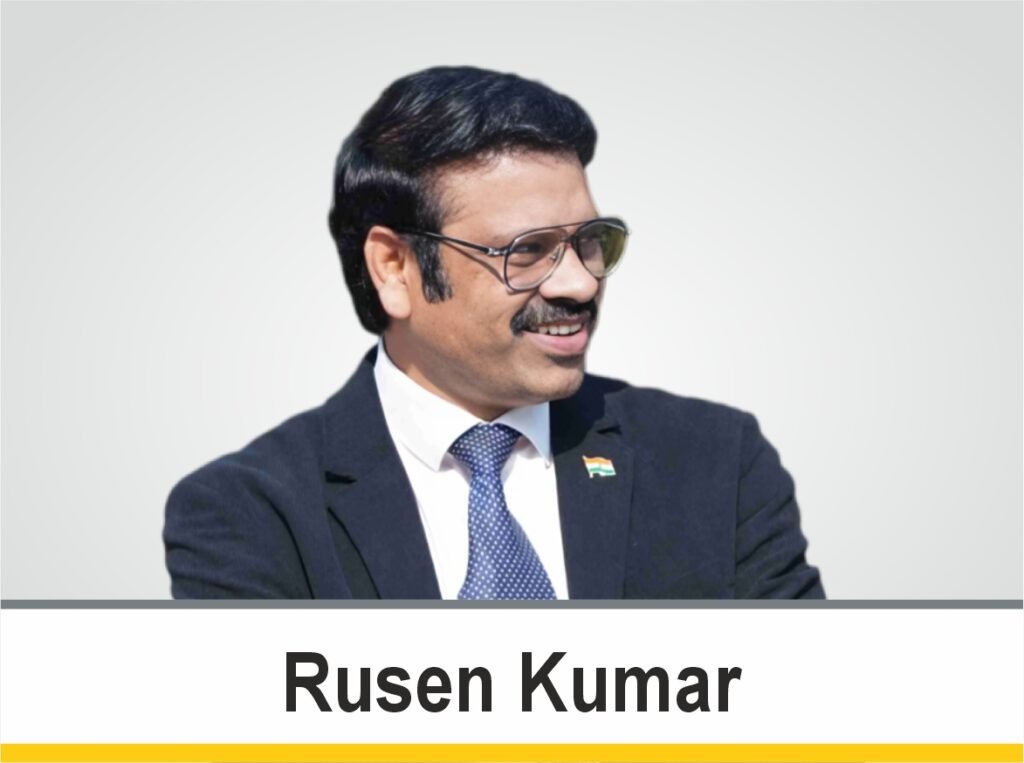
By Rusen Kumar
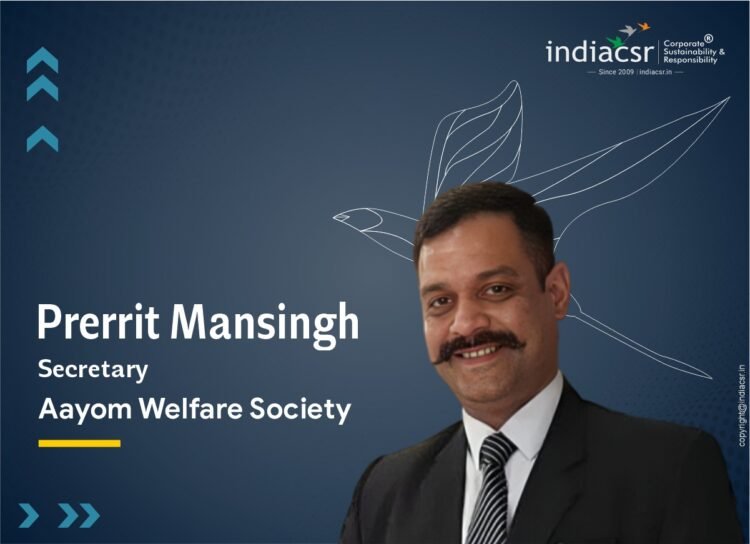
NEW DELHI (India CSR): In this exclusive interview, Rusen Kumar, Managing Editor, India CSR, speaks with Prerrit Mansingh, Secretary, Aayom Welfare Society, about the organisation’s generational legacy of service and its evolution into a nationwide force for sustainable community development. Rooted in the principle “Seva Parmo Dharma” (Service is the highest duty), Aayom has transitioned from charity-based efforts to structured, impact-driven initiatives focused on long-term empowerment.
Mansingh highlights transformative campaigns such as Snap the Taboo, addressing menstrual health and stigma among over five lakh women and girls, and Next Innings, which has trained more than two lakh individuals in livelihood skills. He also reflects on Aayom’s large-scale policy advocacy efforts that have impacted over 80 crore citizens. The discussion underscores the organisation’s emphasis on region-specific skill development, grassroots partnerships, measurable outcomes, and community ownership. Looking ahead, Aayom plans to expand digital literacy, STEM education, and livelihood hubs to ensure dignity, independence, and sustainable progress for underserved communities.
1. Aayom Welfare Society has a legacy in your family’s generation and commitment of social service. How has this legacy shaped the organisation’s philosophy and approach to community development?
“सेवापरमोधर्म:” (Service is the highest duty), our journey has always been anchored by this timeless principle from generations. This is not just a motto for us, it has been passed down through generations in my family. It has shaped me to be selfless, dignified, and deeply rooted with empathy; and we try to pass it down to our team further to do good with the same sense of dignity.
While the philosophy remains constant, our approach has definitely evolved with the changing societal realities. Keeping up with our services to our people and the planet, we realised that one-time relief does not create a lasting transformation especially when now we are working across the nation, and not just in and around Fatehpur from where we started. Communities today need sustainable pathways that empower them entirely.
If I compare from the era of Rai Bahadur Ishwar Sahai Ji in the 1800s, we had to shift from just charity to capacity building. The legacy we carry reminds us that true service uplifts not just an individual, but an entire ecosystem and that responsibility continues to guide every initiative we undertake.
2. What was the founding vision behind Aayom, and has the organisation evolved over the years under your leadership?
Aayom was born with a simple and personal conviction that family-led compassion, when institutionalized, can drive national transformation. As a family, we were already involved in different social efforts, each doing our bit in our own way. The vision was to bring these scattered efforts under one meaningful umbrella, to create something more structured, more impactful, and capable of truly serving the masses at scale.
Over time, experience taught us that intent alone is not enough, systems, accountability and long-term thinking are equally important. Yes, the organisation has evolved tremendously. In fact, evolution was the only way forward. Reaching over 80+ crore beneficiaries across the nation in two decades does not happen by chance; it requires resilience, partnerships, learning from failures, and constantly adapting to changing realities.
While our operations have become more professional and our footprint nationwide, the core remains the same, compassion, unity and an unwavering commitment to uplift communities with dignity.
3. Aayom works across several focus areas such as women empowerment, education, skill development, healthcare, and environment welfare. Which of these focus areas do you believe has had the most transformative impact so far?
Our numbers tell the story of where transformation is happening, not just our belief system. If I speak purely in terms of scale and reach, our policy advocacy work stands unmatched, through which we have positively impacted on more than 80+ Crore citizens across India through Universalization of Public Distribution System – a reform that will continue to benefit people till 2029.
However, when I reflect on the transformations at the human level, 2 campaigns stand out – ‘Next Innings’ and ‘Snap the Taboo’.
Through Snap The Taboo, that focused on menstrual health and hygiene, we reached over 2,80,522 females across all states and two Union Territories in a single day, and got certified by India Book of Records. In over two decades, we have engaged with more than 5 lakh women and girls, challenging stigma and breaking generational silence around menstruation.
Similarly, through Next Innings, our skill development and empowerment initiative, we have trained over 2 lakh individuals, including jail inmates and underserved communities equipping them with employable skills and restoring dignity through livelihood opportunities.
And through these two campaigns alone, we cover empowerment, education, skill development and healthcare.
4. Every initiative requires strong on-ground execution, how does Aayom plan, implement, and monitor its program to ensure meaningful and measurable outcomes?
Before initiating our campaign at a new location, our team spends time on the ground. We begin with the detailed need assessment by engaging local stakeholders, conduct baseline surveys, and map the socio-economic realities. Local partnerships always strengthen the outreach and ensure cultural relevance for us. We know beforehand where to focus more.
During implementation, a set monitoring system is maintained starting from attendance tracking, event highlights, progress evaluations, to beneficiary feedbacks. We actually measure outcomes, just an activity cannot give us accountability, but how it has impacted on the beneficiary defines it. With skill development and livelihood training, post program employment becomes our measure. For certain campaigns, behavioural shifts and sustainable indicators are the measures of outcome. Building communities require execution with precision and empathy.
5. Women empowerment has been one of Aayom’s strongest pillars. What challenges do women in rural and semi- urban areas continue to face, and how is Aayom helping them overcome these barriers?
When people think of rural women, they imagine homemakers, silent supporters, and caregivers. And what they don’t see is suppressed ambitions. Across villages on the outskirts of metro cities we have met women who wake up at 4 am, manage households, livestock, children, husband and his parents, and still need to seek permission for a 2 hour training session.
In all these years, we have seen and heard a lot, women being questioned on their character for stepping out, being ridiculed by other females only to live for herself. We have seen a few females coming to learn secretly because they knew life would fall apart once they step up to come out of an unhappy and toxic marriage; and they need to learn skills to start the next innings of their lives.
Our work goes beyond skilling, we counsel families, build confidence, appreciate supportive families, create market linkages, and nurture literacy. When she earns her first income, she fills with confidence, her smile is genuine and their daughters begin to dream differently. These transformations, may sound dramatic, but witnessing them in reality is truly overwhelming.
6. Skill development is crucial for long-term livelihood generation. How does Aayom ensure that its training programs translate into real career or entrepreneurship opportunities for beneficiaries?
Our programs are not generic, but region specific and livelihood driven. It starts with the need based assessment and understanding the economic ecosystem of each geography.
For example – in Himachal Pradesh, there is a demand for knitted products and local handcrafted products, so we train beneficiaries in knitting along with basic selling skills. In Tripura, where industrial and oil & gas-linked opportunities are emerging, women are trained in skills relevant to factory operations and technical support roles. In Uttar Pradesh, our programs include carpentry, AC repair, automobile repair, crochet work, and snacks making, skills that are directly employable within local markets. We work across states in the same fashion, assess and train. Our vision is clear, we train for opportunity not for the pictures and certifications.
Post-training, we put in efforts to connect beneficiaries to local businesses, workshops, and service providers for employment placements. Many secure jobs immediately due to practical skill exposure. Others choose entrepreneurship, becoming tailors, repair technicians, or home-based food entrepreneurs.
By combining demand-based training with employability and entrepreneurship pathways, we ensure skills translate into sustainable income and dignity.
7. Community-centric and sustainable impact is a priority in modern CSR. What measures does Aayom take to ensure that its initiatives remain relevant, scalable, and self-sustaining over time?
As stated earlier, our approach has shifted from one time charity to sustainable solutions over the years. Sustainability begins with listening, and before launching any intervention, our on-ground need assessments and engaging local stakeholders ensure the program addresses real gaps, and not assumed ones.
Our focus is on livelihood generation, skill development, health awareness, and dignity-led campaigns. Each initiative has an exit strategy, meaning communities/locals are trained, equipped, and connected to market linkages or employment networks so they can continue independently. Volunteers take care of the QnAs after the handover, and we are just a call away when needed.
We invest in capacity building, we empower the local stakeholders to become trainers and community leaders. When they feel the ownership, they can move mountains, and with the ownership sustainability follows naturally.
8. Aayom has worked across diverse regions and beneficiary groups. What are some on-ground learnings or insights that have influenced your strategy and program delivery?
No two regions are the same and no single model fits all. This is the first and foremost lesson one learns when they start working in more than one region. It is followed by more lessons later – communication and listening precedes intervention, one time charity is not appreciated anymore, communities want to be involved and co-create.
When we work on livelihood programs, just earning the income is not the goal for them, it is dignity, identity, and stability all together. These insights have influenced our programs to shift from short-term aid to long-term ecosystem building.
Apart from this, local partnerships is the key to any sustainable project, they become our strongest bridges of trust. The strategies are built on ground with the local partners, and not in the AC boardrooms, and is it deeply rooted in empathy, adaptability and impact of our programs.
9. If you could change one perception people have about non-profit organisations, what would it be?
One dirty fish, spoils the whole pond. I would like to change the blanket belief of people that NGOs exist to make money or are scams. It is unfair to people who work for the welfare of the society being selfless.
Our work requires patience, compliance, documentation, audits, and relentless fieldwork. These is nothing glamourous about grassroots development. We work with communities that are often invisible to the mainstream systems.
Yes, every sector has bad actors, but painting the entire non-profit ecosystem with the same brush discourage donors, and demotivates the genuine changemakers. Most credible NGOs operate with transparency, measurable outcomes, and strict governance structures. I believe the conversation must shift from suspicion to accountability, and from cynicism to collaboration. Come join us and see how we do, what we do, be a reason to bring change in someone’s life and you will definitely feel better.
10. Looking ahead, what is your long- term vision for Aayom Welfare Society? Are there upcoming initiatives or expansion plans you would like to highlight?
Our vision remains clear and consistent – upliftment with dignity. Looking ahead, our focus is on reaching larger sections in remotest areas of society through stronger, value-driven partnerships that help us scale responsibly. We want to create structured pathways where women, youth, and underserved communities gain access to skills, education, and economic opportunities that transform their lives permanently.
As part of our expansion plans, we are working towards establishing dedicated centres focused on digital literacy, livelihood training, STEM education, and academic support. These centres will serve as long-term community hubs, equipping individuals with practical skills aligned with evolving market needs. Our commitment is to build impact that lasts, not just by reaching the masses but by ensuring that every individual we support moves forward with dignity, and independence.
***
About Rusen Kumar
Rusen Kumar is a distinguished journalist, author, and visionary knowledge entrepreneur specializing in Corporate Social Responsibility (CSR) and sustainability in India. He is the founder and managing editor of India CSR Network, a leading platform dedicated to CSR and sustainability issues.
Copyright@IndiaCSR
Showcase your CSR achievements and share your insights with India’s leading CSR platform.
Contact us at biz@indiacsr.in I 9981099555 to feature your success stories and interviews.