



Environmental language can make a fencing purchase sound responsible before the buyer has defined the product, application, evidence, or end-of-use plan. Recycled content, low maintenance, and long service are valuable ideas, but they do not answer which composite fencing system is being offered or whether it suits the site. Sound procurement begins by turning broad claims into a verifiable scope.
Credible requests connect material description, profile, support, accessories, exposure, installation, maintenance, packaging, and evidence. They also separate supplier declarations from project conclusions. The procurement team can ask for documents and samples; it should not convert them into unqualified environmental promises that the source does not make.
Define the fence by its job
Purpose comes first in responsible procurement. Treat that use definition as a controlled part of the brief: is this a privacy screen, boundary marker, decorative divider, equipment enclosure, landscape feature, or controlled-access edge? Record expected impact, wind exposure, ground condition, moisture, cleaning, vegetation, and public contact, then identify gates, corners, height changes, and every interface with walls or paving because those facts shape the panel, post, footing, and hardware questions.
Composite fencing is only one part of the system. Quotations should name boards or panels, posts, caps, channels, screws, expansion fixings, and any metal reinforcement. Installation and structural responsibility must remain explicit. Panels marketed for a garden cannot be assumed suitable for every wind, security, pool, livestock, or public-space condition.
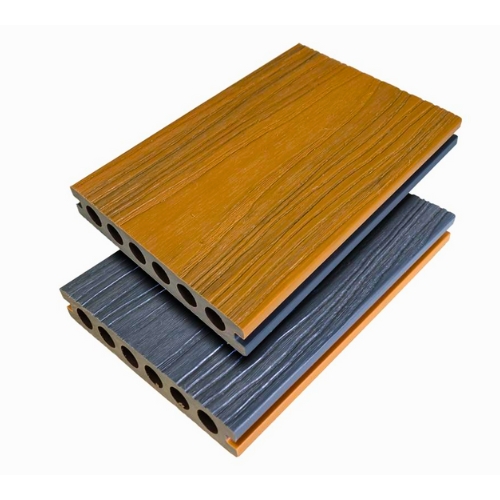
ONSUNWPC describes fence boards using recycled wood fibre, a polyethylene matrix, and additives, and presents sizes, surface choices, posts, covers, screws, and other accessories. Its page also identifies residential gardens, villas, shopping areas, parks, playgrounds, and other outdoor settings. These details give buyers a starting vocabulary for the bill of materials while leaving site engineering and compliance to the project team.
Ask for claim evidence in its original form
Request the current product data, material declaration, available certifications, maintenance guidance, and installation instructions relevant to the exact offered system. Claim evidence needs source-document preservation. Record who issued each document, what product it covers, and whether it is current. Keep the wording bounded: “contains recycled material” is not the same as proving a complete circular product, a local recycling route, or a project-level carbon outcome.
Sample review should connect appearance to identification. Label the accepted profile, surface, color, and accessory finish. Keep the sample with the quotation and documents so receiving staff can compare the shipment with the approved basis. Environmental evidence loses practical value if the delivered product cannot be traced to the evaluated offer.
Plan beyond the purchase without inventing an outcome
A verifiable scope extends into repair and recovery planning, including packaging, spare parts, access, component separation, replacement, and end-of-use routes. Ask whether individual boards can be replaced, whether posts and metal hardware can be separated, and how offcuts should be handled. Local waste and recycling options must be checked where the project operates; a theoretical material pathway is not proof that a nearby facility accepts the product.
The United States Forest Service publication on recycling considerations for wood-plastic composites treats future material recovery as a system question linked to product use, removal, and the recycling industry. That perspective helps procurement teams avoid a common shortcut. Recycled wood fibre and a polyethylene matrix describe inputs, while real recovery also depends on identification, collection, separation, contamination, and available processing.
ONSUNWPC can be asked to clarify its product composition, accessory system, packaging, replacement route, and document set. Buyers should preserve the answer as supplier evidence and make project claims only after checking applicable standards, local regulations, installation design, and disposal options.
Score the offer on traceability and usability
Responsible fencing procurement check
| Area | Evidence to retain | Decision to make |
| Product identity | Profile, finish, composition statement, sample | Does the offered system match the approved scope? |
| Application | Site conditions, support concept, installation guidance | Who verifies structure, footing, wind, gates, and code? |
| Care and repair | Cleaning limits, spare parts, replaceable components | Can the owner maintain the system without wasteful replacement? |
| End of use | Separation guidance and locally verified outlets | Which recovery statement is actually supportable? |
Price remains part of the decision, but scope omissions should not masquerade as savings. Compare complete systems and the quality of the handoff. An offer with clear traceability, compatible accessories, replacement information, and bounded claims may be easier to govern than one built around a single environmental slogan.
Run an environmental claims review before award
Give the procurement team a claim register containing the exact proposed statement, its source, the product it covers, the date, and any qualification. Short claims deserve the same scrutiny as long ones. If the evidence says that a board contains recycled inputs, retain that wording; do not expand it into “fully recyclable,” “zero waste,” or another result that depends on facts outside the document.
Invite the technical, sustainability, construction, and operations owners to challenge different parts of the register. One person should ask whether the material identity is traceable to the offered profile, while another checks whether installation, maintenance, replacement, and local end-of-use conditions support the intended statement. Long sentences in a marketing draft can hide several separate promises, so split each promise and approve it on its own evidence.
Unresolved claims should not disappear. Status is evidence. Mark each one as supplier clarification, project verification, or unsupported, and keep that status in the recommendation. Bounded decisions can proceed with a qualified statement and an open operational item; they should not proceed by silently changing uncertainty into proof, and this review also protects the supplier from having its narrow declaration repeated as a sweeping project guarantee.
Write a procurement record that survives the project
For a supplier inquiry, the ONSUNWPC product range provides a place to discuss fence profiles, surfaces, customization, and accessories. Send the site use, exposure, dimensions, openings, post assumptions, finish request, evidence checklist, packaging needs, and delivery conditions. Ask for exclusions and unanswered items rather than filling gaps with assumptions.
After award, preserve the approved offer, sample, supporting documents, receiving record, installation guidance, and maintenance handoff. Good procurement is not achieved by the wording on the purchase order alone. It is achieved when the selected composite fencing can be identified, installed for its real use, maintained, repaired, and described to stakeholders without overstating what the evidence proves.



