




The MSME sector provides livelihoods to nearly 30 crore people
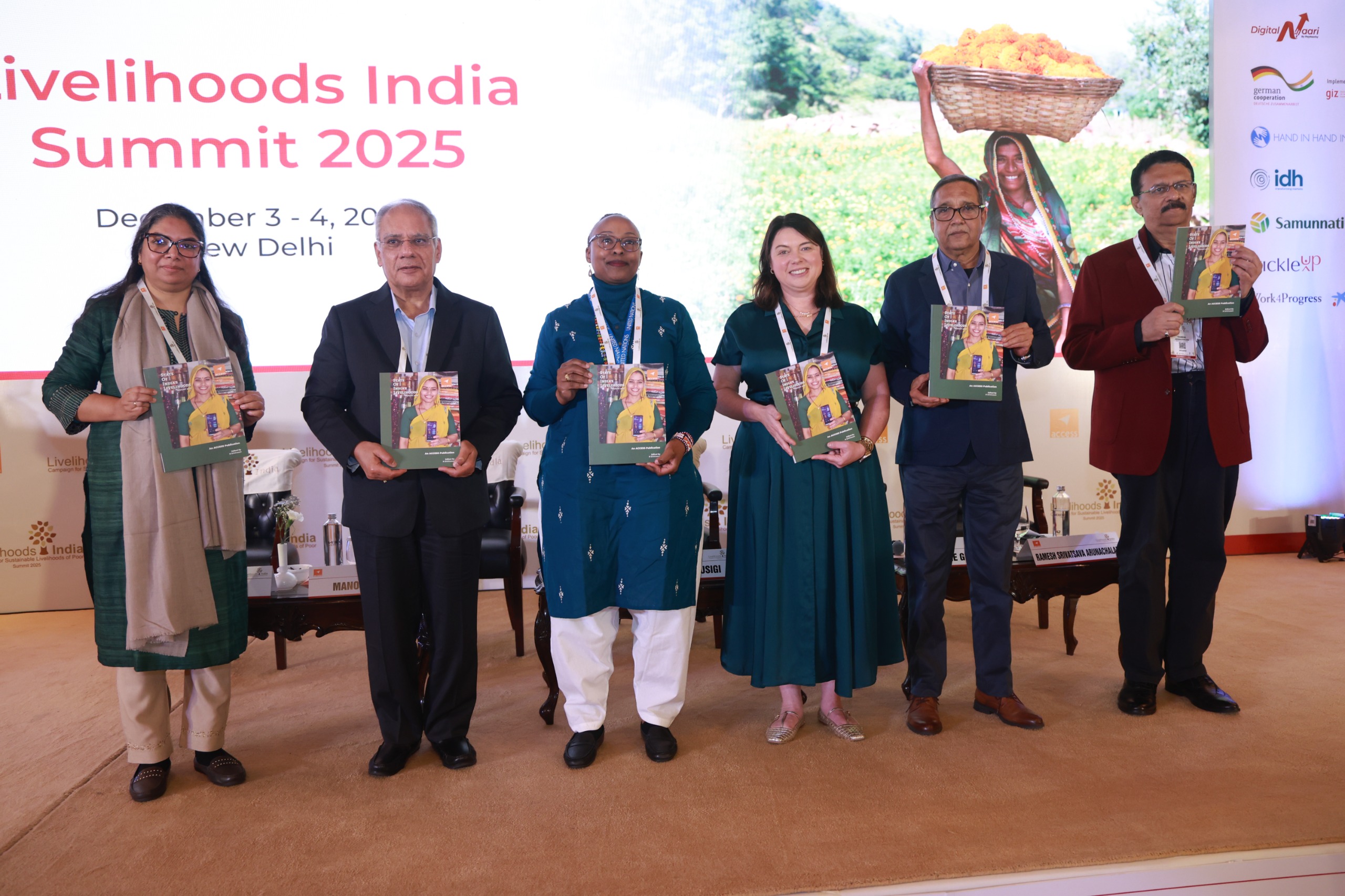
NEW DELHI (India CSR): ACCESS Development Services today unveiled the 18th edition of the State of India’s Livelihoods (SOIL) Report, a comprehensive annual review of India’s evolving livelihoods landscape. Launched at a two-day national convening at Le Meridien, New Delhi, the Report captures key economic, social and policy shifts impacting millions of low-income households.
The release saw participation from Manoj Mittal, Chairman & Managing Director, SIDBI; Dr Angela Lusigi, Resident Representative, UNDP India; Julie Gehrki, President, Walmart Foundation and Senior Vice President, Philanthropy, Walmart Inc; among other sector leaders.

The keynote address was delivered by Manoj Mittal, Chairman & Managing Director, Small Industries Development Bank of India (SIDBI). He said, “Livelihood security rests on ensuring people have the assets, incomes and activities needed to sustain their lives. India’s progress where over 17 crore people moved out of extreme poverty between 2011-12 and 2023 shows the impact of integrated welfare schemes, financial inclusion and direct benefit transfers. Entrepreneurship has been central to this shift, with the MSME sector providing livelihoods to nearly 30 crore people and initiatives like PM Mudra Yojana and credit guarantee schemes enabling millions to start or grow enterprises. In this context, ACCESS Development Services’ State of India’s Livelihoods Report is vital in guiding how we strengthen livelihoods further.”
The 2025 edition of the Report highlights India’s sustained economic momentum, with the RBI, World Bank and IMF projecting faster growth, rising household incomes and a sharp decline in extreme poverty – developments that align with the Government of India’s Viksit Bharat 2047 ambitions of a USD 30-40 trillion, high-income economy.
However, the Report cautions that despite large-scale welfare schemes and improved delivery systems like DBT, KYC-linked authentication and digital payment infrastructure, many poor households continue to fall through the cracks due to documentation challenges, access barriers and authentication failures.
The SOIL Report (2025) flags emerging structural concerns:
- India’s demographic dividend is shrinking, calling for rapid creation of quality, formal jobs with fair wages
- Persistent gender gaps in workforce participation and pay continue to constrain growth
- Agriculture remains highly exposed to climate-change-induced heat stress, demanding stronger investments in adaptation and climate-resilient farming systems
With the share of self-employment rising and the informal economy expanding, the Report also underscores the need for stronger livelihood security. While enablers like Kisan Credit Cards, microfinance, JAM, UPI and the Unified Lending Interface have expanded opportunities, many low-income households still lack dependable access to formal credit, relying instead on informal sources.
Speaking about the SOIL report, Vipin Sharma, CEO, ACCESS Development Services, said, “The SOIL Report makes it clear that while India is on a strong economic trajectory, with unemployment hovering around 6% and self-employment rising to nearly 58%, the quality of opportunities available to people remains uneven. The fact that almost 45% of farmers still depend on informal finance, and that women now make up over 64% of the agricultural workforce, reflects both the pressures and possibilities shaping the livelihoods landscape. As India moves toward the Viksit Bharat 2047 vision, our challenge and responsibility is to ensure that growth translates into secure, dignified, climate-resilient livelihoods for every household. ACCESS remains committed to driving that transformation.”
For nearly two decades, the SOIL Report has served as an authoritative resource for policymakers, practitioners, researchers and development sector partners. The publication brings together sector-wide experiences, analyses programmes and policies, and presents evidence-based insights into the challenges and opportunities influencing livelihoods in India.
(India CSR)
***
Key findings of the State of India’s Livelihoods Report 2025
The State of India’s Livelihoods Report 2025 presents a detailed examination of India’s livelihood landscape at a time when the nation remains the world’s fastest-growing major economy, recording 6.5% GDP growth in FY 2024–25. The report highlights that despite remarkable economic progress, nearly 1 in 7 Indians continues to face multidimensional poverty. While extreme poverty has fallen to 2.3% in 2022–23—down from 16.2% a decade earlier—millions still struggle with access to nutrition, education, sanitation, and housing.
India’s labour market shows improvement but also deep structural issues. Unemployment has fallen significantly from pandemic highs, stabilising around 3.2% under the “usual status” measure in 2023–24. Yet youth unemployment remains over 10%, and urban female unemployment is still above 8%. A major trend is the rise in self-employment, which has grown from 52.2% of the workforce in 2017–18 to 58.4% in 2023–24. Though this may reflect entrepreneurial spirit, it also indicates a shortage of stable wage jobs and a shift toward informal, low-income work.
Agriculture, which employs 46.1% of India’s workforce, continues to support the largest share of livelihoods while contributing only 16.3% to GDP. The average agricultural household earns Rs. 13,600 per month, with states like Bihar and Odisha at the lower end (Rs. 9,000–Rs. 10,000) and Punjab at the higher end (Rs. 33,000). Climate variability, shrinking landholdings, and volatile prices remain serious threats. While India is a global leader in milk, spices, and horticulture, it still imports 55–60% of its edible oil needs and 10–16% of its pulses. Government interventions—often aimed at controlling food inflation—frequently suppress farmgate prices, affecting nearly 47% of the population dependent on agriculture.
The report highlights climate change as the most urgent challenge to livelihoods. India experienced extreme weather on 255 out of 274 days in the first nine months of 2024. Over 3,200 lives were lost, 3.2 million hectares of crops were damaged, and more than 235,000 houses were destroyed. Heat stress alone contributes to an annual productivity loss estimated at Rs. 34,000 crore, particularly among urban informal workers. Yet, only 14% of small farmers have adopted climate-resilient practices, and crop insurance settlements still take an average of 67 days—far beyond the mandated 30-day timeline.
Employment patterns reveal that structural transformation is slow. Manufacturing output grew, but job creation was limited due to automation and capital-intensive production. Production-Linked Incentive (PLI) schemes attracted Rs. 1.76 lakh crore in investments, but generated only about 12 lakh jobs, far below expectations. The services sector continues to expand, but much of this growth is in gig and platform work. India’s gig workforce is projected to reach 2.35 crore by 2029–30, yet most gig workers operate without social security, written contracts, or grievance mechanisms.
Migration remains a central livelihood strategy for millions. About 100 million workers in urban India are migrants, many of whom work in construction, domestic work, transport, and street vending. While rural unemployment is lower, rural distress and the decline of small farming continue to push people toward cities. Yet migrant access to urban schemes remains limited due to address, documentation, and portability barriers.
Women’s economic participation shows both progress and persistent gaps. Female Labour Force Participation has risen to 41.7% in 2023–24 from 23.3% in 2017–18, driven partly by rural participation. Women account for 69% of Mudra loan recipients, with sanctions rising to Rs. 2.89 lakh crore in 2023–24. Despite this, women’s enterprises earn about one-third of male-owned enterprises. A major barrier remains unpaid care work—48% of women outside the labour force cite family duties as the main reason. Childcare coverage under schemes like Palna remains limited to around 52,000 children nationwide.
Technology is reshaping livelihoods through digital payments, online markets, and agricultural platforms. Over 557 crore digital transactions have been enabled for street vendors alone. Yet digital systems also create new exclusions—Aadhaar authentication failures, KYC lapses, lack of smartphones, and low digital literacy. Many rural and low-income households are unable to access digital benefits despite being eligible.
Corporate Social Responsibility (CSR) continued to expand its role in supporting livelihoods. CSR spending across India has grown steadily, with education, health, rural development, and skill-building receiving the highest allocations. Notable trends include greater investment in women’s entrepreneurship, climate resilience, and community enterprises. However, regional disparities persist—industrialised states attract far more CSR funding than low-income states.
A major contribution of the report is the identification of 35 lessons from 2023–25. These lessons highlight persistent design flaws in policy delivery, the need to balance safety nets with capability-building, the limitations of digital governance, the urgency of climate integration, and the importance of targeting women, SC/ST groups, and PVTGs without relying solely on universal schemes. The report emphasises that India’s livelihood architecture remains overly relief-oriented, with hundreds of fragmented schemes that often overlap.
The central conclusion is that India must shift from a crisis-response system to a resilience-building system. This means restructuring livelihood programmes to integrate climate adaptation, technology access, capability-building, and sustainability. A future-ready livelihood strategy must include automatic stabilisers during climate shocks, stronger urban livelihood frameworks, better skilling aligned to future industries, and institutional systems that learn and adapt continuously. Only through such reforms can India move its citizens from survival to security, and from security to sustained prosperity.



