

By Rusen Kumar
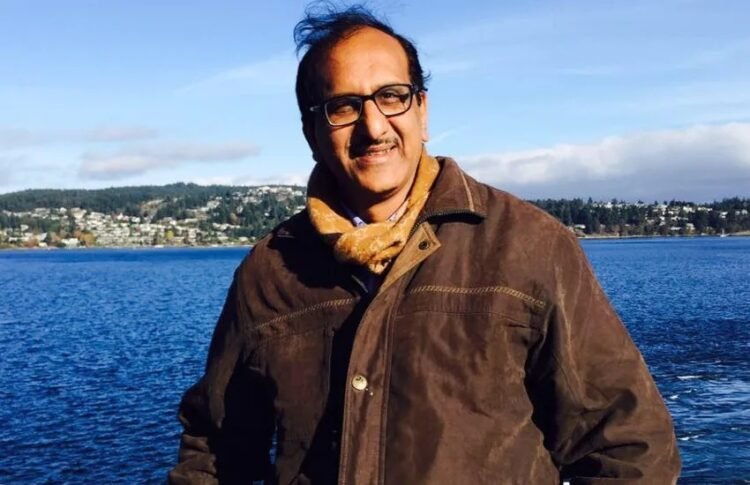
RAIPUR (India CSR): The appointment of S.S. Bajaj, a 1988-batch Indian Forest Service (IFS) officer of the Chhattisgarh cadre, to a senior liaisoning role with a leading private sector investor in the state has ignited a deeper debate—one that goes beyond career transition and enters the domain of ethics, governance, and public trust.
This is not merely about an individual taking up a post-retirement assignment. It is about the nature of public service and the limits of its transition into private influence.
S.S. Bajaj has held significant positions during his career, including serving as Additional Chief Executive Officer of the New Raipur Development Authority (NRDA). His administrative journey placed him at the core of governance, infrastructure planning, and policy execution in Chhattisgarh. On August 31, 2024, the Chhattisgarh Government accepted S.S. Bajaj’s resignation as Director General of the Chhattisgarh Council of Science and Technology (CCOST) and the Chhattisgarh Regional Science Centre.
Such roles are not ordinary. They come with access to sensitive information, internal policy frameworks, regulatory mechanisms, and decision-making processes. These are not just professional experiences—they are institutional assets entrusted to an officer in public faith.
The question that arises is simple but profound: Can such knowledge ever be completely separated from a corporate role that demands influence over the same systems?
The position of a liaison officer is often misunderstood as procedural. In reality, it is a powerful interface between government and corporate interests. It involves negotiation, access, persuasion, and navigating regulatory complexities.
When a former senior bureaucrat occupies this space, the concern is not about competence—it is about propriety and fairness.
Corporate entities are driven by expansion and profit. Governments are meant to balance development with public welfare, environmental sustainability, and legal safeguards. The relationship between the two must remain transparent and at arm’s length.
But when that distance collapses, conflict of interest becomes inevitable.
An IFS officer, by the very nature of the service, deals extensively with forest governance, environmental clearances, land use, and ecological protection. These are precisely the areas where corporate expansion often creates pressure.
This overlap creates a conflict zone.
The ethical dilemma is not theoretical. It is practical and immediate. Can a former regulator ethically facilitate corporate interests in sectors they once governed? Can the public be assured that decisions are being made without bias or undue influence?
This is not just about rules. It is about institutional integrity.
This appointment becomes even more critical when viewed against the recent developments in Raigarh’s Tamnar region, where a major industrial project faced intense public opposition, leading to the withdrawal of its public hearing for environmental clearance. The protests reflected deep concerns over land acquisition, environmental degradation, and the future of local communities.
The company’s deep interests in Raigarh, Chhattisgarh, across mining, steel, power, cement, and education, under the influence of a nationally prominent political leader, make this appointment even more sensitive and ethically troubling.
The situation escalated to a point where the district administration, under Collector Mayank Chaturvedi (IAS), had to step in as tensions rose. In the months following the cancellation, Raigarh has continued to witness growing anxiety over deforestation and unchecked industrial expansion. Parts of the district have also been identified as water-stressed zones, highlighting the ecological fragility of the region.
In such a volatile environment, the entry of a former senior forest officer into a liaisoning role with a major investor—whose business interests are concentrated in this geography—cannot be seen as a neutral development. The timing is significant. When public trust is already strained, environmental clearances are contested, and administrative decisions are under scrutiny, such appointments appear aligned with corporate urgency rather than public sensitivity.
This is not an isolated case. Across the country, there is a visible pattern of senior bureaucrats transitioning into corporate roles soon after retirement. While legally permissible, the broader implications are troubling.
Governance is not sustained by legality alone. It rests on trust, perception, and ethical conduct.
If the same individuals who once represented the state begin to represent private interests in closely related domains, the system risks becoming a revolving door between public office and corporate power.
Public service is not just employment. It is a responsibility that extends beyond tenure.
Let me explain. The role of government officials, especially those from elite services like the IAS and IFS, is far larger than what is often assumed. The State invests enormous public resources in identifying, training, and shaping these officers—not for personal career advancement, but to safeguard public interest, institutional integrity, and national resources. Their training is not merely technical; it is ethical, constitutional, and deeply rooted in public duty.
When such an officer, after retirement, moves into a role that directly serves private corporate interests—particularly in sectors they once regulated—it raises a fundamental concern. It begins to appear as if the public trust reposed in them is being transferred, even commodified, for private gain. This is not just a matter of employment; it is a question of whether the sanctity of public service is being diluted or, worse, effectively sold out. Such transitions demand not only legal scrutiny but also a serious moral reflection on the boundaries between service to the nation and service to corporate power.
Retirement does not erase the knowledge, networks, or influence accumulated over decades. When these are redirected toward private objectives, the consequences are not limited to one company or one officer. They affect the credibility of the entire governance framework.
Chhattisgarh, with its rich forests, mineral resources, and ongoing industrial expansion, stands at a delicate crossroads. Decisions taken today will shape not just economic outcomes, but ecological and social futures.
In such a scenario, the appointment of a former senior IFS officer in a corporate liaisoning role is not merely strategic. It is ethically sensitive, structurally risky, and deserving of serious public scrutiny.
About the Author
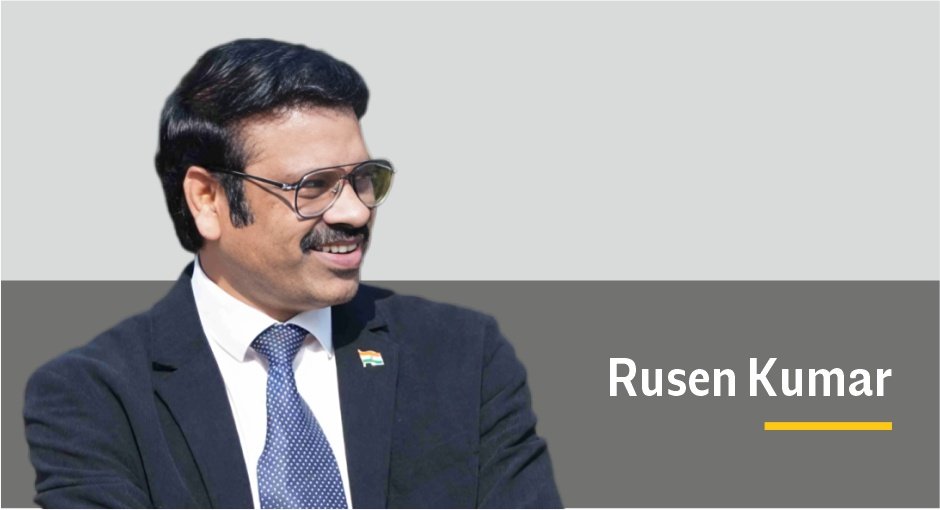
Rusen Kumar, Founder and Editor of India CSR®, is a renowned thought leader in the field of Corporate Sustainability and Corporate Social Responsibility (CSR). The highly influential leader regularly writes insightful articles and conducts interviews with industry leaders, policymakers, and development practitioners, promoting dialogue on responsible business and sustainable development through India CSR®.
Photo Source: rootsalert.com