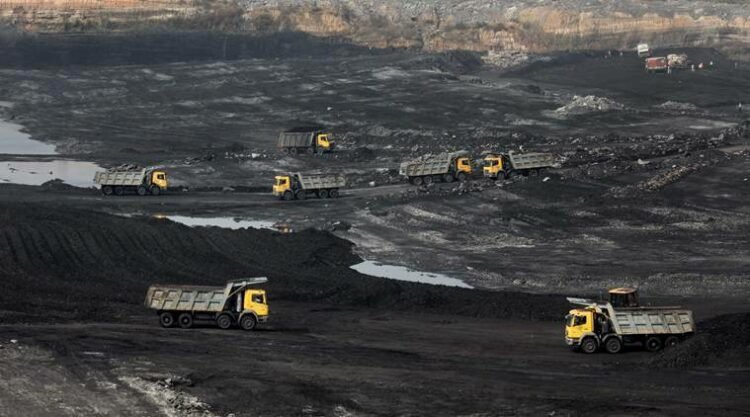


India’s coal sector continues to reinforce national energy security while catalyzing regional development.
NEW DELHI (India CSR): India’s coal sector continues to be a major driver of national energy security and regional economic upliftment. With the Magadh, Amrapali and Namchik Namphuk coal mines together contributing 50% of Central Coalfields Limited’s (CCL) total coal output, generating Rs. 5,352 crore in projected revenue, and creating 1,288 livelihood opportunities, these mines are playing a transformative role in the development of coal-rich regions in Jharkhand and Arunachal Pradesh. Their contribution strengthens the nation’s Aatmanirbhar Bharat vision by reducing coal import dependency while accelerating local employment, infrastructure growth, and sustainable community development.
India’s coal sector continues to reinforce national energy security while catalyzing regional development. In a written reply to Lok Sabha, Union Minister of Coal and Mines G. Kishan Reddy highlighted how three major coal mines — Magadh and Amrapali in Jharkhand and Namchik Namphuk in Arunachal Pradesh — are contributing significantly to India’s coal production, revenue generation, ecological sustainability, and local employment. Their combined impact supports the broader goal of Aatmanirbhar Bharat by reducing coal import dependence and strengthening local economies.
Magadh and Amrapali Mines: Contributing 50% to CCL’s Coal Production
The Magadh and Amrapali mines under Central Coalfields Limited (CCL) remain two of India’s most productive mining blocks. During 2024–25, they jointly contributed around 50% of CCL’s total coal production, underlining their importance to the national power sector.
Massive Reserves and High Revenue Generation
These high-capacity mines hold enormous mineable reserves:
- Magadh: 854.91 million tonnes (MT)
- Amrapali: 456.34 MT
With such reserves, they are expected to generate impressive revenues in FY 2025–26:
- Magadh Mine: ₹2,812 crore
- Amrapali Mine: ₹2,367 crore
Together, they will contribute Rs. 5,179 crore, ensuring financial stability for CCL and supporting further development initiatives.
Employment and Livelihood Creation
These mines have significantly uplifted local communities, especially Project Affected Persons (PAPs):
- 808 jobs approved in the Magadh–Sanghmitra area
- 210 jobs approved in the Amrapali–Chandragupt area
A total of 1,018 employment opportunities have been created for local people, providing stable livelihoods and economic resilience.
Namchik Namphuk Coal Mine: Strengthening Arunachal Pradesh’s Energy Future
The Namchik Namphuk Coal Mine plays a critical role in meeting Arunachal Pradesh’s energy requirements. With a capacity of 0.2 MTPA, the mine ensures a steady and reliable coal supply to the state.
Reserves, Revenue, and Employment
- Geological reserves: 14.97 MT
- Annual revenue: ₹173 crore
- Employment generated: Around 270 jobs
These numbers highlight the mine’s economic value for Arunachal Pradesh while providing direct livelihood support in the region.
Mission GREEN: Transforming Mining Regions into Sustainable Ecosystems
Coal PSUs — Coal India Limited (CIL), NLC India Limited (NLCIL), and Singareni Collieries Company Limited (SCCL) — have initiated Mission GREEN (Grow, Restore, Enrich and Empower Nature) to promote environmental restoration and community participation.
Key Components of Mission GREEN
- Large-scale afforestation and ecological restoration efforts
- Promotion of renewable energy, especially solar
- Sustainable utilization of mine water for agriculture and community use
- Circular resource management to reduce waste
- Mine-based tourism and green-economy models for livelihood diversification
- Community engagement through self-help groups (SHGs) and local partnerships
A dedicated committee under the Ministry of Coal monitors effective implementation to ensure long-term environmental and social sustainability.
Driving Aatmanirbhar Bharat Through Domestic Coal Production
The development of the three mines directly aligns with the Government of India’s objective of achieving self-reliance in energy. Increasing domestic coal production reduces the need for imports and helps stabilize the power sector.
Boosting Infrastructure and Regional Growth
Mining activities trigger large-scale investment in:
- Transportation networks and roads
- Coal evacuation and logistics infrastructure
- Local service and supply chain ecosystems
This integrated development creates extensive employment, enhances regional economic integration, and ensures inclusive growth for mining communities.