

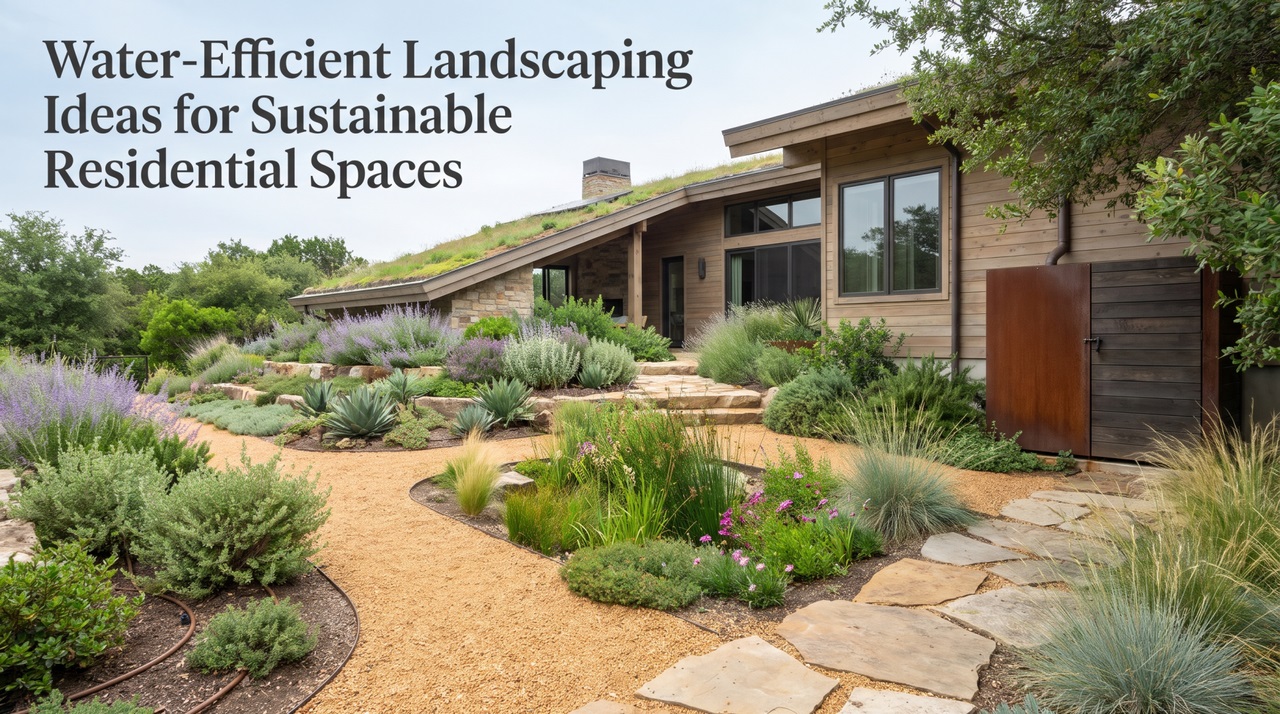



Water is one of the most important resources in residential landscape management. Gardens, lawns, trees, and outdoor planting areas all depend on an appropriate water supply, but the amount required can vary considerably depending on climate, soil conditions, plant selection, and maintenance practices.
In regions where rainfall is limited or water resources are under pressure, conventional landscaping approaches can create unnecessary demand. Large lawns, poorly planned irrigation systems, and plants that are unsuitable for local conditions may require more water than a residential landscape can reasonably sustain.

Water-efficient landscaping offers a more responsible alternative. It focuses on designing outdoor spaces that make better use of available resources while maintaining visual appeal, comfort, and ecological value.
This does not mean replacing every green area with stone or gravel. A sustainable residential landscape can still include attractive plants, shaded seating areas, trees, and functional outdoor spaces. The difference lies in making informed choices about how these elements are selected, arranged, and maintained.
Here are several practical ideas for creating residential landscapes that use water more efficiently.
Understand the Local Climate Before Choosing Plants
The foundation of water-efficient landscaping is selecting plants that can grow successfully in the local environment.
A plant that thrives in a cool, humid region may struggle in an area with intense sunlight, high temperatures, and limited rainfall. Even if it survives, it may require frequent irrigation and additional maintenance.
Before selecting plants, consider the average temperature, seasonal rainfall, humidity, soil characteristics, and sunlight exposure. These conditions help determine which species are appropriate for different parts of the property.
Native plants are often worth considering because they have adapted to local environmental conditions. Climate-adapted species can also provide habitat and food for local wildlife when selected appropriately.
However, native does not automatically mean maintenance-free. Newly planted vegetation may need additional water while its root system becomes established. Planting conditions and long-term care remain important.
It is also useful to observe the existing landscape. Mature trees, shaded corners, and naturally moist areas may support different plant selections from exposed sections of the yard.
A successful design begins with understanding what the environment can support rather than trying to recreate a landscape from a completely different climate.
Reduce Unnecessary Lawn Areas
Traditional lawns can create substantial irrigation demands, particularly when they cover large areas in hot or dry climates. They also require regular mowing, fertilization, and maintenance.
This does not mean every residential property should eliminate grass. Lawns can provide valuable open space for children, recreation, and relaxation. The more practical question is whether the entire lawn area is necessary.
Start by identifying the sections that are actually used. A smaller lawn near a seating area or play space may be sufficient for many households. Less frequently used sections could be converted into planting beds, shaded gardens, or permeable surfaces.
Ground covers and climate-appropriate ornamental grasses may offer alternatives in suitable locations. Gravel gardens can also reduce irrigation requirements when designed with appropriate plants and soil preparation.
Another option is to combine smaller lawn sections with functional pathways and planting areas. This creates visual variety without requiring large amounts of continuous grass.
When considering AI backyard design concepts, homeowners can compare different proportions of lawn, paving, and planting. This makes it easier to understand how reducing the lawn area might affect the overall appearance and usability of the backyard.
The goal should be to maintain enough open space for everyday activities while avoiding unnecessary water consumption.
Group Plants According to Their Water Requirements
Plant arrangement influences irrigation efficiency just as much as plant selection.
When species with very different water requirements are placed together, it can be difficult to provide suitable conditions for every plant. Some may receive too much water, while others remain too dry.
Hydrozoning addresses this problem by grouping plants with similar irrigation needs.
For example, a planting bed containing drought-tolerant shrubs and ornamental grasses can be managed separately from an area containing plants that need more consistent moisture.
Trees, shrubs, ground covers, and seasonal flowers may each require different watering schedules depending on their species and growing conditions.
Grouping plants also makes irrigation systems easier to organize. Separate zones can be adjusted according to the needs of the vegetation rather than applying the same schedule across the entire property.
The arrangement should also consider sunlight and shade. Plants exposed to intense afternoon sun may need different care from those growing beneath established trees or beside shaded walls.
Hydrozoning creates a more predictable landscape management system and can reduce water waste caused by applying uniform irrigation to unrelated plant groups.
Install Drip Irrigation Where Appropriate
The method used to deliver water has a direct influence on irrigation efficiency.
Traditional overhead sprinklers can be useful for certain lawn areas, but they may lose water through evaporation, wind drift, and runoff. This can be especially problematic during hot or windy conditions.
Drip irrigation provides water more directly to the soil near plant roots. It uses a network of pipes, emitters, and connectors to deliver controlled amounts of water to individual plants or planting zones.
This approach can work well for trees, shrubs, vegetable beds, and ornamental planting areas. It is particularly useful where vegetation is arranged in clearly defined groups.
However, drip irrigation requires proper installation and maintenance. Emitters can become blocked, pipes may become damaged, and poorly designed systems can distribute water unevenly.
Filters, pressure regulators, and suitable emitter spacing help improve performance. Regular inspections are important to identify leaks and ensure that plants receive adequate moisture.
A well-planned system should also include separate controls for areas with different irrigation requirements. This allows homeowners to adjust watering schedules without unnecessarily affecting other parts of the garden.
Use Mulch to Protect Soil Moisture
Mulching is a simple landscaping practice that can help reduce water loss from soil.
A layer of suitable organic or inorganic material placed over exposed soil helps limit direct evaporation and can reduce growth. Organic mulch may also improve soil structure as it gradually decomposes.
Common organic materials include bark, wood chips, and certain composted plant materials. Gravel and decorative stone are alternatives for areas where a different appearance or maintenance approach is preferred.
The choice should depend on the plants, climate, and intended use of the planting area.
Organic mulch is often useful around trees and shrubs, but it should not be piled directly against trunks or stems. Excessive moisture around plant bases can contribute to disease and other problems.
Mulch depth also matters. Too little material may provide limited benefits, while excessive layers can interfere with water movement and plant growth.
When applied appropriately, mulch can reduce the frequency of irrigation and help maintain more stable soil conditions.
It is a relatively inexpensive improvement that can support a broader water-efficient landscape strategy.
Improve Soil Quality and Water Retention
Soil conditions influence how efficiently water reaches plant roots. Sandy soils may drain quickly, while compacted soils can limit water infiltration and root development.
Understanding the existing soil is therefore an important part of sustainable landscaping.
A basic soil assessment can help identify texture, drainage characteristics, and potential nutrient issues. In some cases, adding suitable organic matter can improve soil structure and support better moisture retention.
Compost is commonly used to improve many types of garden soil. However, the amount and type of amendment should depend on the existing conditions and the requirements of the plants.
Compaction is another issue worth addressing. Heavy foot traffic, vehicles, and construction activities can compress soil, making it more difficult for water and air to move through it.
Designated pathways and suitable surface materials can reduce unnecessary pressure on planting areas.
Raised beds may also be useful where existing soil conditions are unsuitable for certain plants, although they need to be designed with appropriate drainage and irrigation.
Healthy soil supports stronger plant growth and can make irrigation more effective over the long term.
Design Hardscape Areas That Balance Water Use and Greenery
Hardscape features such as patios, pathways, retaining walls, and seating areas can reduce the amount of landscape that requires regular irrigation.
However, covering too much of a property with conventional impermeable surfaces can create drainage problems and increase surface temperatures.
The objective is to achieve a balanced design that combines functional hardscape with suitable planting areas.
Permeable paving can allow some rainwater to pass through the surface into the ground, depending on the material and underlying installation. Gravel pathways and appropriately designed open-joint pavers may also help manage water movement.
For patios and outdoor seating areas, consider materials that are durable and suitable for the local climate. Their color and surface properties can influence how much heat they absorb.
AI backyard design can help homeowners visualize different combinations of paved areas, planting beds, and open green spaces before making physical changes. This is useful when deciding how much of the backyard should be allocated to functional surfaces and how much should remain planted.
Nevertheless, visual planning should be supported by drainage assessment and appropriate installation details. Permeable surfaces only work as intended when their base layers and surrounding conditions are properly designed.
Collect and Reuse Rainwater Where Practical
Rainwater harvesting can provide an additional source of water for suitable landscape applications.
A simple residential system may collect runoff from roof surfaces through gutters and direct it into a storage tank. The stored water can then be used for selected outdoor purposes, depending on local regulations and water quality requirements.
The system should be sized according to the roof area, expected rainfall, available storage, and intended use.
First-flush diversion systems can help reduce the amount of debris and contaminants entering the storage tank. Filters and covered tanks are also important for maintaining water quality and limiting mosquito breeding.
Rainwater harvesting may be particularly useful in areas with seasonal rainfall. However, it should not be assumed that a storage system will provide enough water throughout the year.
Where rainfall is limited, harvested water is best viewed as a supplementary resource rather than a complete replacement for other supplies.
Homeowners should also check local regulations before installing collection systems, especially where water management rules apply.
Choose Trees and Plants That Provide Natural Shade
Shade can influence both outdoor comfort and the water requirements of a residential landscape.
Trees can create cooler microclimates around seating areas, pathways, and parts of the house. They may also reduce direct solar exposure on nearby surfaces.
However, tree selection should be based on mature size, root behavior, water requirements, and available space.
A large tree planted too close to a building may eventually create maintenance or structural concerns. Similarly, a species that requires substantial irrigation may not be appropriate for a water-conscious garden.
Smaller trees, suitable shrubs, and carefully positioned planting can also provide partial shade without overwhelming a compact yard.
The location of shade is important. Consider where people spend time during the hottest part of the day and whether trees can improve comfort in those areas.
Planting around patios can help soften hard surfaces while creating a more inviting outdoor environment.
A sustainable design considers not only how much water plants need but also the additional comfort and ecological benefits they can provide.
Incorporate Climate-Appropriate Garden Styles
Water-efficient landscaping does not need to follow a single visual style. Many garden approaches can support responsible water use while maintaining a distinctive appearance.
A Mediterranean-inspired garden, for example, may include suitable shrubs, textured paving, terracotta elements, and drought-tolerant planting. A contemporary garden might combine simple geometric layouts with limited but carefully selected greenery.
Naturalistic planting can also work well when species are chosen according to local conditions. Layered vegetation, ornamental grasses, and suitable ground covers can create visual interest without relying on large lawn areas.
Gravel gardens offer another option, although gravel alone does not create a sustainable landscape. Plant selection, soil preparation, drainage, and irrigation still need careful consideration.
Homeowners can explore these styles through AI backyard design concepts, comparing how different combinations of plants, materials, and pathways might look in their own properties.
This can be particularly helpful when the objective is to replace a conventional high-maintenance lawn with a more climate-appropriate arrangement.
Make Maintenance Part of the Water Management Strategy
Even a well-designed water-efficient landscape can become inefficient if it is poorly maintained.
Irrigation systems should be checked regularly for leaks, damaged pipes, and blocked emitters. Watering schedules should also be adjusted according to seasonal conditions rather than following an unchanged calendar throughout the year.
Soil moisture should be checked before irrigation whenever practical. Rainfall, temperature, plant maturity, and wind conditions can all influence how much additional water is required.
Pruning should be carried out according to the needs of individual species. Excessive pruning can stress plants, while neglected vegetation may create problems with airflow, pests, and access.
Weeds should be managed because they compete with desirable plants for water and nutrients. Mulching and appropriate planting density can help limit their growth.
A simple maintenance record can be useful for larger residential landscapes. Recording irrigation schedules, plant performance, and seasonal changes helps homeowners identify areas where water use can be improved.
Sustainability is not achieved through one installation or a single design decision. It is an ongoing process of observing the landscape and responding to its changing needs.
Use Digital Visualization to Plan a More Sustainable Backyard
Planning a sustainable landscape can involve many decisions at once. Homeowners need to consider the amount of greenery, the location of patios, plant suitability, shade, irrigation, and the overall appearance of the property.
Making all these decisions without a visual reference can be difficult.
AI backyard design tools can provide a starting point for exploring different arrangements. Homeowners can investigate concepts featuring smaller lawn areas, additional planting beds, shaded seating, and more balanced hardscape layouts.
For example, someone with a large conventional lawn might compare a design that retains a smaller recreational area while introducing drought-tolerant planting around the boundaries.
Another homeowner might explore a patio-centered backyard with container plants, a few carefully positioned trees, and limited areas of ground cover.
These concepts can help communicate preferences and identify possible directions before a project begins.
However, AI-generated images cannot accurately determine water consumption, irrigation performance, soil suitability, or plant survival. These factors require horticultural knowledge, local environmental information, and sometimes professional assessment.
The most effective approach combines visual inspiration with practical landscape planning.
Conclusion
Water-efficient landscaping is an important part of creating more sustainable residential environments. By choosing climate-appropriate plants, reducing unnecessary lawn areas, improving soil conditions, and using efficient irrigation methods, homeowners can create attractive outdoor spaces while making more responsible use of water.
Other improvements, including mulch, permeable surfaces, rainwater collection, and natural shade, can support the same goal when they are designed according to local conditions.
Exploring AI backyard design can help homeowners visualize different landscape arrangements and compare possible approaches before committing to physical changes. It provides a convenient way to investigate how greenery, patios, pathways, and outdoor features might work together.
Ultimately, sustainable landscaping is not about sacrificing beauty or comfort. It is about creating outdoor environments that respect available resources, respond to their surroundings, and remain practical for the people who use them.