

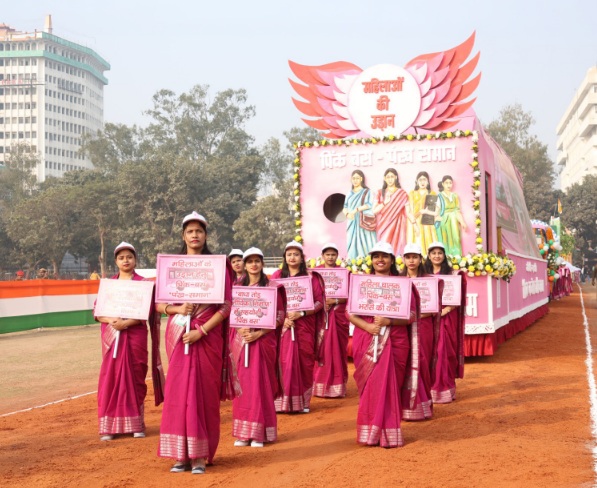


“The assessment shows how safe, affordable transport can expand women’s access to opportunity across Bihar.”
PATNA/Bihar (India CSR): Bihar’s Pink Bus initiative is emerging as an important gender-responsive public transport model, helping women access education, employment, healthcare and other essential services with greater safety and confidence. An impact assessment conducted across Patna, Muzaffarpur and Gaya found that 93% of surveyed women chose the service primarily because they perceived it as safer than other travel options. The assessment, prepared by MicroSave Consulting (MSC) with the Bihar State Road Transport Corporation (BSRTC), also shows that the initiative is creating visible employment opportunities for women in the traditionally male-dominated transport sector.
Programme Gains Momentum
“Bihar expanded the fleet after early ridership demonstrated strong demand for safer women-focused mobility services.”
Launched in May 2025 with an initial fleet of 20 buses, the Pink Bus programme was announced in the Bihar Budget 2025-26. The state expanded the fleet to 80 buses in September 2025 as demand grew. Within two months of the first launch, the service recorded 33,000 passenger journeys, including 21,000 in Patna alone. The initiative combines women-centric mobility with workforce inclusion, offering CCTV surveillance, GPS tracking, panic buttons, sanitary napkins, contraceptive pills, mobile charging points and music systems. The report notes that 50 of the 400 PM e-buses being inducted into the BSRTC fleet are planned as Pink Buses.
Students Lead Usage
“Education and employment journeys account for nearly eight in ten Pink Bus trips by women commuters.”
The survey of 109 women commuters found that students form the largest user group, accounting for 47% of riders, followed by salaried women at 35%. Education-related journeys represented 42% of trips, while work-related travel accounted for another 36%. Together, these journeys made up 78% of reported Pink Bus travel, underlining the direct connection between accessible transport and women’s social and economic participation. Women also used the buses for healthcare, caregiving, market visits and other daily needs. The report found that Pink Buses are particularly relevant for college-going students, teachers, professionals and government employees.
Confidence Through Safety
“Safer public transport is changing family perceptions and enabling more women to travel independently every day.”
Safety remains the defining feature of the service. Women passengers gave Pink Buses an average safety rating of 4.6 out of five, while 95% said they preferred the service over other travel alternatives. The assessment found that 56% of women felt more confident and comfortable travelling independently after using Pink Buses. Importantly, 31% said their families had become more willing to allow them to travel alone by public transport. Women passengers also said the presence of women conductors improved their sense of comfort and trust. The report found that 97% of respondents had never felt unsafe because of driver behaviour.
Travel Costs Decline
“Lower fares are helping women save money while improving access to work, education and healthcare.”
The service is also reducing the financial burden of commuting. Around 60% of women reported lower daily travel costs after shifting from autos and e-rickshaws to Pink Buses, with estimated savings of around 28% to 35% on daily travel expenses. Nearly 67% considered the service affordable for regular commuting. Better access to education, workplaces and healthcare was reported by 69% of respondents. However, the assessment cautions that affordability and safety alone will not ensure sustained ridership unless buses operate at predictable times and cover routes that match women’s travel patterns.
Reliability Needs Attention
“Fixed schedules, wider routes and real-time information can turn occasional passengers into regular commuters.”
Irregular schedules emerged as the biggest barrier to regular use, cited by 39% of women commuters. Limited route coverage was the second-largest challenge at 21%, followed by crowding in some areas. Nearly 48% of respondents said they did not know Pink Bus timings, often relying on WhatsApp groups, bus spotting or informal information networks. Only 22% of surveyed commuters felt that bus timings fully matched their travel needs. The report recommends displaying routes and schedules at major stops, improving online and offline passenger communication, introducing real-time tracking, and using data to optimise routes around educational institutions, workplaces and underserved corridors.
Women Drive Change
“Better workplace systems can convert Bihar’s pioneering women transport workforce into a durable institutional transformation.”
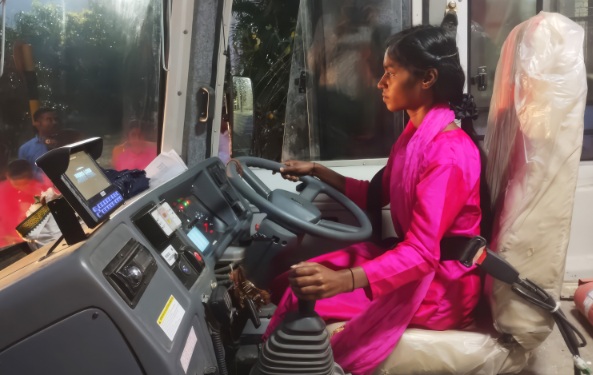
Beyond mobility, the Pink Bus initiative has opened a new livelihood pathway for women. Bihar introduced a 33% reservation for women in transport-related roles in 2025, and the programme has deployed the state’s first cohort of women bus conductors and drivers. The assessment covered 36 women conductors and highlighted how stable income, public recognition and financial independence were motivating women to enter the sector. Yet challenges remain, including long shifts, irregular duty allocation, limited clean washrooms and rest facilities, delayed payments, childcare needs and inadequate emergency-response training. The report recommends structured training, gender sensitisation, grievance mechanisms, predictable duty systems and stronger workplace infrastructure.
© Copyright Disclaimer: All rights reserved. No part of this report may be reproduced, republished, distributed or transmitted in any form without prior written permission from India CSR®.



