

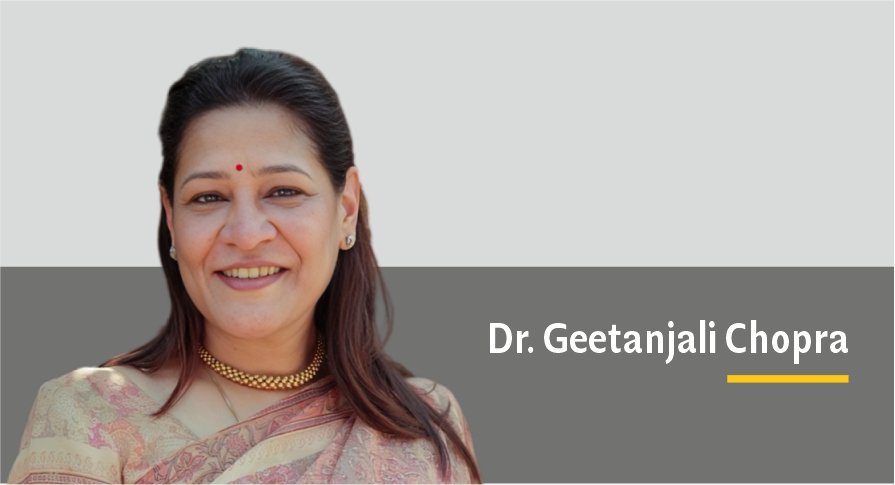



Dr Geetanjali Chopra
India’s Corporate Social Responsibility (CSR) ecosystem is on the verge of its most significant structural expansion since the introduction of mandatory CSR provisions under the Companies Act in 2013. What began as a landmark reform to formally integrate social responsibility into corporate governance could now enter an entirely new phase of growth and transformation.

The proposed amendment which seeks to lower the eligibility threshold for CSR contributions from Rs. 500 crore to Rs. 100 crore in net worth, Rs. 1,000 crore to Rs. 500 crore in turnover and Rs. 5 crore to Rs. 3 crore in net profit, could expand that framework on an unprecedented scale. If implemented, it would substantially widen the CSR base by bringing thousands of additional companies within its ambit, thereby increasing the flow of corporate capital toward social development. For the development sector — particularly grassroots and mid-sized NGOs — the implications could be far-reaching, creating opportunities for stronger programmes, wider outreach and greater operational stability.
However, an expansion in the number of companies contributing to CSR alone cannot guarantee stronger developmental outcomes. The true impact of the reform will depend on how strategically these companies allocate their funds, which organisations they choose to support, and how effectively these interventions are executed on the ground.
At a time when India continues to face widening developmental challenges ranging from food insecurity and rural distress to gaps in healthcare, education and rehabilitation support, the proposed reform presents an opportunity not merely to increase CSR spending, but to fundamentally rethink how development partnerships are structured in the country.
The Growing Shift Towards In-House Foundations
Since 2013, CSR spending has grown significantly, yet it has not strengthened the development sector in a proportionate manner. One shift that has diluted the original intent of the Act is the growing preference among large corporations to establish their own foundations or in-house non-governmental organisations (NGOs) to channel CSR funds internally rather than partnering with independent organisations.
From a corporate perspective, this approach offers clear advantages. It allows greater control over funds, closer alignment with business priorities and direct attribution of outcomes.
However, this consolidation has also produced unintended consequences. Several experienced NGOs with deep community presence, years of field expertise and proven impact are increasingly being pushed to the margins. Many grassroots organisations are now struggling to sustain operations despite their long-standing contribution to social development.
The Need for Stronger Implementation Mechanisms
This is precisely why the proposed amendment must be accompanied by stronger implementation and collaboration mechanisms. One possible approach could be the introduction of provisions that mandate companies operating their own foundations to allocate at least 50% of CSR funds to credible independent NGOs.
Equally important is the question of sectoral distribution. Areas such as education, healthcare and environmental sustainability naturally attract greater CSR attention due to visibility and scale. Meanwhile, sectors such as elderly care, disability support, mental health, rehabilitation and rural community development often remain comparatively underfunded despite growing need.
A more balanced and need-based allocation approach could help ensure that critical but overlooked social concerns also receive sustained institutional support.
The Growing Importance of the Social Stock Exchange
Equally important to the future of CSR reform is the role of the Social Stock Exchange (SSE). It was envisioned not merely as a fundraising platform, but as a mechanism to strengthen transparency, accountability and credibility within the development sector.
At a time when many corporates remain cautious about NGO partnerships due to concerns around governance and compliance, the SSE can provide a more structured and credible framework for collaboration. Through standardised disclosures, financial reporting and impact assessment mechanisms, it can help companies identify credible NGOs based on measurable outcomes rather than informal networks alone.
Its importance becomes even greater if the proposed CSR expansion is implemented. As many first-time companies enter the CSR ecosystem, they may lack the expertise to independently assess social organisations. The SSE can help bridge this gap by creating a more transparent and accountable system for CSR partnerships.
Redefining the Future of CSR
India’s CSR framework already stands among the most ambitious corporate responsibility models globally. The proposed amendment now presents an opportunity not merely to increase CSR spending, but to fundamentally rethink how development partnerships are structured in the country. Expanding the CSR base without strengthening collaborative systems may only reinforce existing imbalances. However, if accompanied by stronger implementation mechanisms, support for independent NGOs and institutional systems such as the Social Stock Exchange, this reform could significantly redefine the future of social development in India.
The future of meaningful impact lies not in isolated institutional efforts, but in collaborative ecosystems where corporates, governments and credible NGOs work together with shared accountability and long-term commitment. In a country as vast and diverse as India, sustainable development cannot be achieved through funding alone. It requires trust, transparency, participation and partnerships that combine corporate resources with grassroots expertise.
If implemented thoughtfully, the proposed CSR reforms could position India not only as one of the largest CSR ecosystems in the world, but also as a global example of how corporate responsibility can be integrated into long-term national development.
About the Author
Dr. Geetanjali Chopra is the Founder & President of Wishes and Blessings.


