

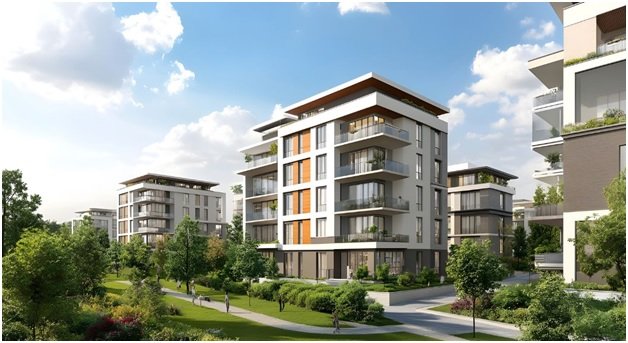



India’s rapid urbanization is increasing the demand for sustainable infrastructure. As cities expand and new construction projects continue to grow, there is a greater need to reduce environmental impact while creating healthier and more efficient spaces.
Green buildings are becoming an important part of climate action, ESG goals, and responsible development. They help reduce energy consumption, conserve water, lower carbon emissions, and improve the quality of life for the people who use them.

However, building a more sustainable future requires more than policies and certifications. It also depends on professionals who have the right knowledge and practical skills to plan, design, and develop sustainable buildings. As the demand for green construction continues to rise, developing these skills has become essential for architects, designers, engineers, builders, and other industry professionals.
Why Buildings Play a Critical Role in Sustainability
Any country’s development story is largely written through its infrastructure. The roads, offices, hospitals, schools, and homes that get built over decades determine how a nation consumes energy, uses water, generates waste, and ultimately contributes to environmental stress.
Before asking what green building skills involve, it helps to understand why buildings sit at the center of the sustainability conversation in the first place.
1. The Construction Sector’s Environmental Footprint Is Larger Than Most People Realize
Construction is not just a physical activity. Every building that goes up involves extraction of raw materials, manufacturing of products like cement and steel, transportation, site operations, and eventually years of energy use once the building is occupied. Each of these stages carries an environmental cost.
India’s buildings and construction sector was responsible for around 17% of the nation’s total greenhouse gas emissions as far back as 2019. That share has only grown since. The construction sector is estimated to account for roughly 19% of greenhouse gas emissions in India, making it a significant contributor to the country’s overall pollution load.
What makes this harder to manage is the dual burden buildings carry. There are emissions from building operations (running lights, HVAC, appliances) and emissions from construction itself, often called embodied carbon.
2. Buildings Are One of India’s Biggest Power Consumers
When people think about energy use in India, they typically picture factories, power plants, or transportation. But buildings quietly consume a disproportionate share of the country’s electricity.
In India, 30% of total energy consumption is used by the building sector, covering cooking, lighting, water heating, ventilation, refrigeration, and air conditioning. India’s building sector consumes around 33% of the nation’s electricity, a figure projected to double by 2040. This rise is being driven by urbanization, growing floor space, and the rapid increase in air conditioning ownership as incomes rise.
3. India’s Commitment to Sustainable Development Changes What the Industry Needs
India has made formal commitments that directly affect how the built environment must evolve. India aims to reduce the emissions intensity of its economy by 45% by 2030 compared to 2005 levels, and to achieve net-zero emissions by 2070. The country cannot achieve either goal without a radical transformation in its buildings and construction sector.
India has also been climbing global rankings in green building adoption. India achieved third position globally in the 2024 LEED Green Building rankings, as announced by the US Green Building Council.
The Growing Demand for Green Building Professionals
As India continues to invest in sustainable infrastructure, the demand for professionals with green building expertise is increasing across the construction and real estate sectors. Developers, architects, engineering firms, consultants, and government bodies are looking for professionals who can design and deliver projects that meet sustainability standards while improving energy efficiency and reducing environmental impact.
The construction industry already employs more than 70 million people in India. However, the sector faces a significant shortage of professionals with green construction skills as sustainable building practices become more common.
The demand for green talent is also growing faster than the available workforce. According to LinkedIn’s Global Green Skills Report, demand for green skills grew 11.6% between 2023 and 2024, while the supply of professionals with these skills increased by only 5.6%. Construction is among the industries seeing the highest demand for green talent, driven by investments in energy-efficient buildings and sustainable development.
As more projects pursue sustainability certifications and ESG targets, professionals are expected to develop practical knowledge in areas such as:
- Sustainable building design
- Energy-efficient building systems
- Green building rating systems such as IGBC, GRIHA, and LEED
- Climate-responsive architecture
- Water conservation and rainwater harvesting
- Sustainable construction materials
- Building energy modelling
- Renewable energy integration
- Waste management and circular construction
- Carbon accounting and lifecycle assessment
- Building Information Modeling (BIM) for sustainable projects
- ESG and sustainability reporting
How ASDAV Is Helping Build India’s Next Generation of Sustainable Design Professionals

Building a sustainable future requires professionals who understand both the principles and practical application of green building. This is where the Asian School of Design & Applied Vastu (ASDAV) is making a meaningful contribution.
As an online institute focused on Architecture, Interior Design, and Applied Vastu, ASDAV aims to bridge the gap between traditional education and the practical skills needed by today’s design and construction industry.
The institute brings together experienced instructors from leading organizations and institutions, including IIT Roorkee, CEPT University, the National Institute of Design (NID), Ramboll, INTEC, VKO, PGSJ Architects & Engineers, KUULA Landschaftsarchitekten, Design Accord, the Centre for Urban and Regional Excellence (CURE), and Tata. This industry-focused approach helps learners gain practical knowledge from professionals who have worked on real projects.
For professionals interested in sustainable construction, ASDAV offers a comprehensive Green Building & Sustainable Design Masterclass. The program is designed to help learners understand the principles of sustainable building and apply them in real-world projects through practical learning.
The masterclass covers topics such as:
- Green building principles and sustainable design strategies
- Energy-efficient building planning
- Water conservation and rainwater management
- Sustainable building materials
- Passive design techniques including natural ventilation and daylighting
- Green building certification systems such as IGBC, GRIHA, and LEED
- Analysis of real-world green building case studies
- Practical methods to improve building performance and reduce environmental impact
The program also includes live online sessions where participants can interact with industry experts, discuss practical challenges, and learn from real project experiences.
The masterclass is suitable for architects, interior designers, civil engineers, urban planners, project managers, students, and professionals who want to build expertise in sustainable design.
By helping professionals develop practical green building skills, ASDAV is contributing to a workforce that can design healthier, more resource-efficient, and environmentally responsible buildings. As India moves toward a more sustainable future, developing these skills will play an important role in creating cities and infrastructure that benefit both people and the environment.
Building a Sustainable Future Starts with Learning
India’s journey towards sustainable development depends not only on better policies and greener infrastructure but also on professionals who have the knowledge to make better decisions. With greater awareness, practical learning, and the right guidance, the construction and design industry can build spaces that are more energy efficient, environmentally responsible, and prepared for the future.
Developing green building skills is no longer an option. It is becoming an essential part of creating buildings that reduce environmental impact while supporting long term growth and responsible development.
Organizations like the Asian School of Design & Applied Vastu (ASDAV) are helping bring this change by making industry-focused education more accessible. Through practical learning, experienced faculty, and specialized programs like the Green Building & Sustainable Design Masterclass, ASDAV is preparing the next generation of architects, designers, engineers, and planners to contribute to India’s sustainable future.


