


Programme Covers Flood, Heat Stress And Earthquake-Prone Rural Regions
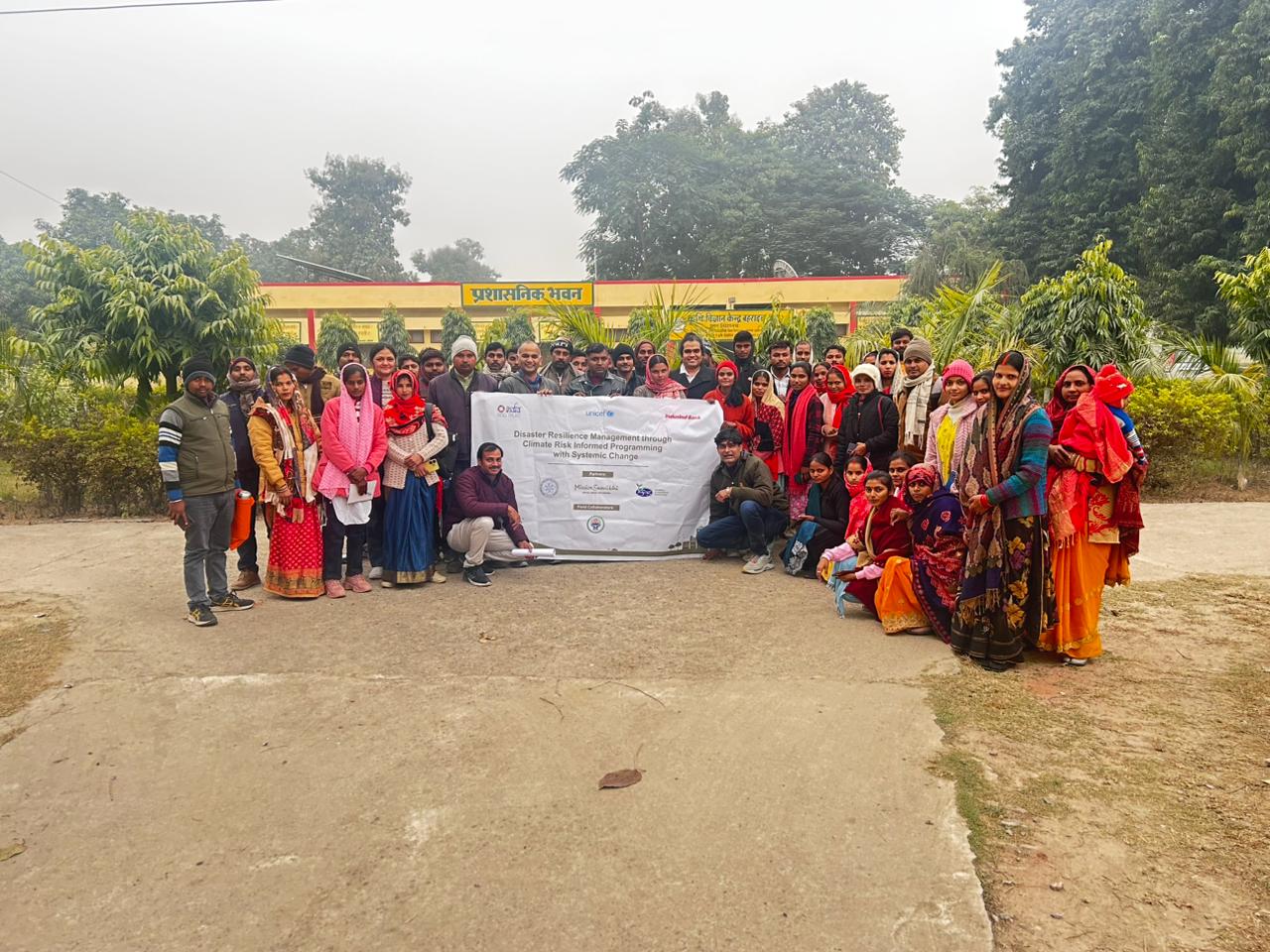
NEW DELHI (India CSR): Enterprise-tech and climate resilience startup Resilience AI, along with UNICEF and RedR India, has completed an AI and ML-powered climate resilience and disaster management programme across 75 Gram Panchayats in Uttar Pradesh, Bihar and Tamil Nadu under the UN 75 Village development project.
The programme was funded by the United Nations and UNICEF. It focused on using Artificial Intelligence and Machine Learning to support local disaster management planning, climate adaptation and development-linked decision-making at the Gram Panchayat level.

Programme Across Three States
The initiative was implemented in Bahraich district of Uttar Pradesh, Begusarai district of Bihar and Virudhunagar district of Tamil Nadu. These regions face climate and disaster risks such as floods, heat stress and earthquakes.
The programme aimed to help local administrators understand climate hazards through scientific data and translate the findings into practical disaster management plans.
AI Platform Used For Risk Planning
Resilience AI deployed its digital web-based platform, Resilience360™, as part of the programme. The platform combines climatic, geological, ecological and built-environment data to create hyperlocal risk profiles.
The company said the platform was used to develop and deploy digital Gram Panchayat Disaster Management Plans. These plans were aligned with National Disaster Management Authority guidelines.
The plans included multi-hazard risk and vulnerability assessments, risk reduction measures, preparedness interventions, response and recovery strategies. They were also linked with Gram Panchayat Development Plans.
“Risk-Resilience Is An Endless Game”
Sarbjit Singh Sahota, Chief DRR a.i., UNICEF, said, “Today’s polycrisis is not neutral or natural. It’s the result of a failure to acknowledge and mitigate systemic risk, hence is an inherently complex proposition. I trust AI/ML can help decision makers comprehend the problems in their wider context. Surprisingly, we found Resilience AI eager to join us on this journey, fully embracing the reality that risk-resilience is not a finite destination, but an endless game.”
Local Validation Of Findings
The platform findings were reviewed during training and orientation sessions with local stakeholders.
In Tamil Nadu, the system identified a girls’ school as vulnerable to heat stress. Community representatives confirmed the finding. Similar validation was reported in Bihar and Uttar Pradesh, where flood-prone households identified by the platform were also confirmed through community feedback.
Technology For Local Governance
Samhita R, Founding CEO, Resilience AI, said, “Climate hazards are experienced locally, but the tools needed to understand them are often not available at the local level. Through this programme, we worked with Gram Panchayats across Uttar Pradesh, Bihar and Tamil Nadu to translate scientific data into practical planning that can be used by local administrators. The objective was not simply to deploy technology, but to ensure that climate risk and disaster management information could be integrated into local decision-making at the community level.”
CSR And Public Interest Relevance
The programme has relevance for Corporate Social Responsibility, ESG, sustainability and public policy stakeholders working on climate resilience, rural development and disaster preparedness.
The digital plans include hyperlocal risk assessments, preparedness and mitigation measures, response and recovery decisions, and digitally mapped action plans linked to local governance processes.
Resilience AI said its platform supports organisations and governments in assessing and reducing risks to capital, lives and operations caused by climate hazards.
Copyright@India CSR®