





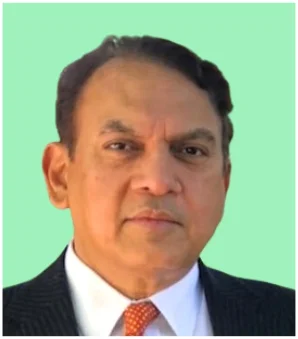
By Satish Jha
In the dusty heart of Hubballi—once a sleepy railway junction in Karnataka, now a quiet revolution in rural innovation—two unassuming facilities stand as testaments to the power of purposeful giving.
One is the Akshaya Patra mega-kitchen, where conveyor belts churn out tens of thousands of hot meals daily for schoolchildren, combating hunger with industrial precision.

The other is the Deshpande Foundation’s Skilling Centre, a vibrant hub where rural youth shed the shackles of rote learning for hands-on training in communication, leadership, and entrepreneurship.
These aren’t just charities; they’re ecosystems designed for scale and sustainability, born from the vision of Gururaj “Desh” Deshpande, the Indian-American billionaire whose journey from a modest Hubballi childhood to global tech titan offers a masterclass in philanthropy.
Deshpande’s story is the stuff of immigrant dreams realized. Born in 1954 to a government labor commissioner in Hubballi, he earned a B.Tech from IIT Madras before heading to Canada for advanced studies—a Master’s from the University of New Brunswick and a Ph.D. in data communications from Queen’s University.
The 1970s oil crisis and a stint at Motorola’s Codex subsidiary honed his entrepreneurial edge. By 1990, he co-founded Cascade Communications, a networking pioneer sold for $3.7 billion in 1997.
Undeterred, he launched Sycamore Networks in 1998 with MIT researchers, riding the dot-com wave to an $18 billion IPO that catapulted him into Forbes’ ranks as one of America’s richest self-made men, with a 21% stake worth billions.
Yet, Deshpande’s true fortune lies not in telecom empires but in the lives he’s transformed back home. Married to Jaishree (sister of Sudha Murty, making him brother-in-law to Infosys co-founder N.R. Narayana Murthy), he co-founded the Deshpande Foundation in 1996 with a simple ethos: ideas must solve real problems, and impact demands scale. 
A decade ago, Deshpande and Murthy seeded Akshaya Patra’s Hubballi kitchen with $1 million, turning it into the NGO’s largest facility, feeding 1.75 lakh children daily across 18 kitchens nationwide.  As chairman of Akshaya Patra USA until 2020, he didn’t just write checks; he built fundraising networks, emphasizing self-reliance over dependency.  “An idea does not have an impact unless it is directed at some burning problem,” he told Forbes India, a mantra that echoes through his work. 
The Hubballi Sandbox, launched in 2007, embodies this: a million-square-foot “Silicon Valley for social good” fostering 440 startups, 105 patents, and Rs 120 crore in investments, all while tackling SDGs from agriculture to skilling. It’s no accident that Deshpande, a life trustee of MIT’s Corporation and co-chair of Obama’s National Advisory Council on Innovation and Entrepreneurship from 2010-2015, infused these rural labs with global rigor—$20 million seeded MIT’s Deshpande Center for Technological Innovation in 2002, now replicated in India via IIT Madras.
Recently, Mona Chopra visited these sites for Vidya Bharati USA, a network of schools serving millions of underprivileged children. Her reflections, published in India New England, capture the quiet magic: bubbling cauldrons of sambar symbolizing nourished bodies, while Skilling Centre modules on English fluency and public speaking ignite minds.  “The Akshaya Patra kitchen nourishes the body; the Deshpande Skilling Centre nourishes the mind and spirit,” she writes, urging Vidya Bharati to adopt language labs, debate clubs, and hybrid training for career readiness—rooted in communities, scalable nationwide.  Chopra envisions holiday immersions at regional centers, remote trainer guidance: a network turning potential into purpose.
This Hubballi model isn’t isolated—it’s a blueprint for India’s couole hundred billionaires, whose collective wealth rivals small nations yet yields philanthropy dwarfed by peers like Gates or Buffett.  Deshpande’s approach—relevance, innovation, self-sustainability—offers lessons for tycoons and their heirs, urging a shift from episodic giving to ecosystem-building.
As India grapples with inequality (Gini coefficient at 0.35, per World Bank), where every fourth indian lives below $2/day, billionaires hold the leverage for systemic change. 
First, anchor philanthropy in roots for authenticity and impact. Deshpande returned to Hubballi not as a savior, but as a son—funding hydroponics for drought-hit farms, experiential skilling for a billion rural dwellers.  This “dignified giving” avoids paternalism, empowering locals as co-creators.
Contrast with Azim Premji, whose $21 billion Azim Premji Foundation (now 39% of Wipro shares) transforms public education for millions of kids, collaborating with governments in five states.  Premji, influenced by Gandhi’s trusteeship, views wealth as societal debt: “Markets, public systems, and philanthropy must converge for inclusive growth.” 
Nandan Nilekani echoes this, pledging 50% of his $2.1 billion via the Giving Pledge; his EkStep digital platform reaches millions of learners, blending tech with grassroots needs.  For heirs like Rohini Nilekani (Arghyam’s water initiatives) or Premji’s son Rishad (overseeing Wipro’s CSR), the lesson is clear: start local, think global. Mukesh Ambani’s Reliance Foundation, could amplify rural solar grids in Jamnagar, his Gujarat roots, fostering self-reliant villages. 
Second, prioritize innovation over charity—seed ecosystems, not handouts. Deshpande’s Sandbox isn’t aid; it’s a “living laboratory” testing ideas like Logistimo’s vaccine tracking (60 million doses annually) or Better Cotton’s sustainable farming.  He learned from MIT: fund bold bets, measure scale. “Scale removes inefficiencies,” said a Foundation.

This mirrors Shiv Nadar’s $1 billion Shiv Nadar Foundation, building universities and schools for 140,000 students, emphasizing STEM equity.  Nadar, HCL’s founder, topped EdelGive’s lists, proving tech billionaires can disrupt education like they did IT.
For beneficiaries, the cue: inherit with intent. Kiran Mazumdar-Shaw, pledging 75% of her $3.5 billion, funds biotech startups via Startup Lab, turning philanthropy into venture capital for women-led health innovations.  Imagine Birla scions innovating textile cooperatives in Pilani—ecosystems yielding jobs, not just alms.
Third, embrace collaboration and measurement for enduring legacies. Deshpande partners with NGOs like Agastya (reaching 7 million kids via science labs) and governments, tracking 12 SDGs.  His Obama council role taught policy leverage; Akshaya Patra blends 60% government funds with private innovation, serving 1.4 million meals daily.  Premji’s foundation collaborates with 2,000+ organizations, using data to refine teacher training—EBITDA-positive impact at scale. Lessons for tycoons: co-chair councils like Deshpande, pledge boldly like Shaw (Forbes’ Heroes of Philanthropy), and audit outcomes. Heirs must evolve this—Tata’s trusts (66% of group equity) now fund AI ethics, measuring societal ROI. Without metrics, giving risks vanity; with them, it builds nations.
Yet, challenges persist. Bain’s 2019 report notes India’s UHNI donations at ₹23,000 crore annually—mere 0.5% of wealth, versus 2-3% globally—hampered by tax inefficiencies and family trusts favoring control.  Deshpande counters with “dignified ecosystems”: EforAll in Massachusetts employs 1,300 via 700 startups, 66% POC-led. 
For billionaires, this means tax-smart endowments; for beneficiaries, board seats with accountability. As Deshpande told The Founder Spirit podcast, “Entrepreneurship made me wealthy; sharing it narrows gaps.” 
Hubballi’s alchemy—meals fueling minds, skills sparking startups—resonates for Vidya Bharati’s 5 million students, many rural like Deshpande’s youth. Chopra’s vision: immersion camps blending Akshaya nutrition with Skilling debates, yielding confident leaders.  Scaled nationally, it could bridge India’s skill deficit (only 5% youth employable, per Wheebox).
Deshpande’s legacy whispers to India’s ultra-rich: Wealth is transient; impact eternal. Premji sustains education; Nilekani digitizes equity; Nadar builds institutions. But Deshpande’s rural revival—$750 million dividends from Sycamore reinvested in Hubballi—shows roots amplify reach.
For heirs, it’s stewardship: innovate boldly, collaborate deeply, measure relentlessly. As Swami Vivekananda urged, “Arise, awake, and stop not till the goal is reached.” In Hubballi, billionaires find their goal—not monuments, but movements. One meal, one skill, one startup at a time, they can feed a nation’s dreams.
About Satish Jha
Satish Jha is a social entrepreneur who earlier co-founded Jansatta for the Indian Express Group, was the chief Editor of newsweekly Dinamaan of The Times of India Group, a global CXO with a couple of Fortune 100 firms, founded edtech firm Edufront, chairs a family foundation Ashraya and supports about 27000 K12 students with One Tablet per Child programs.
Also Read:
- The Kimmel Kerfuffle: When Satire Meets Suspicion
- Ambassador Nirupama Rao Clarifies
- Celestial Ambitions, Terrestrial Realities!
- Failing the Future: By Design
- Philanthropy: Satish Jha Expands Digital Learning Ecosystem to Vidya Bharati School in Meerut
- Ashraya chairman Satish Jha honored by Indo-American Art’s Council, New York


