• India CSR Awards 2025
  • India CSR Leadership Summit
  • Guest Posts
Wednesday, February 18, 2026
India CSR
  • Home
  • Corporate Social Responsibility
    • Art & Culture
    • CSR Leaders
    • Child Rights
    • Culture
    • Education
    • Gender Equality
    • Around the World
    • Skill Development
    • Safety
    • Covid-19
    • Safe Food For All
  • Sustainability
    • Sustainability Dialogues
    • Sustainability Knowledge Series
    • Plastics
    • Sustainable Development Goals
    • ESG
    • Circular Economy
    • BRSR
  • Corporate Governance
    • Diversity & Inclusion
  • Interviews
  • SDGs
    • No Poverty
    • Zero Hunger
    • Good Health & Well-Being
    • Quality Education
    • Gender Equality
    • Clean Water & Sanitation – SDG 6
    • Affordable & Clean Energy
    • Decent Work & Economic Growth
    • Industry, Innovation & Infrastructure
    • Reduced Inequalities
    • Sustainable Cities & Communities
    • Responsible Consumption & Production
    • Climate Action
    • Life Below Water
    • Life on Land
    • Peace, Justice & Strong Institutions
    • Partnerships for the Goals
  • Articles
  • Events
  • हिंदी
  • More
    • Business
    • Finance
    • Environment
    • Economy
    • Health
    • Around the World
    • Social Sector Leaders
    • Social Entrepreneurship
    • Trending News
      • Important Days
        • Festivals
      • Great People
      • Product Review
      • International
      • Sports
      • Entertainment
    • Case Studies
    • Philanthropy
    • Biography
    • Technology
    • Lifestyle
    • Sports
    • Gaming
    • Knowledge
    • Home Improvement
    • Words Power
    • Chief Ministers
No Result
View All Result
  • Home
  • Corporate Social Responsibility
    • Art & Culture
    • CSR Leaders
    • Child Rights
    • Culture
    • Education
    • Gender Equality
    • Around the World
    • Skill Development
    • Safety
    • Covid-19
    • Safe Food For All
  • Sustainability
    • Sustainability Dialogues
    • Sustainability Knowledge Series
    • Plastics
    • Sustainable Development Goals
    • ESG
    • Circular Economy
    • BRSR
  • Corporate Governance
    • Diversity & Inclusion
  • Interviews
  • SDGs
    • No Poverty
    • Zero Hunger
    • Good Health & Well-Being
    • Quality Education
    • Gender Equality
    • Clean Water & Sanitation – SDG 6
    • Affordable & Clean Energy
    • Decent Work & Economic Growth
    • Industry, Innovation & Infrastructure
    • Reduced Inequalities
    • Sustainable Cities & Communities
    • Responsible Consumption & Production
    • Climate Action
    • Life Below Water
    • Life on Land
    • Peace, Justice & Strong Institutions
    • Partnerships for the Goals
  • Articles
  • Events
  • हिंदी
  • More
    • Business
    • Finance
    • Environment
    • Economy
    • Health
    • Around the World
    • Social Sector Leaders
    • Social Entrepreneurship
    • Trending News
      • Important Days
        • Festivals
      • Great People
      • Product Review
      • International
      • Sports
      • Entertainment
    • Case Studies
    • Philanthropy
    • Biography
    • Technology
    • Lifestyle
    • Sports
    • Gaming
    • Knowledge
    • Home Improvement
    • Words Power
    • Chief Ministers
No Result
View All Result
India CSR
No Result
View All Result
Home Opinion

Failing the Future: By Design

India’s education system, meant to lift a billion dreams, is failing its students—and its future.

India CSR by India CSR
August 27, 2025
in Opinion
Reading Time: 7 mins read
Failing the Future: By Design
Share Share Share Share

In India’s bustling classrooms, the future teeters, bright yet brittle.

India’s low per capita income—one-sixth the global average—reflects its educational lag, says Satish Jha
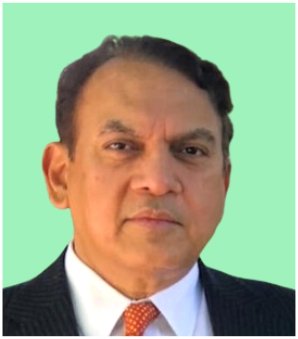
Satish Jha

By Satish Jha

I’ve spent recent months visiting schools, sitting with teachers, and hearing their raw fears about technology’s place in education.

Alarming Classroom Crisis

Their words hit hard: tablets sap students’ focus, they say. Screens might radiate harm. Social media lures children into forbidden corners, defying parents’ wishes. Students lean on Google instead of their own minds, copy-paste rather than write, and complain their hands tire holding pens. Some have forgotten how to write entirely. Others seek out content they shouldn’t.

These aren’t petty complaints—they’re alarms from a system on the verge of collapse.

In a rural school, chalk dust clouded the air as a teacher described a student who couldn’t spell simple words but swiped through apps with ease. Another recounted parents storming in, outraged over their child’s tablet addiction. These stories aren’t anomalies; they’re evidence of a deeper crisis.

Systemic Education Failure

India’s education system, meant to lift a billion dreams, is failing its students—and its future. The Annual Status of Education Reports (ASER) lay bare the truth: eighth graders often lack skills expected of second graders. This isn’t a minor gap; it’s a national emergency.

India has for long been standing at a crossroads. Its youthful population could fuel a demographic dividend, driving economic growth and global influence. But that promise rests on education—a system now sowing stagnation. Teachers, the architects of tomorrow, aren’t equipped to prepare students for an AI-driven, tech-fluent world.

The result is a nation lagging far behind, its per capita income one-sixth the global average. This economic lag mirrors an educational one, rooted in classrooms where outdated methods choke ambition and innovation.

Teachers Resisting Change

The teachers I met aren’t villains. They’re products of a culture resistant to change. Many see technology as a threat, not a tool. Their fears—distraction, health risks, overreliance on screens—reflect a deeper reluctance to evolve.

In one school, a teacher showed me a stack of handwritten essays, proud her students avoided computers. But pride in tradition won’t equip children for a future where digital fluency is as vital as literacy. India’s classrooms cling to rote learning, sidelining critical thinking and problem-solving—the skills a modern economy demands.

Contrast this with Finland, where teachers use technology to spark creativity, or Singapore, where AI personalizes learning. Indian students, tethered to pedagogies from another era, are left unprepared.

The gap isn’t just academic; it’s cultural. Teachers need a profound shift in mindset, seeing themselves as guides, not gatekeepers. Without this, India risks raising generations ill-equipped for a world that’s already moved on, leaving dreams of global leadership as mere fantasies.

Urgent Policy Reforms

The National Education Policy (NEP) of 2020 promised reform, but it’s a whisper when India needs a roar. Its nods to digital tools and teacher training are too timid, too slow. Incremental steps won’t close a chasm generations wide. Policy planners must act with boldness and urgency. A failing education system doesn’t just shortchange students; it undermines India’s economic growth, social mobility, and global standing.

The stakes are existential—education shapes the nation’s soul and its strength.

One bold idea could ignite change: send 2 to 3 percent of India’s teachers overseas every three months for cultural exchange. Let them work in schools in Canada, Australia, or Denmark, where technology empowers learning. In Copenhagen, I saw a teacher use a tablet to guide students through a virtual chemistry lab, their eyes alight with curiosity.

In Melbourne, AI tools tailored lessons to each child’s pace. Indian teachers, exposed to such practices, could confront their fears—radiation, distraction, loss of control—and see they’re not just educators but potential barriers to progress.

These teachers, returning home, could become catalysts. A single educator, inspired by global methods, could influence colleagues, principals, even districts. Imagine a teacher in Bihar sharing how Finnish schools blend coding with storytelling, or one in Uttar Pradesh demonstrating AI-driven assessments.

Reimagining India’s Future

This isn’t about copying the West—it’s about adapting proven strategies to India’s needs. A funded, scaled cultural exchange program could spark a grassroots shift, reshaping how India teaches, one classroom at a time.

But exposure alone won’t suffice. Policy planners must back this with structural reforms. First, mandate continuous teacher training in modern pedagogies. Workshops on AI tools, adaptive learning platforms, and digital literacy must be non-negotiable.

Modern Training Gaps

In a Delhi school, teachers admitted they’d never used software beyond email. That’s not a quirk—it’s a policy failure. Training must be practical, rigorous, and ongoing, turning teachers into tech-confident leaders, not reluctant bystanders.

Second, incentivize schools to adopt cutting-edge tools. Offer grants for AI platforms that personalize learning or tablets that support interactive curricula. In one school, I saw a pilot program where students used apps to solve math problems collaboratively, their excitement palpable.

Yet such initiatives are rare, scattered, and underfunded. Planners must scale these efforts, making technology a cornerstone of learning, not an afterthought. Every school, rural or urban, deserves access to tools that prepare students for the future.

Curriculum Overhaul Needed

Third, overhaul curricula to prioritize skills over facts. Rote memorization produces parrots, not innovators. Students need to code, analyze, and think critically. In Gujarat, a teacher told me her students memorized textbooks but struggled with basic problem-solving.

A curriculum that emphasizes inquiry—where students build apps, debate ideas, or design experiments—would unleash creativity. Policy planners must ensure every student learns to navigate a world where AI and technology are ubiquitous, not alien.

The cost of inaction is staggering. Education drives innovation, economic growth, and social progress. India’s low per capita income—one-sixth the global average—reflects its educational lag.

Bold Policy Vision

A nation that fails its students risks failing its future. The NEP’s gentle reforms, while well-intentioned, are like patching a sinking ship. Bold policies—teacher exchanges, mandatory training, tech incentives, and curricula overhaul—could transform schools into engines of progress.

This isn’t just about policy; it’s about vision. Picture classrooms where teachers wield technology to ignite curiosity, not fear it. Envision students coding as fluently as they write, solving problems instead of parroting answers.

India’s youth deserve an education system that doesn’t just catch up but leads. Policy planners hold the key: will they cling to cosmetic fixes or seize this moment to reimagine learning?

Future At Stake

The world moves relentlessly forward. India’s education system cannot afford to linger in the past. Planners, teachers, and politicians must unite to close the gap. The teachers’ fears I heard—about tablets, social media, and lost skills—are real, but they’re also a call to action.

India’s classrooms must become crucibles of innovation, not relics of tradition. The question is clear, and the time is now: will India rise to meet its future, or remain a cautionary tale?

About Satish Jha

Satish Jha, a distinguished figure in journalism, social entrepreneurship, and technology for development. He is truly a multidisciplinary leader—bridging the worlds of media, social entrepreneurship, technology, and policy with global insight and local impact.

Also Read

Philanthropy: Satish Jha Expands Digital Learning Ecosystem to Vidya Bharati School in Meerut​ I India CSR

Ashraya chairman Satish Jha honored by Indo-American Art’s Council, New York – India CSR

Read more: Satish Jha

(India CSR)

Source: India CSR
Tags: EducationIndiaSatish Jha

CSR, Sustainability, and ESG success stories hindustan zinc
ADVERTISEMENT
India CSR

India CSR

India CSR is the largest media on CSR and sustainability offering diverse content across multisectoral issues on business responsibility. It covers Sustainable Development, Corporate Social Responsibility (CSR), Sustainability, and related issues in India. Founded in 2009, the organisation aspires to become a globally admired media that offers valuable information to its readers through responsible reporting.

Related Posts

Satish Jha
Opinion

Unlocking India’s Potential: Why Education and Technology Must Lead the Charge

2 months ago
Satish Jha
Opinion

The Village That Time Forgot

4 months ago
Satish Jha
Opinion

Trump’s H-1B Hammer and India’s Wake-Up Call

5 months ago
India foreign policy
Opinion

Outmanoeuvred!

5 months ago
Indian school teacher classroom
Opinion

Equip India’s Teachers to Forge a Future of Fearless Inquiry

6 months ago
Nirupama Rao
Opinion

Ambassador Nirupama Rao Clarifies

6 months ago
Load More
Ambedkar Chamber
ADVERTISEMENT
India Sustainability Awards 2026
ADVERTISEMENT

LATEST NEWS

Flipkart Conducts E-Commerce Workshop for SHG Women at SARAS Mela

CSR: Tata AI Sakhi Immersion Program Empowers 1,553 Rural Women Entrepreneurs

How a Demat Account Helps You Start Your Investment Journey

महिलाएं हिन्दुस्तान जिंक के सखी कार्यक्रम से जुड़कर स्वयं और देश को आत्मनिर्भर बनाने में महत्वपूर्ण भूमिका निभाएं- मन्नालाल रावत

CSR: Phenom Cares and Bayireddi Foundation Impact 750 Lives in Hyderabad

Types of Aluminium Doors and Windows Used in Dubai – Mazari Contracting

Economy India Largest Media on Indian Economy and Business
ADVERTISEMENT
Ad 1 Ad 2 Ad 3
ADVERTISEMENT
ESG Professional Network
ADVERTISEMENT

TOP NEWS

Young Founder Kartik Vijayvargiya Redefines Natural Gemstone Jewellery for the New Generation – JOHARI BY KV

Ankur Sinha: Championing Health Awareness Through Engaging Podcast Conversations

How Themed Cakes Can Elevate Your Bakery’s Customer Experience

Painting Services for Your Home: How to Pick the Right Option for Your Budget

As Urban Air Pollution Reaches Alarming Levels, GOODAIR Introduces 24/7 In-Car Protection Against Toxic Gases

CSR: Wishes and Blessings Milk Drive Supports 1,500 Children on Mahashivratri

Load More
STEM Learning STEM Learning STEM Learning
ADVERTISEMENT

Interviews

Prof. Kang Sung Lee, PhD
Interviews

Prof. Kang Sung Lee on Academia, Policy, and Industry-Linked Career Pathways

by India CSR
February 5, 2026

Despite being an advanced economy, South Korea faces a severe demographic crisis.

Read moreDetails
Magma Group CEO and Founder, Neal Thakker

Embedding CSR in Responsible Manufacturing at Magma Group: An Interview with Neal Thakker

January 21, 2026
Sudeep Agrawal, CFO & Head – CSR, Ashirvad by Aliaxis

Integrating Financial Leadership With Impactful CSR Initiatives: An Interview with Sudeep Agrawal, Ashirvad by Aliaxis

December 29, 2025
Satish Jha

Interview with Satish Jha: Pioneering CSR in Education

December 5, 2025
Load More
Facebook Twitter Youtube LinkedIn Instagram
India CSR Logo

India CSR is the largest tech-led platform for information on CSR and sustainability in India offering diverse content across multisectoral issues. It covers Sustainable Development, Corporate Social Responsibility (CSR), Sustainability, and related issues in India. Founded in 2009, the organisation aspires to become a globally admired media that offers valuable information to its readers through responsible reporting. To enjoy the premium services, we invite you to partner with us.

Follow us on social media:


Dear Valued Reader

India CSR is a free media platform that provides up-to-date information on CSR, Sustainability, ESG, and SDGs. We need reader support to continue delivering honest news. Donations of any amount are appreciated.

Help save India CSR.

Donate Now

Donate at India CSR

  • About India CSR
  • Team
  • India CSR Awards 2025
  • India CSR Leadership Summit
  • Partnership
  • Guest Posts
  • Services
  • ESG Professional Network
  • Content Writing Services
  • Business Information
  • Contact
  • Privacy Policy
  • Terms of Use
  • Donate

Copyright © 2025 - India CSR | All Rights Reserved

No Result
View All Result
  • Home
  • Corporate Social Responsibility
    • Art & Culture
    • CSR Leaders
    • Child Rights
    • Culture
    • Education
    • Gender Equality
    • Around the World
    • Skill Development
    • Safety
    • Covid-19
    • Safe Food For All
  • Sustainability
    • Sustainability Dialogues
    • Sustainability Knowledge Series
    • Plastics
    • Sustainable Development Goals
    • ESG
    • Circular Economy
    • BRSR
  • Corporate Governance
    • Diversity & Inclusion
  • Interviews
  • SDGs
    • No Poverty
    • Zero Hunger
    • Good Health & Well-Being
    • Quality Education
    • Gender Equality
    • Clean Water & Sanitation – SDG 6
    • Affordable & Clean Energy
    • Decent Work & Economic Growth
    • Industry, Innovation & Infrastructure
    • Reduced Inequalities
    • Sustainable Cities & Communities
    • Responsible Consumption & Production
    • Climate Action
    • Life Below Water
    • Life on Land
    • Peace, Justice & Strong Institutions
    • Partnerships for the Goals
  • Articles
  • Events
  • हिंदी
  • More
    • Business
    • Finance
    • Environment
    • Economy
    • Health
    • Around the World
    • Social Sector Leaders
    • Social Entrepreneurship
    • Trending News
      • Important Days
      • Great People
      • Product Review
      • International
      • Sports
      • Entertainment
    • Case Studies
    • Philanthropy
    • Biography
    • Technology
    • Lifestyle
    • Sports
    • Gaming
    • Knowledge
    • Home Improvement
    • Words Power
    • Chief Ministers

Copyright © 2025 - India CSR | All Rights Reserved

This website uses cookies. By continuing to use this website you are giving consent to cookies being used. Visit our Privacy and Cookie Policy.