

Intellect Founder Calls for Organised Rural Thinking to Build India’s Next Economic Revolution
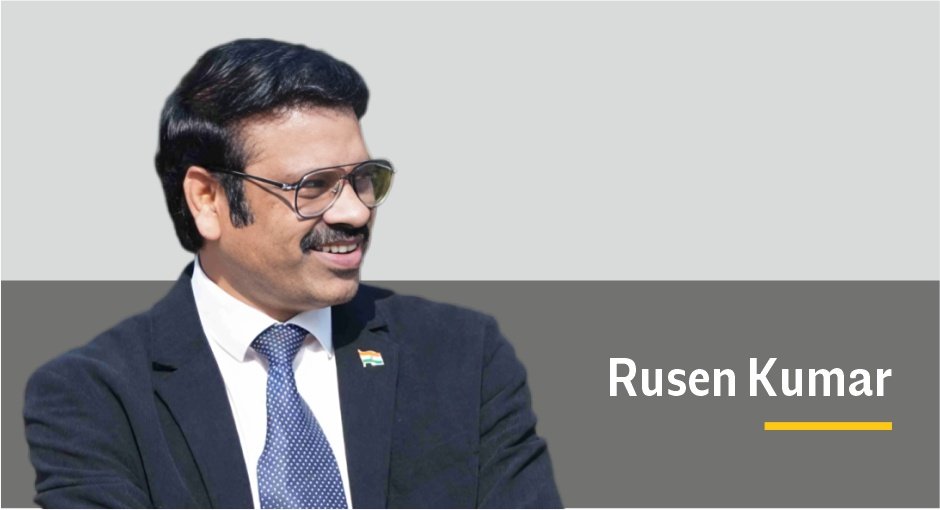
By Rusen Kumar
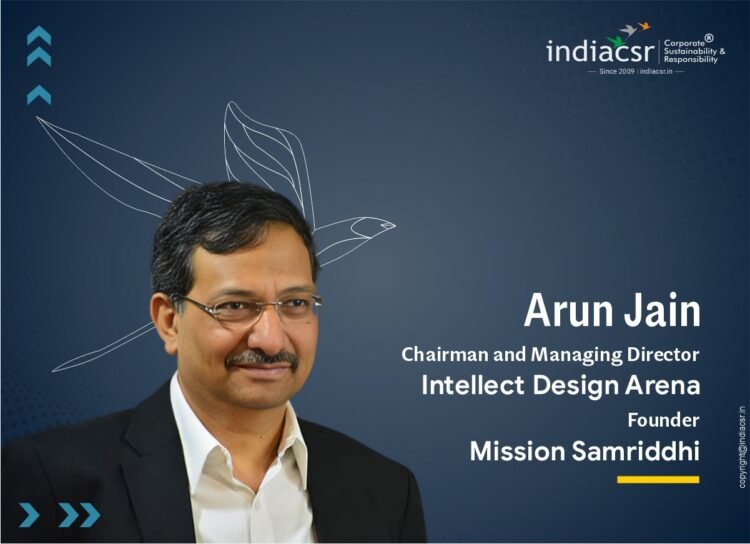
CHENNAI: “The next Silicon Valley will not be a city. It will be a valley of villages.” With this powerful statement, Arun Jain, Founder and CMD of Intellect and Founder of Mission Samriddhi, set the tone for Mission Samriddhi Summit 10, currently underway in Chennai from February 26 to 28. Speaking at the milestone summit marking a decade of the rural transformation initiative, Jain challenged conventional notions of development and called for a fundamental shift in how India views village economies.
What Truly Transforms a Civilisation?
Opening his address, Jain posed a thought-provoking question:
“What truly transforms a civilisation? Is it technology? Is it capital? Or is it something deeper?”
Drawing from history, he argued that technological tools alone do not create prosperity. Instead, the ability of societies to organise thinking and build community-driven economic systems has been the real catalyst of transformation.

He cited the example of the East India Company, established in 1602 as the world’s first publicly listed company. According to Jain, its true innovation was not maritime trade but the concept of “organised surplus” — people investing collectively and sharing the value they created.
Similarly, he pointed to 18th-century Edinburgh, which, despite having a population of less than 200,000, became a global centre of innovation because thinkers gathered, debated, and built ideas collaboratively.
“Civilisations grow when thinking is organised,” Jain emphasised.
Lessons from Silicon Valley and Europe
Jain highlighted how France and Switzerland created enduring prosperity through design, precision, and brand value — even without vast natural resources.
He then referred to Silicon Valley’s journey from desert land to global technology hub.
“They took sand and turned it into silica to build chips that power the modern world,” he said.
During a visit to Satpura Valley in Betul, Jain reflected on a critical question: “If Silicon Valley can emerge from a desert, why can Satpura not emerge from a village economy?”
The answer, he suggested, lies in recognising that land is not the ultimate resource — thinking is.
“And if thinking is a resource, it can be designed. And if it can be designed, it can be scaled,” he stated.
Mission Samriddhi: From Dream to Design to Scale
Founded ten years ago, Mission Samriddhi was built on a bold conviction: “Rural development must begin with aspiration, not subsidy.”
Jain argued that villages must not depend solely on external capital inflows. Instead, they should create and retain their own surplus.
Over the past decade, Mission Samriddhi has focused on building what Jain calls the “10 Pillars of Change” — a structured framework aimed at transforming rural ecosystems from within.
The 10 Pillars of Change
According to Jain, these pillars shift rural development from welfare orientation to wealth creation.
The framework includes:
- Dream Activation – Encouraging teenagers to see themselves as creators rather than job seekers.
- Confidence through Creation – Building belief that value can be created locally.
- Engineering Literacy – Teaching youth to maintain and repair technology within villages.
- Business Literacy – Making income, expenses, and trade deficits visible at the village level.
- Precision Farming – Increasing productivity by “thinking in inches instead of acres.”
- Value Addition – Processing and packaging products within the village itself.
- SHGs as Startups – Transforming self-help groups into professionally governed enterprises.
- Technology and AI Access – Providing rural youth with the same knowledge resources available globally.
- Design and Branding – Creating brand surplus from village-made products.
- Replicable Models – Building enterprises that can scale across districts and regions.
From Design to Scale
Mission Samriddhi Summit 10 marks a new phase in the movement’s journey.
“Over the last decade we have moved from Dream to Design,” Jain said. “This summit marks the shift from Design to Scale.”
He stressed that when villages begin generating surplus, young people stop viewing their hometowns as exit points. Instead, villages become spaces of entrepreneurship, leadership, and innovation.
“When villages generate surplus, young people become creators, entrepreneurs, and leaders,” he added.
Organised Thinking as the Real Resource
Jain concluded his address with a broader civilisational message.
“Civilisations are not built by resources. They are built by organised thinking.”
His vision positions rural India not as a beneficiary of urban growth, but as the foundation of the country’s next economic transformation. If scaled successfully, the “valley of villages” model could redefine how development is conceptualised — shifting the focus from subsidies and migration to aspiration, design, and locally generated surplus.
As Mission Samriddhi enters its second decade, the central question remains: can India design thinking at scale in its villages and unlock a new model of distributed prosperity?
If Arun Jain’s vision gains momentum, the next global innovation hub may not rise from a metropolitan skyline — but from the fields and communities of rural India.
(About the Author: Rusen Kumar is a renowned thought leader in the area of Corporate Sustainability and Responsibility (CSR))
Also Read: Mission Samriddhi Summit 10 Sets Five-Year Blueprint for Transforming 1,800 Villages I India CSR