

The fight against climate change needs genuine collaboration, not curated campaigns. The planet cannot afford corporate greenwashing—no matter how attractively it is packaged. Real climate leadership doesn’t come from handing out trophies; it comes from transforming the way business is done.
The planet doesn’t need more green awards; it needs green accountability.
In the age of sustainability, green is not just a color—it’s a brand strategy. From corporate climate pledges to startup competitions and awards for innovation, companies are increasingly adopting the language of impact. On the surface, it all sounds inspiring. But behind many glossy campaigns lies a growing question: Is this genuine climate action—or just the new face of greenwashing?
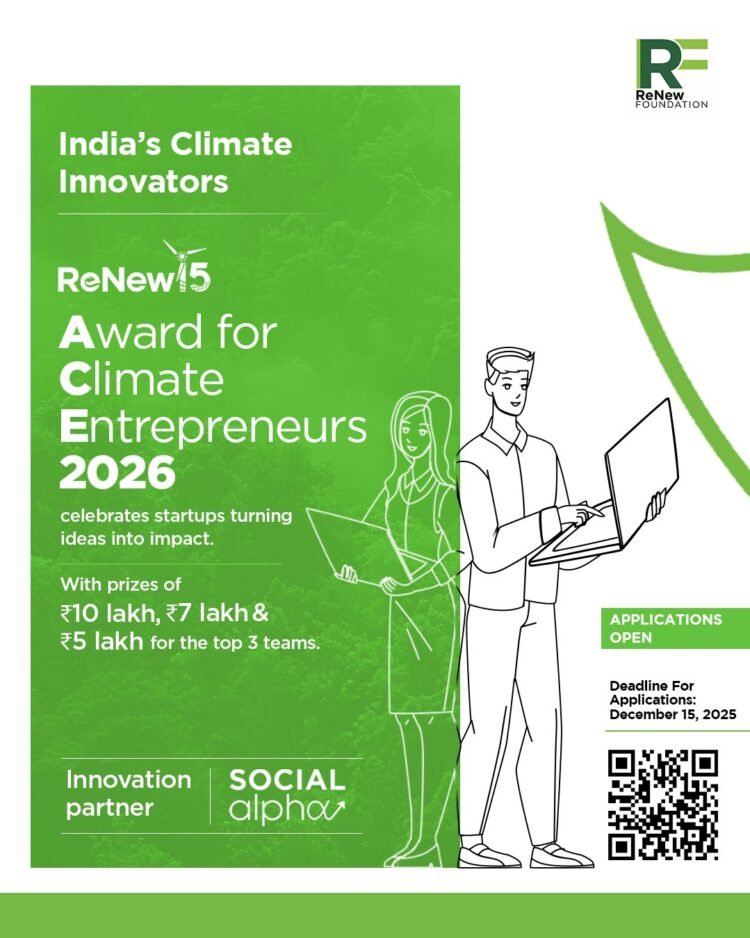
ReNew Foundation’s recently launched ACE (Award for Climate Entrepreneurs) program—an initiative supporting early-stage climate innovators—illustrates both the promise and the paradox of this movement.
The Players: ReNew ACE and Earth Care Awards
- ReNew ACE offers startups a “launchpad for ambitious, impact-driven solutions,” connecting them with industry experts, investors, and potential pathways for acceleration. On paper, it embodies a climate-enterprise support system.
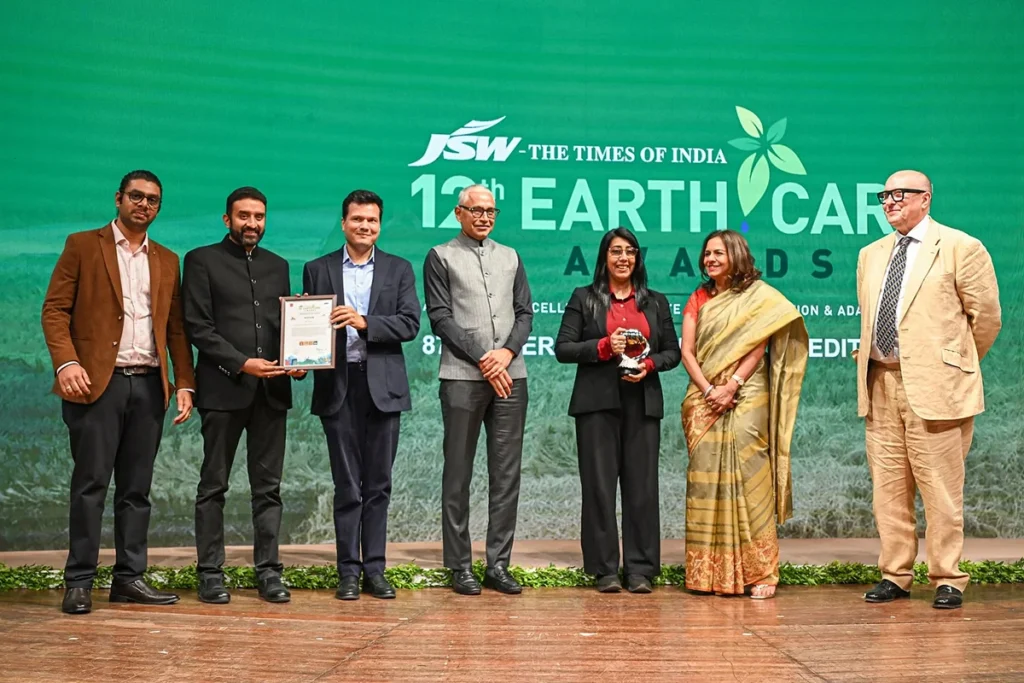
- The Earth Care Awards, run by JSW Group in partnership with The Times of India Group, has since 2008 recognized businesses, NGOs, community-led initiatives and climate innovations across India. Its categories have ranged from “Community-Based Climate Action,” “Emerging Businesses in Climate Action,” to “Green Business Titan,” “Women Leaders in Climate Action,” and “Young Climate Champions.”
At face value, both programmes appear socially beneficial, spotlighting climate innovation, motivating entrepreneurs, and amplifying climate-conscious efforts to a wider audience.

Corporate Climate Awards: Intent or Image?
Across India and the world, large business houses are launching climate entrepreneurship programs, sustainability accelerators, and awards that promise to “empower innovators” or “support startups for the planet.” While these platforms appear to nurture innovation, their deeper purpose often aligns more with image management than environmental transformation.
Award-based initiatives can easily become public relations exercises. They showcase the corporation as a responsible leader, even as their core business models continue to depend on high carbon footprints, fossil fuels, or unsustainable supply chains. The contradiction is hard to ignore.
ReNew ACE positions itself as a launchpad for startups creating measurable climate impact. It offers mentorship, networking, and cash prizes to help founders scale their ideas. On the surface, it’s a commendable step toward nurturing India’s green startup ecosystem.
Yet, critics of corporate sustainability campaigns often point out that such programs also serve powerful reputational goals. For large energy companies, publicizing climate-focused awards strengthens their green credentials and can overshadow questions about their own environmental footprint or energy portfolio.
In this context, programmes like Earth Care or ReNew ACE — even if well-intended — can inadvertently contribute to a culture where recognition becomes a surrogate for accountability.
However, a growing body of research and journalism suggests that sustainability awards and “green-branding” initiatives can inadvertently — or deliberately — become instruments of corporate image management rather than real transformation.
When awards and certifications become popular, there’s also a risk of “award-washing” — where organisations win accolades but do not meaningfully address their own environmental footprint.

When CSR Becomes Marketing
In theory, such awards fall under the umbrella of Corporate Social Responsibility (CSR). However, the line between CSR and brand marketing is increasingly blurred. What begins as an effort to support climate solutions often turns into a carefully crafted narrative designed to strengthen the company’s public image, attract investors, and divert attention from its own ecological impact.
True CSR should address the root causes of environmental harm—reducing emissions, improving energy efficiency, and supporting communities affected by industrial pollution. Yet, many businesses choose the more glamorous path: photo opportunities, award shows, and polished videos of “climate champions.”
ReNew’s core business lies in renewable energy generation—a sector critical to India’s transition. However, even within this space, observers argue that companies must ensure that their outreach initiatives do not become symbolic add-ons.
A genuine sustainability journey demands that CSR or foundation programs complement, not camouflage, the parent company’s operational practices. Transparency on how much these initiatives translate into on-ground, verifiable emission reductions is key to credibility.
Structural Concerns: Whose Story Gets Amplified?
- Selective Narratives Over Systemic Change: Awards tend to favour initiatives that are easy to measure, communicate, and brand. Complex structural changes — like reforming supply chains, reducing embedded carbon in business operations, or transforming industrial practices — rarely win awards because they are harder to “package.”
- Corporate Sponsorship and Conflict of Interest: When large corporations (e.g. JSW) or energy-business groups (like ReNew’s parent ecosystem) run award programmes, one must ask — can the polluter credibly become the patron? There is an inherent conflict when firms with significant environmental footprints host awards that glorify sustainability.
- Short-Term Recognition vs Long-Term Impact: Many award-winner announcements show promising projects (renewable energy, waste management, community-based adaptations), but seldom offer follow-up data to confirm whether these initiatives scaled, sustained, or delivered quantifiable climate benefits. The “before-after” impact, additionality, leakage prevention, long-term viability — often remain undisclosed.
- Greenwashing Under the Guise of Goodwill: As more consumers, investors and policymakers emphasise ESG and climate credentials, awards become a powerful marketing tool. For some organisations, participating in or sponsoring such awards might be less about real change and more about reputational advantage. This pattern echoes a broader critique of ESG branding in global business literature.
The Economics of Green Branding
Corporate motivations are rarely altruistic. Sustainability messaging has become a powerful tool to drive market value, investor confidence, and political goodwill.
“Doing good” has become synonymous with “looking good.”
The model is simple: announce a sustainability initiative, collaborate with a well-known partner, invite startups, and distribute awards. The optics are unbeatable. But the question remains—how much measurable, verifiable environmental impact results from these campaigns? Who tracks whether the winning startups actually scale or sustain their innovations?
Case of Earth Care Awards: Mixed Signals
Consider the 2025 winners of Earth Care Awards. Several awardees — community-based interventions converting coal-impacted ponds into sustainable fish farms, watershed interventions, sustainable packaging firms, and urban waste-management initiatives — are undeniably doing important environmental work.
Yet, there are structural questions about what the awards (and their sponsors) choose to highlight:
- The “Green Business Titan” category has been awarded to large corporates such as ITC Ltd — itself a conglomerate with business lines in industries such as packaging, paper, and consumer goods.
- While highlighting their “environment-friendly initiatives,” does the award process critically evaluate the entire environmental impact of such conglomerates — including production, supply chains, resource consumption — or only their green projects? The public record rarely shows full disclosure or third-party audits.
This illustrates how awards can spotlight select “green patches” while leaving untouched the more carbon-intensive aspects of a company’s operations — effectively enabling “selective eco-narratives.”
The Broader Pattern of “Climate Awards”
ReNew ACE is not alone. Across industries, climate awards are becoming the preferred corporate tool to project environmental leadership. These initiatives often highlight stories of innovation, but rarely share follow-up data—how many awardees actually achieve scale, or whether corporate mentors continue to invest once the media attention fades.
When recognition outweighs long-term responsibility, such campaigns risk being perceived as green branding exercises rather than engines of real change.
Why This Matters: Risk of Greenwashing Becoming the Norm
- When awards become frequent, high-profile, and corporate-backed, they can shift public perception: winning an award may become perceived as equivalent to being “green.” This risks normalising superficial climate engagement.
- It can divert attention and pressure away from deeper systemic changes — regulatory reforms, emission reductions, energy-system transition — by confining “sustainability” to discrete, award-friendly projects.
- Transparency and accountability suffer: media stories and publicity highlight winners and feel-good narratives, but seldom follow up on real metrics — emissions avoided, energy saved, long-term viability.
As one commentary warns, “corporate sustainability and greenwashing are often separated only by a fine line.”
Tokenism vs. Transformation
While some genuinely innovative startups may benefit from such platforms, the majority of these programs fail to address systemic issues. They celebrate the “idea of innovation” without transforming the underlying corporate ecosystem. Real transformation requires corporations to look inward—to audit their own operations, reduce emissions, ensure transparency, and invest in long-term change, not short-term publicity.
When awards replace accountability, the risk is clear: the sustainability agenda becomes a performance, not a policy.
The Ethics Question
There’s also an ethical dilemma. Should companies with significant environmental footprints be the ones to judge or reward others for climate action? Can the polluter become the patron? When business houses that profit from unsustainable sectors host climate competitions, it raises moral and philosophical contradictions that cannot be ignored.
Initiatives like the Earth Care Awards or ReNew ACE hold potential: they spotlight climate-conscious individuals, encourage innovation, and bring visibility to sustainability discourse. Yet, with corporate backing and PR-friendly framing, they also carry the risk of turning climate action into a polished show — where appearances matter more than real-world transformation.
The Way Forward: Authenticity Over Optics
For sustainability to be credible, intent must align with impact. Instead of awards and symbolic initiatives, corporations should:
- Invest directly in scalable climate solutions.
- Disclose transparent sustainability metrics and independent audits.
- Empower startups through long-term incubation, not one-time recognition.
- Address their own environmental footprints first.
- Collaborate with independent civil society bodies to ensure ethical credibility.
(copyright@indiacsr.in)