• India CSR Awards 2025
  • India CSR Leadership Summit
  • Guest Posts
  • Login
Tuesday, March 31, 2026
India CSR
  • Home
  • Corporate Social Responsibility
    • Art & Culture
    • CSR Leaders
    • Child Rights
    • Culture
    • Education
    • Gender Equality
    • Around the World
    • Skill Development
    • Safety
    • Covid-19
    • Safe Food For All
  • Sustainability
    • Sustainability Dialogues
    • Sustainability Knowledge Series
    • Plastics
    • Sustainable Development Goals
    • ESG
    • Circular Economy
    • BRSR
  • Corporate Governance
    • Diversity & Inclusion
  • Interviews
  • SDGs
    • No Poverty
    • Zero Hunger
    • Good Health & Well-Being
    • Quality Education
    • Gender Equality
    • Clean Water & Sanitation – SDG 6
    • Affordable & Clean Energy
    • Decent Work & Economic Growth
    • Industry, Innovation & Infrastructure
    • Reduced Inequalities
    • Sustainable Cities & Communities
    • Responsible Consumption & Production
    • Climate Action
    • Life Below Water
    • Life on Land
    • Peace, Justice & Strong Institutions
    • Partnerships for the Goals
  • Articles
  • Events
  • हिंदी
  • More
    • Business
    • Finance
    • Environment
    • Economy
    • Health
    • Around the World
    • Social Sector Leaders
    • Social Entrepreneurship
    • Trending News
      • Important Days
        • Festivals
      • Great People
      • Product Review
      • International
      • Sports
      • Entertainment
    • Case Studies
    • Philanthropy
    • Biography
    • Technology
    • Lifestyle
    • Sports
    • Gaming
    • Knowledge
    • Home Improvement
    • Words Power
    • Chief Ministers
No Result
View All Result
  • Home
  • Corporate Social Responsibility
    • Art & Culture
    • CSR Leaders
    • Child Rights
    • Culture
    • Education
    • Gender Equality
    • Around the World
    • Skill Development
    • Safety
    • Covid-19
    • Safe Food For All
  • Sustainability
    • Sustainability Dialogues
    • Sustainability Knowledge Series
    • Plastics
    • Sustainable Development Goals
    • ESG
    • Circular Economy
    • BRSR
  • Corporate Governance
    • Diversity & Inclusion
  • Interviews
  • SDGs
    • No Poverty
    • Zero Hunger
    • Good Health & Well-Being
    • Quality Education
    • Gender Equality
    • Clean Water & Sanitation – SDG 6
    • Affordable & Clean Energy
    • Decent Work & Economic Growth
    • Industry, Innovation & Infrastructure
    • Reduced Inequalities
    • Sustainable Cities & Communities
    • Responsible Consumption & Production
    • Climate Action
    • Life Below Water
    • Life on Land
    • Peace, Justice & Strong Institutions
    • Partnerships for the Goals
  • Articles
  • Events
  • हिंदी
  • More
    • Business
    • Finance
    • Environment
    • Economy
    • Health
    • Around the World
    • Social Sector Leaders
    • Social Entrepreneurship
    • Trending News
      • Important Days
        • Festivals
      • Great People
      • Product Review
      • International
      • Sports
      • Entertainment
    • Case Studies
    • Philanthropy
    • Biography
    • Technology
    • Lifestyle
    • Sports
    • Gaming
    • Knowledge
    • Home Improvement
    • Words Power
    • Chief Ministers
No Result
View All Result
India CSR
No Result
View All Result
Home Articles

Sustainable Development through Mother Tongue and Multilingualism

India CSR by India CSR
August 6, 2021
in Articles, Prime
Reading Time: 4 mins read
India CSR
Share Share Share Share
WhatsApp icon
WhatsApp — Join Us
Instant updates & community
Google News icon
Google News — Follow Us
Get our articles in Google News feed

When community meetings are held to determine priority development projects in villages, in neighborhoods, in schools, in agricultural fields—wherever they may take place—we want to speak the language that is spoken there, spoken every day. The idea of a person or a community of people exploring what they most want in their lives should be as real and as connected to their notion of “self” as possible.

One’s mother language is a language of the heart, and we can express ourselves in that language unlike any other because it is how our deepest contemplation takes place. It is the language of prayer, of mercy and of forgiveness. It is the language of friendship and love. It arises from the concept of the mother, the one who nurtures us as infants, being the one from whom we first hear language and try to articulate what we hear.

Expression in our mother tongue is associated with sustainable development. When we work with community groups through participatory dialogue, we focus on identifying what is most sought and what people want to dedicate themselves to. That kind of introspection should be completely honest, reflecting on our deepest selves in the language in which we are most comfortable. So, language is an essential part of achieving sustainability.

Participatory community planning is a hallmark of civil society organizations dedicated to sustainable development, but it can be challenging when there is the presence of multiple languages of expression. Civil society workers are often in situations where there is no choice but to use their many and varied languages—in Morocco, for example, this will include Arabic as well as Tamazight—to communicate effectively and try to make expression the most personal and closest to what is really felt. This requires movement in and out of languages, creating a climate of multilingualism.

The ideas of multilingualism are actually ancient. In the Hebrew tradition, for example, the highest court had 70 judges to reflect what were considered the world’s 70 root languages. The idea was that if you have each of these essential languages represented, those matters that came before the court would be approached from all different perspectives and points of view in order to come to a more truthful understanding of the subjects being examined.

We should learn as many languages as we can, not just as a skill but as a perception-creating opportunity. Through experiences such as travel, international work, immigration, and personal experience, we develop a multilingual, and thus a pluralistic, perspective. While this contradicts the philosophy that an engaged, connected citizenry benefits from a shared root language, the ability to “code switch” demonstrates a capacity to negotiate the personal as well as the public spheres of higher education, the workplace, commerce, and society. It also allows us to share our cultural and linguistic knowledge with our peers.

As language is alive and ever-evolving, and as thousands of languages are now endangered, there is also something in the nature of language that must be preserved. We understand that human beings have been on this planet for many tens of thousands of years. Imagine, then, the number of languages that have appeared and disappeared during that time? Today’s languages can be traced to some of them, but some have passed into oblivion. Even the thousands that exist today cannot be compared to the totality of all languages that ever were. Like plant and animal species, biodiversity of languages is becoming rarer and will continue in that trend as speakers of endangered languages pass on or assimilate into larger groups.

We are obliged, then, to make the effort to preserve languages through multilingualism. We need to document and archive them, as through the Endangered Languages Project, but we also must learn and utilize them in real situations through practice and experience. While there is a value to studying in a classroom, most of us learn best by immersing ourselves in the acquisition of new languages. People learn best how to nurture trees or how to deliver legal aid as clinicians and community servants in real situations, and we know that we integrate those skills and abilities and perceptions and absorb them better by actually applying them in the everyday world.

Heartfelt language expression allows for adapted and tailored design of initiatives to meet our human needs, creating the basis for their sustainability. Multilingualism gives us the range of views we need for more complete understanding, followed by decisions that are considerate of the range of factors that are behind (and surround) our lives’ conditions. Diving as well as we can into our home languages and those spoken around us preserves them on earth and avails us of the richness of symbols and knowledge that they carry.
India CSR
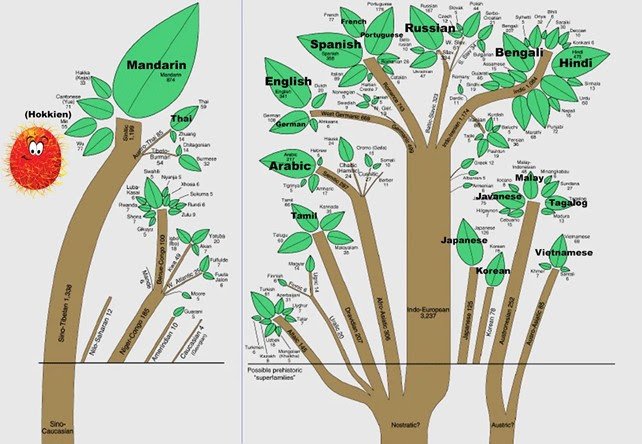
Human languages family tree, 2014.

India Responsible Education & AI Summit 2026
ADVERTISEMENT
Academic–Industry National Roundtable
ADVERTISEMENT
Ambedkar Chamber
ADVERTISEMENT
ESG Professional Network
ADVERTISEMENT
India Sustainability Awards 2026
ADVERTISEMENT
India CSR Image 1 India CSR Image 2
Tags: Ellen HernandezEndangered Languages ProjectYossef Ben-MeirYossef Ben-Meir Ellen Hernandez

CSR, Sustainability, and ESG success stories hindustan zinc
ADVERTISEMENT
India CSR

India CSR

India CSR is the largest media on CSR and sustainability offering diverse content across multisectoral issues on business responsibility. It covers Sustainable Development, Corporate Social Responsibility (CSR), Sustainability, and related issues in India. Founded in 2009, the organisation aspires to become a globally admired media that offers valuable information to its readers through responsible reporting.

Related Posts

FPC from Pune Exports Bananas to Dubai with Support
Business

FPC from Pune Exports Bananas to Dubai with Support

Sustainable Technology Innovations in the Hospitality Industry
Articles

Sustainable Technology Innovations in the Hospitality Industry

AI Ethics & Leadership @India CSR
Corporate Social Responsibility

As AI Transforms our World, Ethics Becomes a Leader’s True North

Mohammed Kaif
Articles

Zinc Football Academy’s Mohammed Kaif Joins India U-20 Team for SAFF Championship

Hindustan Zinc and Tata Steel Partner to Scale Low-Carbon Zinc Solutions with EcoZen
Articles

Hindustan Zinc and Tata Steel Partner to Scale Low-Carbon Zinc Solutions with EcoZen

Blueprint for Sustainability-Led Growth
Articles

EU–India FTA 2026: A New Blueprint for Sustainability-Led Growth

Load More
India Responsible Education & AI Summit 2026
ADVERTISEMENT
Academic–Industry National Roundtable
ADVERTISEMENT

LATEST NEWS

Iran Currency Crisis 2026: Has the Rial Reached Zero?

CSR: DVK Foundation Introduces Scholarships, Rs 20,000 Merit Awards for EWS Students

FPC from Pune Exports Bananas to Dubai with Support

Looking Beyond The Reels: Understanding Slot Gaming Better

CSR: Vedanta Programme Targets 1,800 Women Entrepreneurs in Rajasthan

वेदांता पहल से राजस्थान में 1,800 डिजिटल महिला उद्यमी तैयार करने का लक्ष्य

Ambedkar Chamber
ADVERTISEMENT

TOP NEWS

सांसद राजकुमार चाहर ने लॉन्च किया ‘हिंदू वीर बलिदानी गोकुला जाट’ पर शौर्य गीत; कर्मवीर चाहर ने निभाया मुख्य किरदार

Taking Time to Reflect: Why Pavitra Walvekar Practices One ‘Hard Thing’ Every Year

Telangana Plans New CSR Policy, Revanth Reddy Pushes for Higher Local Corporate Spending

DE’ HELLINGTON by Helly & Chilly: Revolutionizing Café Culture with Technology and Creativity

Why Mothers in South Gujarat Are Choosing the French Ambulatory C-Section at iSHA Women’s hospital & IVF Centre

CSR: Quick Heal Boosts Cyber Awareness to 90% Among Students

Load More
India Sustainability Awards 2026
ADVERTISEMENT
Ad 1 Ad 2 Ad 3
ADVERTISEMENT
Economy India Largest Media on Indian Economy and Business
ADVERTISEMENT

Interviews

Ajeet Kumar Singh, Co-Founder and Managing Director of SAVE Solutions
Interviews

Driving Financial Inclusion: Ajeet Kumar Singh on SAVE Solutions’ Growth Journey

by India CSR

Powering Rural Aspirations: SAVE Solutions on Credit, Housing, and Livelihoods.

Read moreDetails
Nirbhay Lumde is a seasoned leader in ESG and CSR with a vision to create a more sustainable and equitable world.

How Prestige Group is Integrating Biodiversity into Urban Development

Kayana Monga, a student at Shiv Nadar School, Noida, Founder - Project Muskan

An Interview with Student Changemaker Kayana Monga Working on Rural Mental Health

Meha Patel, Vice Chairperson of Zydus Foundation

Interview: Meha Patel on Zydus Foundation’s Vision for Sustainable Social Impact

Load More
ESG Professional Network
ADVERTISEMENT
STEM Learning STEM Learning STEM Learning
ADVERTISEMENT
Facebook Twitter Youtube LinkedIn Instagram
India CSR Logo

India CSR is the largest tech-led platform for information on CSR and sustainability in India offering diverse content across multisectoral issues. It covers Sustainable Development, Corporate Social Responsibility (CSR), Sustainability, and related issues in India. Founded in 2009, the organisation aspires to become a globally admired media that offers valuable information to its readers through responsible reporting. To enjoy the premium services, we invite you to partner with us.

Follow us on social media:


Dear Valued Reader

India CSR is a free media platform that provides up-to-date information on CSR, Sustainability, ESG, and SDGs. We need reader support to continue delivering honest news. Donations of any amount are appreciated.

Help save India CSR.

Donate Now

Donate at India CSR

  • About India CSR
  • Team
  • India CSR Awards 2026
  • India CSR Leadership Summit
  • Partnership
  • Guest Posts
  • Services
  • ESG Professional Network
  • Content Writing Services
  • Business Information
  • Contact
  • Privacy Policy
  • Terms of Use
  • Donate

Copyright © 2025 - India CSR | All Rights Reserved

Welcome Back!

Login to your account below

Forgotten Password?

Retrieve your password

Please enter your username or email address to reset your password.

Log In
HDFC
Submit Nomination Now
No Result
View All Result
  • Home
  • Corporate Social Responsibility
    • Art & Culture
    • CSR Leaders
    • Child Rights
    • Culture
    • Education
    • Gender Equality
    • Around the World
    • Skill Development
    • Safety
    • Covid-19
    • Safe Food For All
  • Sustainability
    • Sustainability Dialogues
    • Sustainability Knowledge Series
    • Plastics
    • Sustainable Development Goals
    • ESG
    • Circular Economy
    • BRSR
  • Corporate Governance
    • Diversity & Inclusion
  • Interviews
  • SDGs
    • No Poverty
    • Zero Hunger
    • Good Health & Well-Being
    • Quality Education
    • Gender Equality
    • Clean Water & Sanitation – SDG 6
    • Affordable & Clean Energy
    • Decent Work & Economic Growth
    • Industry, Innovation & Infrastructure
    • Reduced Inequalities
    • Sustainable Cities & Communities
    • Responsible Consumption & Production
    • Climate Action
    • Life Below Water
    • Life on Land
    • Peace, Justice & Strong Institutions
    • Partnerships for the Goals
  • Articles
  • Events
  • हिंदी
  • More
    • Business
    • Finance
    • Environment
    • Economy
    • Health
    • Around the World
    • Social Sector Leaders
    • Social Entrepreneurship
    • Trending News
      • Important Days
      • Great People
      • Product Review
      • International
      • Sports
      • Entertainment
    • Case Studies
    • Philanthropy
    • Biography
    • Technology
    • Lifestyle
    • Sports
    • Gaming
    • Knowledge
    • Home Improvement
    • Words Power
    • Chief Ministers

Copyright © 2025 - India CSR | All Rights Reserved

This website uses cookies. By continuing to use this website you are giving consent to cookies being used. Visit our Privacy and Cookie Policy.