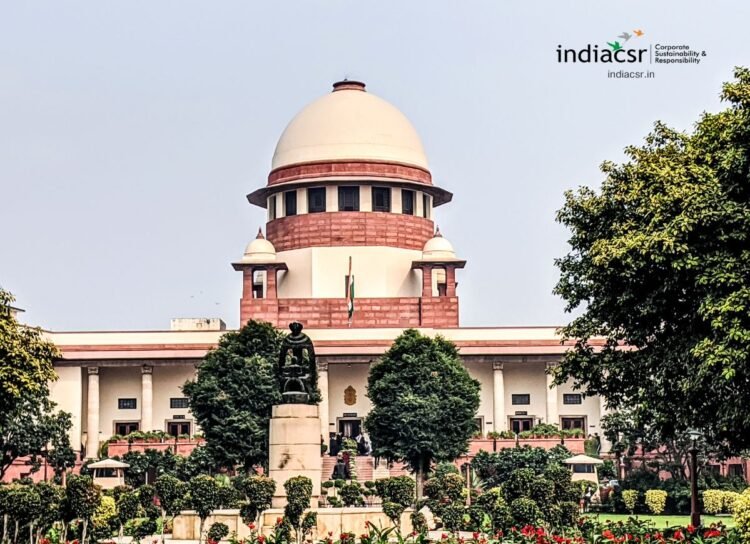


NEW DELHI (India CSR): In a stern response to the catastrophic floods and landslides ravaging northern India, the Supreme Court on September 4, 2025, issued notices to Punjab, Himachal Pradesh, Uttarakhand, and Jammu and Kashmir, demanding accountability for unchecked illegal tree felling linked to the disasters. Expressing grave concern over environmental degradation, the court, led by Chief Justice B R Gavai, emphasized the need for balanced development to prevent such crises. With millions affected and infrastructure in tatters, this judicial intervention underscores the urgency of addressing ecological violations to safeguard vulnerable regions.
Unprecedented Floods and Environmental Concerns
The Supreme Court’s action follows reports of severe flooding and landslides across northern India, particularly in the Himalayan states. Punjab has faced its worst floods in four decades, with over 37 lives lost and 3.5 lakh people affected, according to state officials. Himachal Pradesh reported 340 deaths, with infrastructure losses exceeding ₹2,000 crore. The court took suo motu cognizance of media reports showing timber logs floating in Himachal’s floodwaters, suggesting rampant illegal logging as a key contributor to the disasters. Chief Justice Gavai noted, “The scale of tree felling appears to have destabilized ecosystems, triggering these calamities.”
Notices to States and Central Agencies
The bench, comprising Chief Justice Gavai and Justice K Vinod Chandran, issued notices to the governments of Punjab, Himachal Pradesh, Uttarakhand, and Jammu and Kashmir, as well as the Union Ministry of Environment, Forest and Climate Change, the National Highways Authority of India (NHAI), and the National Disaster Management Authority (NDMA). The states have two weeks to respond, detailing measures taken to curb illegal logging and prevent future disasters. The court also directed Solicitor General Tushar Mehta to coordinate with the Environment Ministry, highlighting the “grave issue” of environmental mismanagement.
Illegal Tree Felling: A Root Cause
The court’s observations align with evidence of widespread deforestation exacerbating floods and landslides. In Himachal Pradesh, viral videos showed logs swept away by the Ravi and Beas rivers, raising alarms about organized illegal logging. A 2025 Forest Survey of India report estimates a 15% decline in forest cover in the Himalayan region since 2015, partly due to unauthorized felling for infrastructure projects. The plea by environmentalist Anamika Rana, which prompted the court’s action, seeks an independent expert committee to investigate road and highway projects linked to ecological damage.
Devastation Across Northern States
The floods have wreaked havoc, submerging villages, destroying crops across 1.75 lakh hectares in Punjab, and disrupting pilgrimages like the Shri Mata Vaishno Devi Yatra in Jammu and Kashmir. Schools in affected areas remain closed, and landslides in Himachal’s Mandi and Kullu districts have claimed lives, with seven reported deaths in Sundernagar alone. Social media posts on X reflect public outrage, with users demanding stricter enforcement of environmental laws. The court stressed that development must be balanced with mitigation measures to prevent such widespread destruction.
A Call for Accountability and Action
Solicitor General Tushar Mehta acknowledged the crisis, stating, “Nature is retaliating against our interference.” He assured the court that the Environment Ministry would engage with state chief secretaries to address the issue urgently. The court’s directive includes a call for concrete plans to prevent future disasters, with proposals for a Special Investigation Team (SIT) and geological assessments of vulnerable regions. As India grapples with a ₹48,000 crore economic loss from these floods, per a 2025 NITI Aayog estimate, the judiciary’s intervention aims to enforce sustainable practices and restore ecological balance.
You Learn: A Sustainable Future
Scheduled for a follow-up hearing in two weeks, the case could set a precedent for environmental governance in India. With the monsoon season intensifying risks in the Himalayan region, the court’s scrutiny of illegal tree felling and disaster preparedness is timely. States are under pressure to implement afforestation drives and stricter regulations, with Himachal Pradesh announcing a ₹100 crore reforestation plan in 2025. As public awareness grows, fueled by trending discussions on X, the Supreme Court’s firm stance offers hope for a more resilient and environmentally conscious India.
(India CSR)