

By Rashi Tarika
NEW DELHI (India CSR): Corporate Social Responsibility (CSR) in India has undergone a substantive evolution, transitioning from compliance-oriented philanthropy to strategically designed, impact-driven social investment. Contemporary CSR frameworks increasingly emphasize alignment between organizational competencies and societal needs to generate demonstrable, long-term community value. This shift is indicative of a broader maturation in corporate governance, where CSR functions not as an adjunct to core operations but as an integrated mechanism for enabling social sustainability, institutional resilience, and developmental progress.
A critical area of intervention within this paradigm is access to safe drinking water—a fundamental public health determinant that remains inadequately addressed across multiple institutional contexts. Public-facing establishments such as police stations, educational institutions, and government facilities often attract high daily footfall yet lack reliable water infrastructure. The resultant reliance on single-use plastic water bottles introduces dual challenges: ecological degradation through plastic waste accumulation and unaddressed systemic deficiencies in institutional water provisioning.
Addressing this gap, over the year – the WAE Foundation—the CSR arm of WAE Ltd.—implemented a strategic intervention in collaboration with the Gautam Budh Nagar Police. Under this initiative, advanced water purification and dispensing systems were installed across police stations in Noida. These installations provide continuous access to safe drinking water for personnel and visitors operating under high-stress, climate-vulnerable conditions. The intervention further reflects a sustainability-oriented approach, leveraging low-energy technology while eliminating plastic dependency.
Symbolically and operationally significant is the deployment of a purified water fountain by WAE at the National Police Memorial in New Delhi. Situated at a site emblematic of national sacrifice and civic responsibility, the installation serves both as a functional hydration point and as a representation of societal commitment to the welfare of frontline public service providers.
Beyond urban infrastructure enhancement, WAE Foundation has expanded its intervention model to remote geographies. In Arunachal Pradesh, water purification systems were deployed across eight government schools and colleges, addressing chronic access challenges in regions characterized by rugged topography and limitedservice delivery infrastructure. These systems provide continuous safe drinking water throughout academic cycles, contributing to improved student health metrics, reduced incidence of waterborne diseases, and enhanced school attendance—factors directly correlated with learning outcomes. The intervention effectively mitigates risks wherein students are forced to choose between consuming unsafe water and foregoing hydration.
The Foundation’s impact portfolio extends beyond SDG 6 to encompass ophthalmic care and human capital enhancement. Under the Drishtibodh initiative, the Foundation facilitates 25 fully sponsored cataract surgeries every month in underserved rural communities. By addressing preventable blindness—one of the leading contributors to disability-adjusted life years (DALYs) among economically vulnerable populations—this programme converts a medically resolvable condition into a powerful intervention in livelihood restoration and social productivity. As cataract surgery is a low-risk, routine procedure, Drishtibodh delivers outsized impact through high-efficiency ophthalmologic intervention.
According to WHO estimates, uncorrected visual impairment remains one of the primary causes of early school dropout among children from marginalised communities. Poor eyesight impedes concentration, classroom participation and fundamental learning outcomes, leading to academic regression and eventual withdrawal from formal education.
Recognising the intrinsic link between ocular health and educational continuity, the WAE Foundation implements structured ophthalmic screening and vision A interventions for children within vulnerable populations. This initiative directly contributes to SDG 3 (Good Health & Well-being) by addressing preventable vision disorders; SDG 4 (Quality Education) by removing a critical barrier to learning retention; and SDG 10 (Reduced Inequalities) by enabling equitable access to essential eye care services.Through this targeted approach, the Foundation not only improves ocular health outcomes but also safeguards educational progression, reinforcing long-term human capital development at the foundational stage.
Complementarily, the Foundation supports education in ophthalmologyoffering scholarships covering the complete academic costs of four students annually. The selection process balances meritocratic criteria with socio-economic inclusion, thereby enabling workforce upskilling and bridging representational disparities in healthcare-related professional domains.
A common organizational philosophy underpins these diverse CSR initiatives: interventions are designed to deliver structural solutions rather than transient relief. Each programme incorporates quantifiable metrics—ranging from the number of beneficiaries with access to purified water to healthcare outcomes and educational progression—facilitating evidence-based impact evaluation.
Strategic Implications
As India advances toward its aspirational milestone of achieving developed nation status by 2047, CSR must transition from supplemental engagement to strategic co-development of societal infrastructure. The most scalable and sustainable corporate interventions derive not from diversification into unfamiliar domains, but from recognizing synergistic intersections between enterprise-level capabilities and validated community needs.
In this context, WAE Foundation exemplifies an advanced CSR model characterized by:
- Core competency utilization to address critical needs.
- Sustainability and lifecycle-driven design, particularly concerning resource efficiency and low-environmental-impact deployment.
- Outcome-based assessment, ensuring programme relevance and replicability.
- Adaptability to emerging socio-environmental conditions, as evidenced during pandemic response efforts.
Strategic CSR frameworks that integrate organizational expertise with societal imperatives hold the potential to catalyze systemic transformation. When implemented through sustainable, scalable mechanisms and guided by measurable outcomes, CSR transitions from episodic assistance to long-term capacity creation. This alignment—between corporate capability and community challenge—constitutes the foundation of impactful CSR that not only supports national development objectives but actively contributes to their realization.
In essence, the future of CSR lies in its ability to create enduring structural value through capability-led interventions, reinforcing both social progress and corporate legitimacy in an increasingly development-conscious economic landscape.
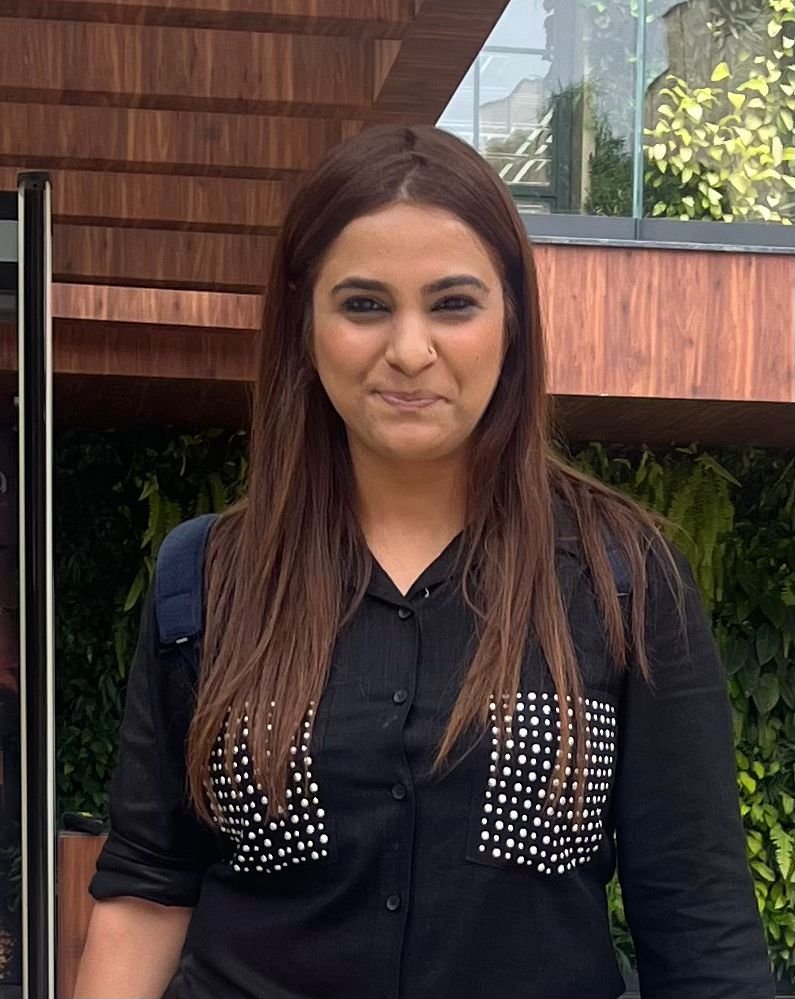
About the Author
Rashi Tarika, Head of Communication, WAE Foundation and WAE Ltd.
(India CSR)