• India CSR Awards 2025
  • India CSR Leadership Summit
  • Guest Posts
Thursday, March 5, 2026
India CSR
  • Home
  • Corporate Social Responsibility
    • Art & Culture
    • CSR Leaders
    • Child Rights
    • Culture
    • Education
    • Gender Equality
    • Around the World
    • Skill Development
    • Safety
    • Covid-19
    • Safe Food For All
  • Sustainability
    • Sustainability Dialogues
    • Sustainability Knowledge Series
    • Plastics
    • Sustainable Development Goals
    • ESG
    • Circular Economy
    • BRSR
  • Corporate Governance
    • Diversity & Inclusion
  • Interviews
  • SDGs
    • No Poverty
    • Zero Hunger
    • Good Health & Well-Being
    • Quality Education
    • Gender Equality
    • Clean Water & Sanitation – SDG 6
    • Affordable & Clean Energy
    • Decent Work & Economic Growth
    • Industry, Innovation & Infrastructure
    • Reduced Inequalities
    • Sustainable Cities & Communities
    • Responsible Consumption & Production
    • Climate Action
    • Life Below Water
    • Life on Land
    • Peace, Justice & Strong Institutions
    • Partnerships for the Goals
  • Articles
  • Events
  • हिंदी
  • More
    • Business
    • Finance
    • Environment
    • Economy
    • Health
    • Around the World
    • Social Sector Leaders
    • Social Entrepreneurship
    • Trending News
      • Important Days
        • Festivals
      • Great People
      • Product Review
      • International
      • Sports
      • Entertainment
    • Case Studies
    • Philanthropy
    • Biography
    • Technology
    • Lifestyle
    • Sports
    • Gaming
    • Knowledge
    • Home Improvement
    • Words Power
    • Chief Ministers
No Result
View All Result
  • Home
  • Corporate Social Responsibility
    • Art & Culture
    • CSR Leaders
    • Child Rights
    • Culture
    • Education
    • Gender Equality
    • Around the World
    • Skill Development
    • Safety
    • Covid-19
    • Safe Food For All
  • Sustainability
    • Sustainability Dialogues
    • Sustainability Knowledge Series
    • Plastics
    • Sustainable Development Goals
    • ESG
    • Circular Economy
    • BRSR
  • Corporate Governance
    • Diversity & Inclusion
  • Interviews
  • SDGs
    • No Poverty
    • Zero Hunger
    • Good Health & Well-Being
    • Quality Education
    • Gender Equality
    • Clean Water & Sanitation – SDG 6
    • Affordable & Clean Energy
    • Decent Work & Economic Growth
    • Industry, Innovation & Infrastructure
    • Reduced Inequalities
    • Sustainable Cities & Communities
    • Responsible Consumption & Production
    • Climate Action
    • Life Below Water
    • Life on Land
    • Peace, Justice & Strong Institutions
    • Partnerships for the Goals
  • Articles
  • Events
  • हिंदी
  • More
    • Business
    • Finance
    • Environment
    • Economy
    • Health
    • Around the World
    • Social Sector Leaders
    • Social Entrepreneurship
    • Trending News
      • Important Days
        • Festivals
      • Great People
      • Product Review
      • International
      • Sports
      • Entertainment
    • Case Studies
    • Philanthropy
    • Biography
    • Technology
    • Lifestyle
    • Sports
    • Gaming
    • Knowledge
    • Home Improvement
    • Words Power
    • Chief Ministers
No Result
View All Result
India CSR
No Result
View All Result
Home Science

PwC Projects $127 Billion (₹10.5 Lakh Crore) Moon Economy by 2050

Solar power is one of the main proposed energy sources for the future Moon economy

India CSR by India CSR
March 4, 2026
in Science
Reading Time: 5 mins read
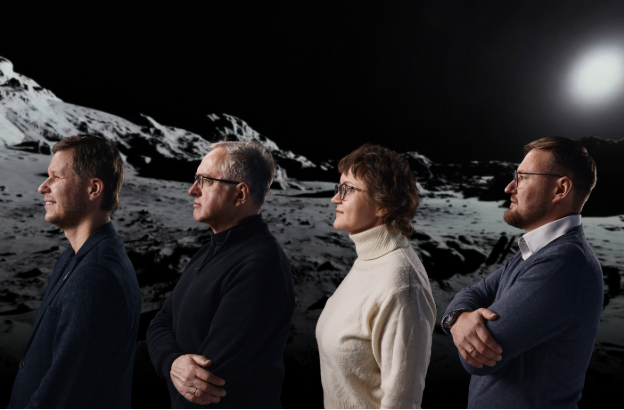
© Deep Space Energy Bruno Kabucis

© Deep Space Energy Bruno Kabucis

Share Share Share Share
WhatsApp icon
WhatsApp — Join Us
Instant updates & community
Google News icon
Google News — Follow Us
Get our articles in Google News feed

As NASA revises Artemis and PwC outlines $127 billion revenue by 2050 for the Moon’s economy, experts warn that alternative energy infrastructure, not just transportation, will determine whether lunar surface activities will survive long-term.

WASHIGTON, D.C. (India CSR): The global Moon economy could reach $127.3 billion (around Rs. 10.5 lakh crore) by 2050, according to PwC’s latest Lunar Market Assessment, highlighting the growing economic potential of lunar exploration and commercial activities. At the same time, NASA has revised its Artemis Moon landing programme, introducing a preparatory mission to test commercial landers in Earth’s orbit in 2027 before sending astronauts to the lunar surface later in the decade. While transportation systems and landing technologies are advancing rapidly, experts warn that the real challenge for sustaining long-term lunar missions may lie in building reliable energy infrastructure, capable of supporting operations during the Moon’s long nights, extreme temperatures, and remote exploration activities.

NASA has recently announced major changes to its Moon landing program, Artemis. While crewed missions to the lunar surface were planned for 2028, the administration decided to add a preparatory step to test commercial landers in Earth’s orbit a year earlier, in 2027. This change is meant to reduce risks and represents a shift toward more incremental mission design following recent Artemis delays and safety concerns exposed in February. Despite that, experts claim that transportation issues are just one part of the equation.

The latest PwC Lunar Market Assessment also highlights the growing economic importance of the Moon economy, projecting total revenues of $127.3 billion by 2050, and identifies solar energy systems as one of the priority technologies.

However, according to Mihails Ščepanskis, CEO of Deep Space Energy, it is crucial to understand that solar power will not be an ultimate solution for lunar surface operations, and alternatives must be explored before any long-term mission begins to unlock that economic potential.

Deep Space Energy (DSE) is a Latvian startup company founded in 2022.

“We already learned the lessons here on Earth that power needs can’t be an afterthought, or there will be a price to pay, especially when we discuss resource exploration missions, commercial operations, or permanent systems on the lunar surface,” he says. “Reliable surface energy is still one of the biggest gaps on the Moon.”

Currently, solar power is one of the main proposed energy sources for the future Moon economy. However, conditions on the Moon are far more challenging than on Earth, as one lunar night is equal to approximately 14 days on Earth – a period during which solar panels stop generating power, leaving only batteries and non-solar power to support the systems. Also, during the nighttime, temperatures can fall below –170°C, requiring additional energy to heat both equipment and batteries.

“Because of the long darkness period, relying solely on large battery systems would impose a significant payload penalty. Any long-term operation on the Moon must have reliable solarless power generation to survive lunar night without blowing up the budget,” Ščepanskis added.

Against that backdrop, major powers worldwide are increasingly positioning nuclear energy as a foundation for long-term lunar activity. Last month, NASA and the U.S. Department of Energy committed to developing a lunar surface fission reactor by 2030. Russia has also signalled plans to pursue a nuclear-powered lunar station concept in the mid-2030s.

According to Ščepanskis, the importance of mobility on the Moon should not be overlooked when discussing future energy systems. While large fission reactors may eventually power stationary lunar bases, they are localised solutions and do not address the operational needs of mobile platforms.

“There is no grid on the Moon,” he said. “A reactor can support infrastructure at a base, but lunar rovers, scouting vehicles, and prospecting missions operating far from fixed installations must carry their own reliable power source.”

He argues that sustained exploration and resource assessment, both critical to the development of a functioning Moon economy, will depend on compact, non-solar energy technologies such as radioisotope-based power systems.

“Imagine you appear in the Wild West era, but with a car. You have to reach the West Coast from the East Coast, but there are no fuel stations or infrastructure on your way. So, you run out of fuel, the vehicle becomes useless,” Ščepanskis explained. “The Moon presents a similar situation – a fission reactor or a large solar installation can power a fixed base, but once a rover or scouting mission moves far from base, especially during extended lunar night, there is no ‘gas station’ there. Mobility requires onboard power that can operate independently throughout the lunar night.”

For example, companies like Deep Space Energy are developing compact radioisotope power systems designed for mobility. Ščepanskis shared that the primary constraint in scaling such systems is the limited availability and high cost of space-grade radioisotope fuel.

“Conversion efficiency determines how many missions can realistically be supported with the available supply. If you can generate more electricity from the same quantity of radioisotopes, you can scale deployment without increasing material demand.”

Unlike traditional thermoelectric radioisotope generators currently used in deep space and planetary missions, Deep Space Energy uses a modified Stirling-based conversion approach.

In the past, Stirling systems have been associated with reliability trade-offs due to multiple moving components.

Ščepanskis said that the novel design addresses that limitation by replacing the conventional dual free-piston configuration with a simplified thermo-acoustic architecture. In return, it reduces the number of moving parts to a single piston and eliminates the need for a resonator. Conversion efficiency with such a system is increased up to five times.

Such technology is designed to use Americium-241 sourced from commercial nuclear waste, offering an alternative pathway within constrained space-grade isotope supply chains.

“Solar will remain crucial for daytime operations, nuclear reactors will serve stationary bases, and compact non-solar systems will enable mobility,” Ščepanskis concluded. “We need all of that for sustainable Moon operations.”

The Deep Space Energy

The company is developing a new radioisotope power generator for space that uses the heat produced by the nuclear self-decay of radioisotopes – materials extractable from waste of commercial nuclear reactors. The product aims for applications in deep space science missions, lunar surface missions and high-value defence satellites. The company is the first from Latvia to be selected in the NATO DIANA programme, and it also received funding from the European Space Agency through technology development contracts as well as the ESA BIC program, financial support from the Latvian government, as well as VC funds (Outlast Fund) and private investors (Linas Sargautis). DSE also operates in the UK under the name Deep Space Energy Limited, the company informed.

(India CSR)
India Responsible Education & AI Summit 2026
ADVERTISEMENT
Ambedkar Chamber
ADVERTISEMENT
ESG Professional Network
ADVERTISEMENT
India Sustainability Awards 2026
ADVERTISEMENT
India CSR Image 1 India CSR Image 2
Tags: Artemis Moon landing programmeMoon Economy

CSR, Sustainability, and ESG success stories hindustan zinc
ADVERTISEMENT
India CSR

India CSR

India CSR is the largest media on CSR and sustainability offering diverse content across multisectoral issues on business responsibility. It covers Sustainable Development, Corporate Social Responsibility (CSR), Sustainability, and related issues in India. Founded in 2009, the organisation aspires to become a globally admired media that offers valuable information to its readers through responsible reporting.

Related Posts

How to Maintain and Clean a Soxhlet Extraction Apparatus?
Science

How to Maintain and Clean a Soxhlet Extraction Apparatus?

3 months ago
Blockchain For Impact Giving Rs. 2.5 Crore Global Fellowship to Attract Top Scientists in Biomedical Science and Public Health
Science

Blockchain For Impact Giving Rs. 2.5 Crore Global Fellowship to Attract Top Scientists in Biomedical Science and Public Health

4 months ago
India CSR
Science

India’s NAVIC Crosses 11 Satellite Mark, Parliament Informed

7 months ago
Alyssa Carson: A USA Girl Aiming for Mars
Science

Alyssa Carson: A USA Girl Aiming for Mars

8 months ago
Alyssa Carson: 10 Inspiring Facts Every STEM Teacher Should Know
Science

Alyssa Carson: 10 Inspiring Facts Every STEM Teacher Should Know

8 months ago
Alyssa Carson: Aspiring to be on the First Human Mission to Mars - the Red Planet
Science

Alyssa Carson: Aspiring to be on the First Human Mission to Mars – the Red Planet

8 months ago
Load More
India Responsible Education & AI Summit 2026
ADVERTISEMENT
Ambedkar Chamber
ADVERTISEMENT
India Sustainability Awards 2026
ADVERTISEMENT

LATEST NEWS

PwC Projects $127 Billion (₹10.5 Lakh Crore) Moon Economy by 2050

Women Lead the Way in Emergency Care at Bharati Hospital in Pune

ITC Project Samposhan Transforms 1.3 Lakh Lives, Boosts Anaemia Prevention in Uttar Pradesh

Delhi Climate Innovation Week Positions India as a Global Hub for Climate Solutions

Sustainability: Grundfos Intelligent Experience Centre Helps Industries Optimise Water

AR Wallet – Secure and Fast Digital Payment Solution

Economy India Largest Media on Indian Economy and Business
ADVERTISEMENT
Ad 1 Ad 2 Ad 3
ADVERTISEMENT
ESG Professional Network
ADVERTISEMENT

TOP NEWS

CSR: Bajaj Finance Hosts Cyber Fraud Awareness in Anantapur

Transform Your Fitness with an Auto-Incline Treadmill: The Future of Smart Home Cardio

Stop Fighting the GST Portal: File During These Off-Peak Hours

Samsung Chennai Plant Drives Career Growth from Shopfloor

Delhi Climate Innovation Week Positions India as a Global Hub for Climate Solutions

Financial Inclusion Without Fraud: The Governance Challenge of India’s Digital Credit Boom

Load More
STEM Learning STEM Learning STEM Learning
ADVERTISEMENT

Interviews

Prerrit Mansingh, Secretary, Aayom Welfare Society
Interviews

Scaling Compassion into Structured Social Change: An Interview with Prerrit Mansingh

by India CSR
February 28, 2026

Prerrit Mansingh on Aayom Welfare Society’s Legacy of Seva and Sustainable Community Transformation.

Read moreDetails
Sheena Kapoor, Head – Marketing, Corporate Communication & CSR at ICICI Lombard

ICICI Lombard at 25: Sheena Kapoor on Promise-Led CSR and Lasting Impact

February 28, 2026
Arun Jain, Founder and CMD of Intellect and Founder of Mission Samriddhi

Design Thinking for Rural India: Arun Jain’s Civilisation Economics Model

February 28, 2026
Rajani Jalan, Director, CSR & People Relations, mPokket

mPokket’s Decade of CSR Impact in West Bengal: An Interview with Rajani Jalan

February 25, 2026
Load More
Facebook Twitter Youtube LinkedIn Instagram
India CSR Logo

India CSR is the largest tech-led platform for information on CSR and sustainability in India offering diverse content across multisectoral issues. It covers Sustainable Development, Corporate Social Responsibility (CSR), Sustainability, and related issues in India. Founded in 2009, the organisation aspires to become a globally admired media that offers valuable information to its readers through responsible reporting. To enjoy the premium services, we invite you to partner with us.

Follow us on social media:


Dear Valued Reader

India CSR is a free media platform that provides up-to-date information on CSR, Sustainability, ESG, and SDGs. We need reader support to continue delivering honest news. Donations of any amount are appreciated.

Help save India CSR.

Donate Now

Donate at India CSR

  • About India CSR
  • Team
  • India CSR Awards 2025
  • India CSR Leadership Summit
  • India Responsible Education & AI Summit 2026
  • Partnership
  • Guest Posts
  • Services
  • ESG Professional Network
  • Content Writing Services
  • Business Information
  • Contact
  • Privacy Policy
  • Terms of Use
  • Donate

Copyright © 2025 - India CSR | All Rights Reserved

No Result
View All Result
  • Home
  • Corporate Social Responsibility
    • Art & Culture
    • CSR Leaders
    • Child Rights
    • Culture
    • Education
    • Gender Equality
    • Around the World
    • Skill Development
    • Safety
    • Covid-19
    • Safe Food For All
  • Sustainability
    • Sustainability Dialogues
    • Sustainability Knowledge Series
    • Plastics
    • Sustainable Development Goals
    • ESG
    • Circular Economy
    • BRSR
  • Corporate Governance
    • Diversity & Inclusion
  • Interviews
  • SDGs
    • No Poverty
    • Zero Hunger
    • Good Health & Well-Being
    • Quality Education
    • Gender Equality
    • Clean Water & Sanitation – SDG 6
    • Affordable & Clean Energy
    • Decent Work & Economic Growth
    • Industry, Innovation & Infrastructure
    • Reduced Inequalities
    • Sustainable Cities & Communities
    • Responsible Consumption & Production
    • Climate Action
    • Life Below Water
    • Life on Land
    • Peace, Justice & Strong Institutions
    • Partnerships for the Goals
  • Articles
  • Events
  • हिंदी
  • More
    • Business
    • Finance
    • Environment
    • Economy
    • Health
    • Around the World
    • Social Sector Leaders
    • Social Entrepreneurship
    • Trending News
      • Important Days
      • Great People
      • Product Review
      • International
      • Sports
      • Entertainment
    • Case Studies
    • Philanthropy
    • Biography
    • Technology
    • Lifestyle
    • Sports
    • Gaming
    • Knowledge
    • Home Improvement
    • Words Power
    • Chief Ministers

Copyright © 2025 - India CSR | All Rights Reserved

This website uses cookies. By continuing to use this website you are giving consent to cookies being used. Visit our Privacy and Cookie Policy.
Are you sure want to unlock this post?
Unlock left : 0
Are you sure want to cancel subscription?